A group of Republican election officials has petitioned the U.S. Supreme Court to prevent President Donald Trump’s mail-ballot rule from taking effect before the November midterm elections. They warn that these rules could lead to voter confusion, delays, and disruption. This appeal is significant as it comes from Republican officials, rather than just voting-rights groups or Democratic officials.
On Thursday, this situation gained more importance when the U.S. Court of Appeals for the First Circuit declined to pause a lower court’s injunction blocking the rule. The appellate court determined that the government had not shown a likely chance of success, emphasizing that states might not be able to comply with the rule’s specifications before the November 3 election.
The Trump administration has made an emergency appeal to the Supreme Court to reinstate the ballot-mail provisions, which were halted by a federal judge in Massachusetts. The administration claims these measures are essential to maintain election integrity. Opponents argue that they would cause logistical problems and exceed federal authority.
Republicans Point Out Election Risks
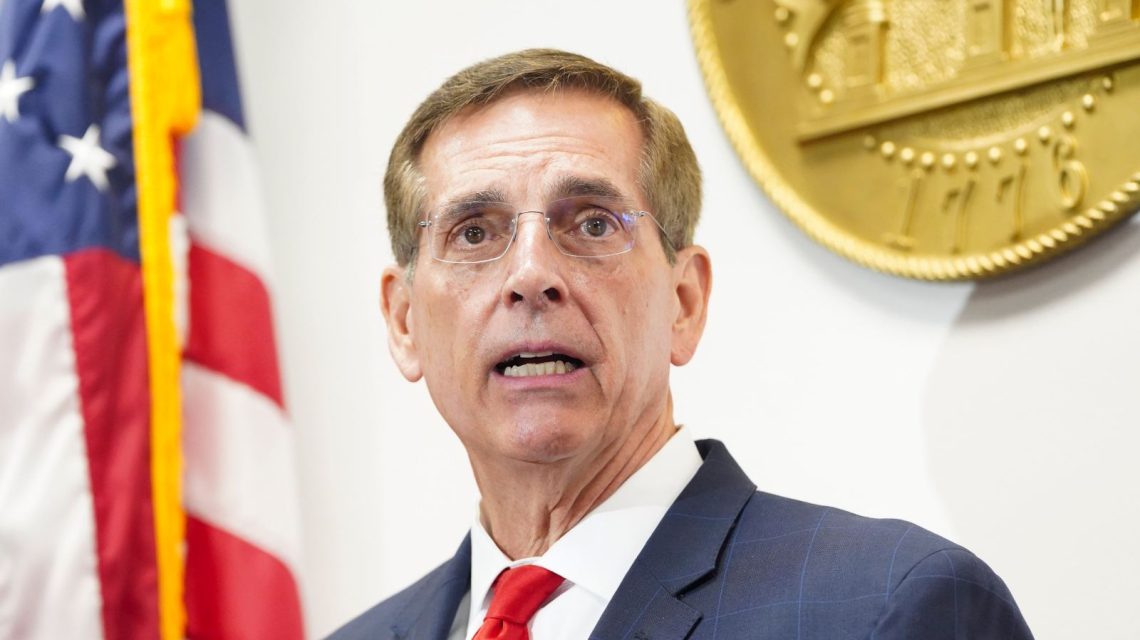
The motion was signed by 38 current and former election officials from 10 states, including notable names such as Republican Secretaries of State Brad Raffensperger (Georgia), Scott Schwab (Kansas), Michael Adams (Kentucky), David Scanlan (New Hampshire), Michael Howe (North Dakota), and Monae Johnson (South Dakota), as well as Utah Lieutenant Governor Deidre Henderson.
The officials emphasized that their motion does not support or oppose the rule itself, but rather highlights the impracticality of implementation before the midterms. “Attempting to implement the Rule now will almost certainly lead to mistakes, delays, and confusion for both voters and election officials,” the brief explains.
The motion noted that absentee ballots have already been dispatched in some states. Federal law mandates that states send ballots to military and overseas voters by September 19. Election administrators would also face new envelope requirements, would need to employ a federal ballot portal deemed not fully tested, and implement additional verification procedures, the brief states.
Additionally, the officials cited the Supreme Court’s Purcell doctrine. This principle advises against making significant changes to election rules close to an election due to risks of voter confusion and administrative disruption. The brief asserts that November’s election should proceed under the existing regulations that governed election preparations. “Election administrators deserve a clear roadmap to successfully deliver a free, fair, and fast election. We already have that in Georgia,” Raffensperger spokesman Robert Sinners told Newsweek. “To serve their communities effectively, they need certainty, and last-minute changes undermine that. The Purcell doctrine is clear on this.” Raffensperger is notable for his previous disagreements with Trump over election administration issues dating back to 2020.
Appeals Court Raises Similar Concerns
The First Circuit echoed many concerns the Republican officials raised. Most notably, the court identified no immediate threat of voter fraud that could justify the problems the changes might cause. Instead, the court suggested the rule could disenfranchise millions while offering minimal gains in fraud prevention.
In denying the administration’s request for a stay, the court referenced states’ need for USPS approval for redesigned ballot envelopes, replacing already ordered envelopes, creating systems for voter-specific barcodes, and uploading information into a non-operational USPS portal.
The appeal panel also acknowledged the lower court’s view that states could not comply with the rule’s intricate requirements in the remaining time before the November 3 election. Further concerns about potential “chaos and widespread disenfranchisement” from immediate implementation were noted, including delays related to envelope approvals and large-scale ballot verification.
The group determined that the upcoming election should operate under “the rules that were in place when its administration began,” arguing that questions regarding the rule’s legality should be addressed prior to the 2028 election.
 Democratic Hopes and Historical Warnings in 2026 Senate Race
  Republicans Face Challenges Amidst Cost of Living Concerns
  A Different Kind of Fall for Congress This Year
  Cornel West and Sean Hannity Discuss Differences on Podcast
  Trump Unveils AI-Powered America.gov Platform
  Upcoming Congressional Elections: Key Districts to Watch