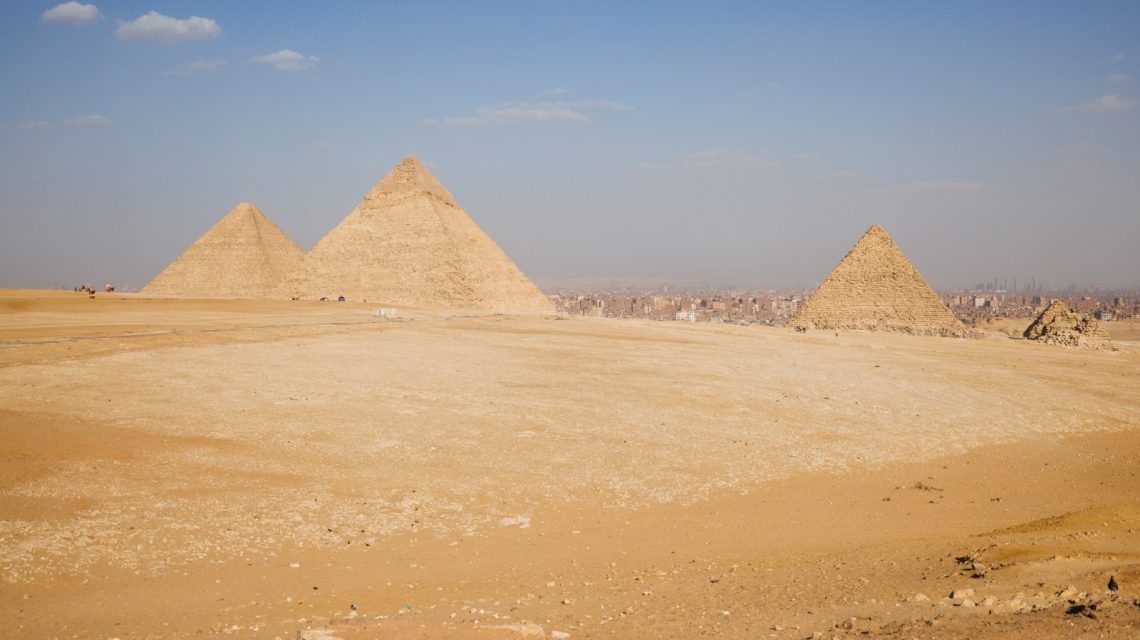
A scientific journal recently retracted a study claiming that satellite radar could reveal hidden structures inside the Great Pyramid of Giza. The study, published by Italian researchers Filippo Biondi and Corrado Malanga in 2022, was found to have serious methodological flaws and statistical errors.
The Original Claim
The paper was featured in Remote Sensing, a peer-reviewed journal focusing on satellite imaging and radar technologies. The researchers used a radar-based imaging technique called synthetic aperture radar Doppler tomography. They claimed it could analyze changes in radar signals to picture structures inside the Pyramid of Khufu without any physical entry.
They argued that this method could potentially map rooms and corridors unknown before. The study piqued curiosity as it formed a scientific basis for extraordinary claims about unverified hidden features.
The Investigation
The skepticism arose when a reader raised concerns about the study’s methodology, prompting Remote Sensing to investigate. Resultantly, the paper was retracted on August 10.
Biondi and Malanga claimed scans indicated shafts and tunnels beneath the nearby Pyramid of Khafre, fueling rumors of an underground city. These claims captured international attention, including from YouTuber MrBeast. Speculation expanded to an alleged second Sphinx beneath the Giza Plateau.
Despite disagreeing with the retraction, Biondi and Malanga did not respond to requests for comment from Retraction Watch.
How the Claims Gained Popularity
The paper identified 20 hidden features within and beneath the Great Pyramid. The researchers stated that small movements caused by environmental factors helped map these features. They even suggested having detected the “Big Void,” previously found using cosmic-ray scans.
Public interest surged in March 2025, when they presented findings on the Pyramid of Khafre. This included five connected structures and eight shafts with surrounding spiral pathways.
Controversy Surrounding the Claims
The scale of their findings led to scrutiny as no peer-reviewed journal published the claims around Khafre, nor were they independently confirmed. Critics doubted if minimal surface movements could reveal precise underground structures.
Egyptologist Zahi Hawass dismissed the claims, citing a lack of scientific evidence and permission for such work. The researchers conceded only on-site investigations could validate their findings, acknowledging the limitations of radar signals in penetrating solid stone.
Journal’s Rationale for Retraction
Nearly four years post-publication, the journal confirmed serious flaws undermining the study. They emphasized errors without detailing individually but refrained from accusing the researchers of misconduct.
The retraction covers the 2022 paper on Khufu’s pyramid, not the later claims on the Giza Plateau.
Biondi persisted in promoting the project, sharing media segments about alleged structures and updates on permit applications for fieldwork in Egypt. Nevertheless, neither media nor announcements addressed the retraction findings.
 Climate-Resistant Rock Glaciers: Hidden Water Resources
  California Voters to Decide on $7.5 Billion State Research Fund
  Ancient Pottery Unearthed During Roadworks in Tbilisi
  U.S. Space Academy Announcement
  The Need for New Strategies in Oregon’s Wildfire Management
  Plastic Pollution in the Great Lakes: A Growing Concern