In Barranquilla, Colombia, a lawyer who has never held public office clinched a narrow victory in the country’s presidential runoff. Abelardo de la Espriella, representing the National Salvation Movement, secured 49.66% of the vote, narrowly defeating left-wing Senator Ivan Cepeda, who garnered 48.70%. De la Espriella’s triumph signals a shift towards the right in Colombia’s political landscape, aligning with policies focused on stringent security measures.
His victory prompted reactions across the nation. Supporters of De la Espriella celebrated in various cities, while protests erupted in response to the election results. In cities like Cali and Bogota, demonstrators expressed their discontent by clashing with police and burning flags and tires.
The election’s outcome echoes a broader trend in the region, as stated by President Trump, celebrating De la Espriella’s success. The administration’s stance indicates an extension of right-wing influence throughout the Americas.
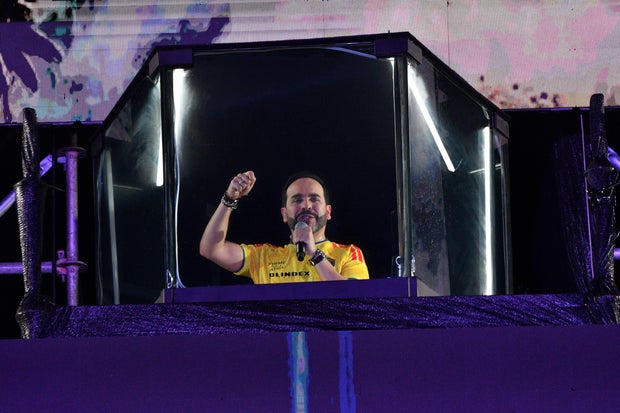
“We are beginning a new era!” De la Espriella declared, addressing his supporters behind bulletproof glass. He reaffirmed his commitment to tackling drug cartels and guerrilla groups that perpetuate violence in Colombia.
Despite the jubilation among supporters, the election highlighted the country’s deep divisions. Student protester Natalia criticized past right-wing governments for prioritizing the wealthy, while De la Espriella’s backers donned the national football jersey, expressing hope in his promises for security and employment.
De la Espriella assured the public of his dedication to democratic governance. He pledged to uphold freedom and inclusivity, addressing concerns about unity in a politically polarized nation.
The election marks the continuation of right-wing dominance in Colombia, with potential implications for the nation’s ongoing peace efforts. De la Espriella indicated intentions to cease peace talks with rebel groups, favoring military interventions instead.
The close election, with a mere 247,000 votes separating the candidates, highlighted by The Wall Street Journal, underscores the competitive nature of the race. Ivan Cepeda, the opposing candidate, refrained from immediate concession, awaiting final vote counts, although historical precedents suggest unlikely changes in the outcome.
The election not only affects Colombia domestically but also has international ramifications. U.S. Secretary of State Marco Rubio expressed optimism about future collaboration between the two nations under De la Espriella’s administration.
 The Trump Team’s Challenge to the Military Leadership
  Maryland First State to Restrict Electronic Pricing in Grocery Stores
  British Police Arrest Man Suspected of Terror Plot
  Activists Push for Nationwide Ban on Child Marriage in the U.S.
  Democratic Hopes and Historical Warnings in 2026 Senate Race
  Republicans Face Challenges Amidst Cost of Living Concerns