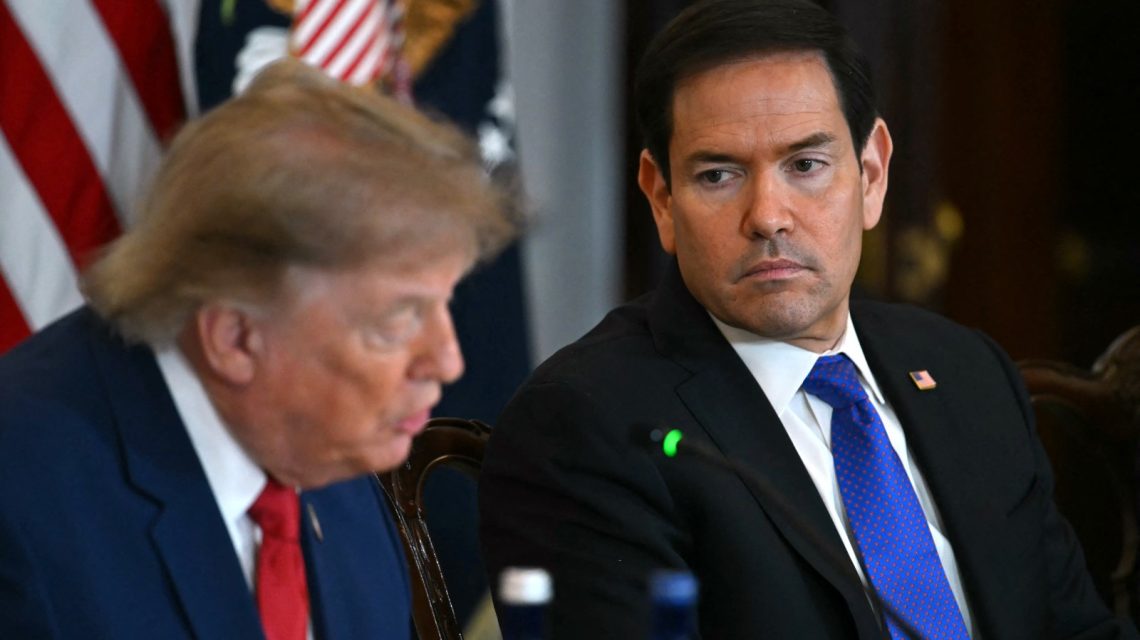
Secretary of State Marco Rubio has cultivated a strong stance against Chavismo throughout his political career. Despite this, the Trump administration recently announced an oil agreement with the government of interim President Delcy Rodríguez, formerly Nicolás Maduro’s vice president.
This arrangement places Rubio in a challenging position. Less than a year after Maduro’s capture, the administration collaborates with the very movement Rubio warned against. With Rubio seen as a potential 2028 presidential hopeful, questions arise about his support among Venezuelan and Cuban voters who have backed his career.
President Donald Trump declared the agreement on Truth Social, describing it as “the biggest oil deal in world history.” Under the agreement, a joint venture will develop 17 Venezuelan oil fields with an estimated capacity of 65 billion barrels. The United States gains a 55 percent stake through direct ownership and crude purchase rights at production cost.
Rodríguez stated the concession would last 25 years, but a U.S. official, who spoke anonymously, indicated it spans 100 years. This discrepancy remains unresolved due to a lack of released agreement details.
Trump praised Rubio and Defense Secretary Pete Hegseth for their part in the negotiations with Rodríguez. Rubio labeled it a “huge win for both the American and Venezuelan people.” Yet, criticism emerges from Venezuelans and analysts uneasy with ties to Hugo Chávez’s successor regime. Some critics call the deal “shameful,” particularly targeting Rubio.
A Shift in Support Among Venezuelans
Polling by Meganálisis found over 90 percent of Venezuelans appreciative of Maduro’s departure. Trump’s approval in Venezuela has declined since January, according to Eduardo Gamarra, a political scientist at Florida International University.
“People still support Maduro’s removal,” Gamarra stated, “but they’ve lost confidence in Delcy and Trump’s actions.”
Gamarra detailed grievances, highlighting continued political imprisonment and controversial figures being treated as legitimate interlocutors by Washington. The oil deal bears significant emotional weight in Venezuela, rooted in the nation’s historical conflicts over oil.
Conservative commentators in Miami echo these sentiments, expressing discontent with the agreement. Harvard economist Ricardo Hausmann criticized Rubio directly, arguing the deal betrayed Venezuelans by engaging with an oppressive government.
Hausmann called the deal unconstitutional, claiming Rodríguez lacks authority to commit Venezuela. He accused the administration of obstructing the return to democracy and delaying elections.
Controversy Over Key Figures
Critics focus on Rubio’s choice of Alejandro Betancourt López to oversee the oil fields. Betancourt, a wealthy businessman from Venezuela, faced legal challenges abroad. Michael McFaul, former U.S. ambassador to Russia, criticized Rubio for collaborating with Rodríguez.
A March Quinnipiac University poll showed most Americans oppose U.S. control of Venezuelan oil, reflecting broader dissent toward the deal.
State Department’s Position
A U.S. official described the agreement as a private venture, not an accommodation with the Venezuelan government. The official clarified the concession’s duration as 100 years, confirming earlier reports.
The State Department didn’t address criticism of Betancourt’s involvement directly and emphasized ongoing reconciliation talks between the Venezuelan government and opposition.
Rubio’s History of Complicated Relationships
This oil deal isn’t the first controversial moment for Rubio. In 2025, he faced backlash after supporting an end to Temporary Protected Status (TPS) for Venezuelans, conflicting with his earlier views.
Polls have indicated Venezuelan Americans’ potential withdrawal of support for Rubio should he oppose permanent legal status for TPS holders.
Over time, Washington has increasingly cooperated with Rodríguez, leading to frustration among Rubio’s supporters. Rubio has consistently outlined a three-phase plan for Venezuela’s transition, which seemingly conflicts with the recent oil agreement.
Political Consequences
Rubio’s decisions draw scrutiny amid growing tension among Venezuelan and Cuban communities. Representative María Elvira Salazar initially criticized the deal before publicly supporting its outcomes, highlighting political pressure in her district.
Meanwhile, Representative Carlos Giménez criticized Rodríguez’s status, while some see parallels in U.S. foreign policy dealings with regimes when convenient for national interests.
Gamarra referenced a State Department report on electoral fraud that strategically omitted recent events, implying avoidance of sensitive topics related to Venezuela’s political climate.
Future Challenges
As Rubio navigates these political waters, the oil deal complicates his standing with the Venezuelan community. Despite strong favorability ratings and a lead in prediction markets for the 2028 Republican field, these issues may influence his political trajectory.
While Rubio hasn’t publicly discussed the political risks, insights from experts like Will Freeman suggest that his support base in South Florida might withstand these challenges, given trust in his long-term strategy.
 President Trump’s Pre-Midterm Interview on Key Issues
  Trump’s 2024 Reelection and Evolving Voter Dynamics
  Defense Secretary Emerges as Key Player in the Trump Administration
  Hegseth’s Vision for the Military: Balancing Tradition and Innovation
  Significant Funding Boosts Ken Paxton’s Texas Senate Campaign Amid Tight Race
  U.S. States Extend Gas Tax Waivers Amid Rising Fuel Costs Due to Iran Conflict