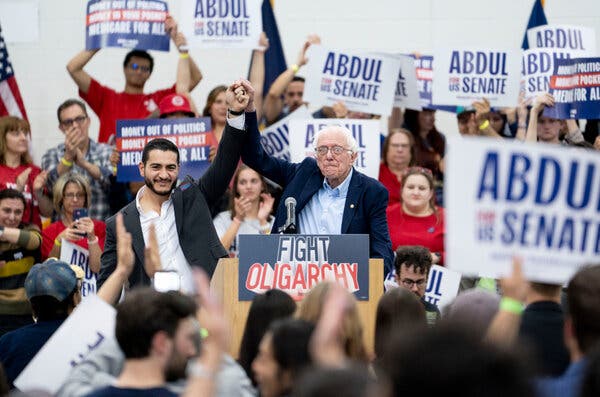
In the competitive battle for control of the House, Democrats aim to flip key seats in November. They are relying on appeals for universal health care and taxing the wealthy to resonate, even among Republican voters.
Senator Bernie Sanders from Vermont emphasized that candidates advocating for the working class represent a winning strategy nationwide. Sanders recently campaigned alongside Abdul El-Sayed, a Senate hopeful from Michigan.
In California, Randy Villegas’s congressional campaign embodies a populist platform, including support for Medicare for all. Though backed by progressives like Sanders and Representative Alexandria Ocasio-Cortez, Villegas is taking on Republican Representative David Valadao in the traditionally conservative Central Valley.
Republicans have targeted Villegas, labeling him a socialist and backing him in the primary to potentially make Valadao’s path easier with a perceived weaker opponent. Despite the criticism, Villegas remains steadfast. He believes that his message, which opposes corporate funding and advocates for universal health care, cuts across party lines. He argues that health concerns such as valley fever, diabetes, or cancer are universal, regardless of prior voting history.
As Democrats strive for congressional control, influential figures like Sanders and Ocasio-Cortez increasingly involve themselves in primary campaigns to promote progressive candidates where centrist Democrats have traditionally won.
 Trump Unveils AI-Powered America.gov Platform
  Upcoming Congressional Elections: Key Districts to Watch
  President Trump’s Pre-Midterm Interview on Key Issues
  Trump’s 2024 Reelection and Evolving Voter Dynamics
  Defense Secretary Emerges as Key Player in the Trump Administration
  Hegseth’s Vision for the Military: Balancing Tradition and Innovation