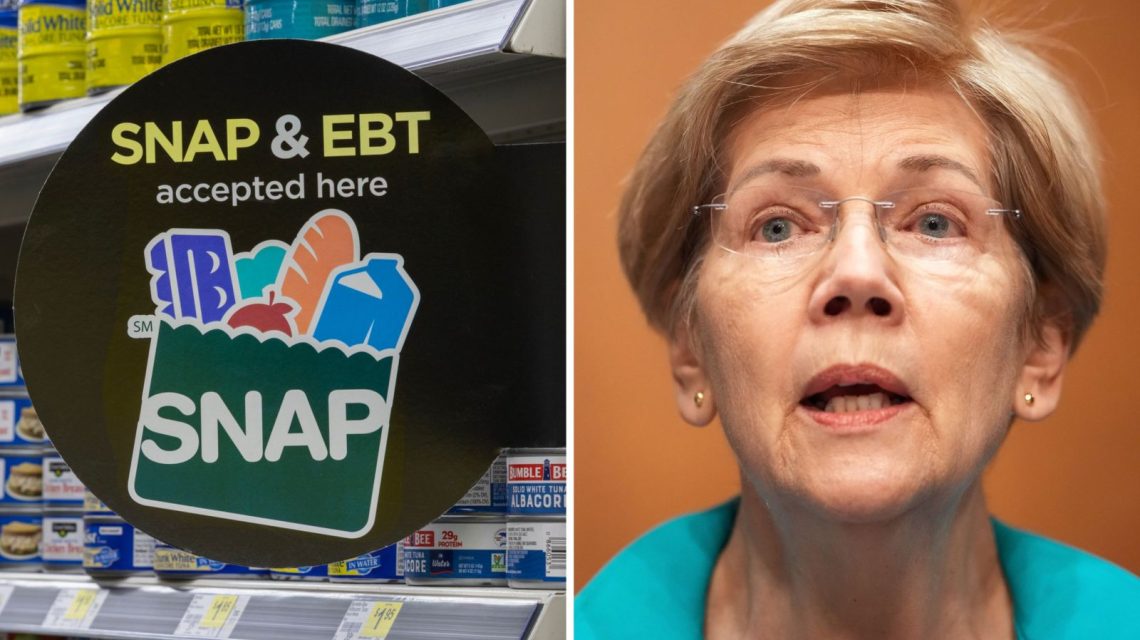
Senator Elizabeth Warren has expressed concerns about the potential challenges states will face due to upcoming changes in the federal funding of the Supplemental Nutrition Assistance Program (SNAP). She highlighted the issue in a recent message, emphasizing that states should not be pressured into choosing between essential services and SNAP funding.
Federal Contributions Reduced
The changes involve a significant reduction in the federal government’s funding for SNAP administration costs. This reduction will see the federal contribution fall from covering 50 percent of administrative costs to just 25 percent. Warren stated that these cuts could force states to make difficult choices between funding for SNAP and other essential programs like education.
Impact of the One Big Beautiful Bill Act
The changes are part of broader reforms included in President Donald Trump’s One Big Beautiful Bill Act (OBBBA), enacted on July 4, 2025. As part of this law, states may need to partially fund the SNAP food benefits themselves starting next year, a move that could shift billions of dollars of expenses onto state budgets from the federal government.
According to projections from the nonpartisan Congressional Budget Office (CBO), the law’s provisions, including expanded work requirements and changes in benefit calculations, could trim federal SNAP spending by approximately $211 billion by 2035.
New SNAP Cost-Sharing Rules
Prior to the OBBBA, the federal government fully covered food benefits under SNAP, while the administrative costs were split equally between federal and state governments. Starting October 1, 2026, states will be responsible for 75 percent of administrative expenses, resulting in a projected $16.9 billion shift in costs from FY2027 to FY2031, averaging $3.4 billion annually.
Furthermore, from October 1, 2027, states will need to contribute toward SNAP benefits if their payment error rate exceeds specific thresholds. This error rate refers to the percentage of benefit payments improperly made.
Potential Financial Impact on States
The Center on Budget and Policy Priorities (CBPP) conducted an analysis using USDA’s 2025 error rates and recent spending data. The analysis found that 35 states and one U.S. territory could face significant benefit costs, collectively amounting to approximately $9 billion for FY2028. Many states could face financial obligations exceeding $100 million.
States with high error rates will see delayed responsibilities initially. For example, Alaska, Delaware, Georgia, Illinois, New Mexico, and Oregon currently qualify for postponements based on their error rates.
Republican Perspective on Accountability
The Trump administration and congressional Republicans advocate these changes, suggesting they will encourage states to reduce inefficiencies. The USDA reported a national SNAP payment error rate of 10.62 percent for FY2025, which equates to around $10.1 billion in misallocated payments. Secretary Brooke Rollins has emphasized a need for improved state accountability.
Senate Agriculture Committee Chairman John Boozman has voiced support for these reforms, aiming to ensure greater financial responsibility among states. House Agriculture Committee Chairman Glenn Thompson echoed these sentiments, stating states would exercise more diligence if they shared financial stakes.
State Concerns Over Budget Pressure
Governors and state officials have raised concerns about the new financial burdens. The National Governors Association and other organizations have expressed fears over the potential impact on the SNAP program’s sustainability. They urge Congress to postpone the implementation of these requirements to allow states to adjust their financial strategies and address payment accuracy.
In New York, Governor Kathy Hochul’s administration anticipates potentially facing $1.4 billion in new SNAP costs annually. California’s State Auditor has estimated over $2.5 billion in additional yearly costs due to the law, highlighting the potential strain on the state’s budget.
The CBO expects states to respond variably, with some absorbing the added costs, altering eligibility, or opting out of the program altogether. This highlights the differing strategies each state might employ in response to these challenges.
 The Trump Team’s Challenge to the Military Leadership
  Maryland First State to Restrict Electronic Pricing in Grocery Stores
  Activists Push for Nationwide Ban on Child Marriage in the U.S.
  Democratic Hopes and Historical Warnings in 2026 Senate Race
  Republicans Face Challenges Amidst Cost of Living Concerns
  A Different Kind of Fall for Congress This Year