
On Wednesday, a SpaceX rocket collided with the moon after being off course for a year. Scientists had predicted the event. Although the collision, occurring at a speed of 5,400 mph, was not observed, astronomers identified the debris plume through a telescope in Chile.
This rocket segment hitting the moon is part of a growing problem known as lunar litter. The issue emerges as the U.S. and China intensify efforts to send astronauts to the moon.
In recent history, similar incidents have occurred. In 2022, a Chinese rocket accidentally hit the moon following a mission. Accumulated stray rocket debris likely collided with the moon over past decades without detection.
SpaceX official Julianna Scheiman stated that the recent impact was unintended. Solar activity and gravitational forces accidentally led the rocket to the moon. The company collaborates with NASA to prevent future incidents.
Boston University’s Carl Schmidt confirmed his team’s readings indicated signs of the crash. He cited evidence observed by the European Southern Observatory’s Very Large Telescope. A stream of sodium and lithium extended miles into space for a brief period post-impact.
Retired astrophysicist Jonathan McDowell mentioned confirming the collision trajectory before the event. He highlighted that the expected crash site was near Einstein Crater. Observing this area on the moon’s sunlit western limb is challenging from Earth.
Stargazers, like Dutch scientist Marco Langbroek, attempted to witness the event. However, they were unsuccessful in spotting it. Visual confirmation may arrive when NASA’s Lunar Reconnaissance Orbiter photographs the impact site in the coming week.
The Falcon rocket’s upper stage created this situation. It launched two private lunar landers on January 15, 2025. After deployment, the rocket went adrift. Subsequently, ispace’s Resilience wrecked, while Firefly Aerospace’s Blue Ghost successfully landed.
The moon is increasingly becoming the focal point for space exploration. NASA plans to build a sustainable lunar base with multiple robotic craft missions in the upcoming years. Private companies SpaceX and Blue Origin are constructing lunar landers for NASA’s Artemis program.
As space activities accelerate near the moon, impacts causing extensive dust clouds may become unacceptable. McDowell anticipates heightened activity around the moon, stressing the importance of minimizing such incidents.
 The Threat of Melting Glaciers: A Call to Action
  Climate-Resistant Rock Glaciers: Hidden Water Resources
  California Voters to Decide on $7.5 Billion State Research Fund
 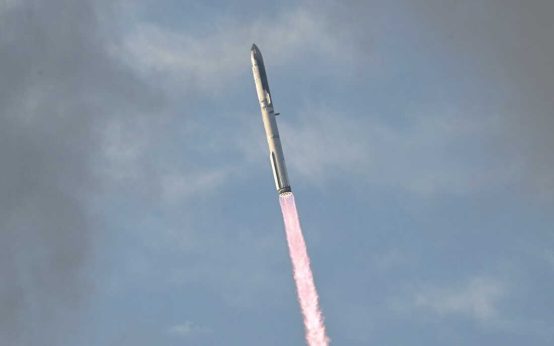 SpaceX Successfully Launches Starship Flight 14 into Orbit
  Ancient Pottery Unearthed During Roadworks in Tbilisi
  U.S. Space Academy Announcement