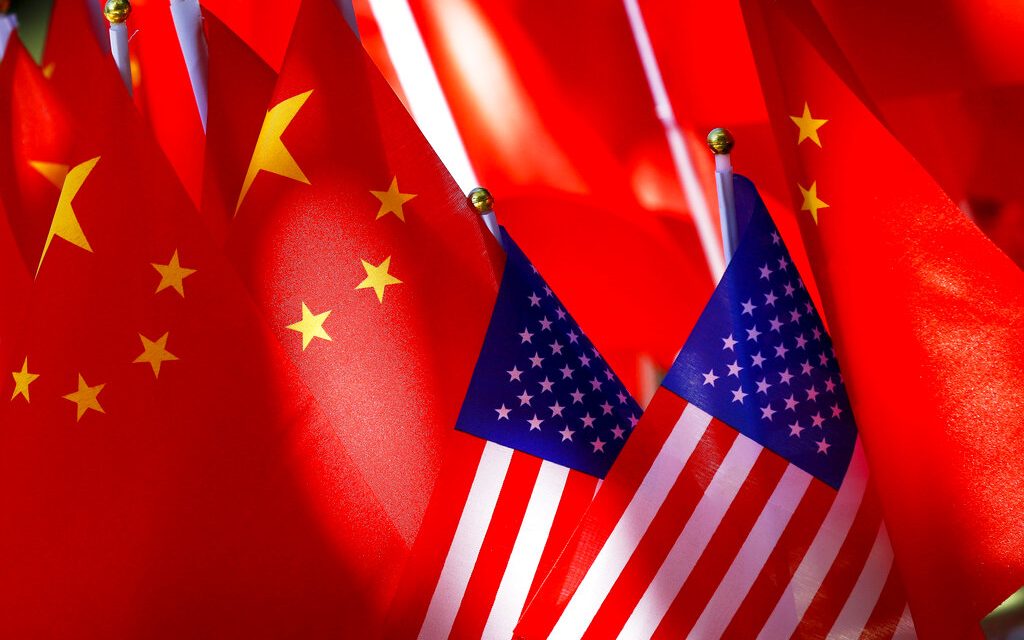
The National Defense Authorization Act has emerged as a vital tool for Congress in countering China’s military and technological advancements. This year, it aims to address a domestic issue: the inadequate disclosure of foreign funds entering American universities and the associated risks.
U.S. higher education plays a key role in national security. These institutions not only educate crucial scientists and engineers but also conduct federally funded research and create discoveries that hold future battlefield potential. Such significance makes universities attractive targets for foreign governments wanting influence and access to sensitive research. China is the primary concern, as it uses higher education for strategic benefits.
Recent congressional inquiries have highlighted these risks. The House Select Committee on Countering the Chinese Communist Party, along with the House Education and Workforce Committee, revealed that U.S. taxpayer-funded research has propelled China’s military and technological growth through partnerships and joint research. The committees emphasized collaborations in sensitive sectors like artificial intelligence, quantum technology, hypersonics, and nuclear physics. They also stressed concerns about U.S.-China joint institutes linked to Chinese institutions with defense ties.
Transparency in foreign funding extends beyond research security. Gifts, contracts, and partnerships can lead to dependencies and obscure conflicts, giving foreign governments leverage within universities. Although individual relationships might seem manageable, collectively they can unveil access and influence patterns crucial for policymakers.
The current disclosure system under Section 117 of the Higher Education Act requires reporting of foreign gifts and contracts valued at $250,000 or more from a single foreign source annually. While this threshold seems high, distinct cases suggest otherwise. Since the Education Department’s tighter enforcement began in 2019, universities disclosed approximately $6.5 billion in previously hidden foreign funds. Senate investigations found many institutions with Confucius Institutes did not report Chinese government funding worth millions.
Recent disclosures by the Education Department reflect ongoing issues. Federal data indicate about $405 million in university transactions tied to foreign entities listed on U.S. government watchlists, including the Commerce Department’s Entity List and the Defense Department’s 1260H list, involving firms like Huawei.
Given these revelations, Congress is considering stricter disclosure requirements in the defense bill. Proposed measures include lowering the reporting threshold to $50,000 and demanding full disclosure for specific countries, such as China, Russia, Iran, and North Korea. They also propose stronger enforcement and improved public access to foreign funding data.
The intent is clear: provide Congress, federal agencies, universities, students, and the public with a clearer understanding of foreign money in American higher education. Better disclosure aids implementation by allowing agencies to compare funding data against risk indicators like export-control restrictions and entity lists.
It is important to note what these requirements do not entail. They do not prohibit foreign students from attending U.S. colleges, nor do they limit lawful study or restrict legitimate academic exchanges. The focus remains on disclosing foreign gifts, contracts, partnerships, and their terms.
Transparency helps maintain America’s openness to global talent by differentiating genuine academic exchanges from risky relationships. As Congress evaluates measures concerning China in this year’s defense bill, foreign funding transparency should be included. The aim is not to isolate U.S. campuses but to ensure awareness of who seeks access.
Craig Singleton serves as a senior fellow at the Foundation for Defense of Democracies, having formerly been a U.S. diplomat.
 Byron Donalds Targets Black Voters in Florida Governor Race
  Brazil’s Presidential Race Heads to Runoff
  Sen. Thom Tillis Criticizes Trump’s Administration in New Book
  Controversy Surrounds Steve Hilton’s Campaign Ad Amid Gubernatorial Race
  Trump Calls for Probe into Alleged ‘Paid Protesters’
  Donald Trump Criticizes Fox News for Rally Coverage