
The Supreme Court ruled against a former Louisiana inmate seeking to sue prison officials for cutting off his dreadlocks, which violated his Rastafari religious beliefs. Even though the justices expressed disapproval of the incident involving Damon Landor, they decided that federal law does not permit lawsuits for monetary damages against individuals in such cases. The decision, made in a 6-3 vote, aligns with lower court rulings stating that the Religious Land Use and Institutionalized Persons Act doesn’t make individuals financially liable when inmates’ rights are breached.
The court chose not to apply the rationale used in a 2020 decision that allowed Muslim men to sue under the Religious Freedom Restoration Act after their inclusion on the FBI’s no-fly list. Earlier, the Justice Department, which initially opposed the plaintiffs, supported Landor’s stance. Justice Neil Gorsuch clarified that the law focused on prisoners’ religious rights, prohibiting lawsuits against individual officers.
Justice Ketanji Brown Jackson, dissenting, emphasized that there is little incentive for state prison officials to follow federal law without the threat of financial liability. Her opinion, shared by two other liberal justices, pointed out how Landor’s experience underscores the need for legislative protection of religious rights.
During his five-month prison term in 2020, Landor experienced a violation of his religious rights at the Raymond Laborde Correctional Center. Despite initially carrying a court ruling that supported his religious grooming preferences, his rights were disregarded. Guards at the facility tossed away this ruling and forcibly cut his dreadlocks. Although Landor pursued legal action post-release, the 5th U.S. Circuit Court of Appeals upheld lower court decisions, asserting that the current legal framework doesn’t support holding officials accountable for damages.
In response to the incident, Louisiana stated it has revised its prison grooming policies to prevent future occurrences similar to the one faced by Landor. The Rastafari faith, growing from 1930s Jamaica, blends Old Testament teachings with aspirations for returning to Africa, notably propagated worldwide in the 1970s by Bob Marley and Peter Tosh.
 Judge Declares Police Use of Flock Cameras Unconstitutional
  Police Release Arrest Video of Luigi Mangione in Pennsylvania
 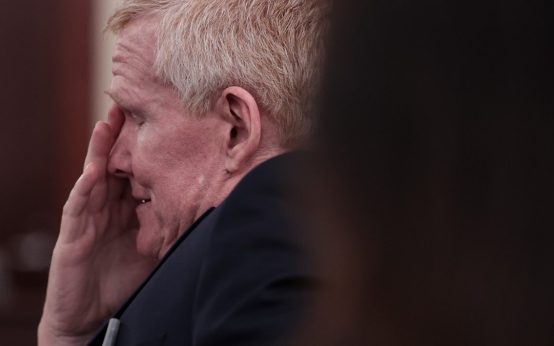 Murdaugh Attorneys Accuse Prosecutors of Withholding Key Evidence in Retrial
  Immigration Judge Allows Deportation of Wisconsin Mosque Leader Salah Sarsour
  Lindsay Clancy Faces Potential Retrial After Mistrial
  Tennessee Prepares for Rare Execution of Woman on Death Row