
Recent developments in the Gulf region have intensified as the Kuwaiti military reported that its air defenses engaged “hostile” maneuvers from Iran. This confrontation adds to the growing tensions following a brief pause in hostilities.
Tehran has voiced accusations against the United States, alleging that U.S. forces bombed a wedding, an act which Iran insists requires a thorough investigation. Meanwhile, the United States maintains that it conducted renewed strikes on Sunday, targeting Iranian positions. These launchers, according to U.S. officials, were primed to release rockets into the strategic Strait of Hormuz.
This escalation follows Iran’s missile and drone assault on Kuwait early Thursday. The attack marks another entry in a complex series of airstrikes involving Iran and U.S.-aligned forces. The military actions signify a resurgence of combat activities in the area, disrupting a period of relative calm that persisted for about a month.
Diplomatic channels are expected to be under pressure as both nations navigate the consequences of these aggressive exchanges. Traditionally, the Strait of Hormuz remains a critical maritime corridor for global oil transport, making stability in this region crucial to international economic interests.
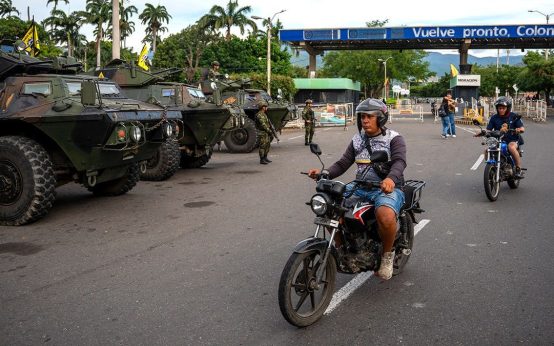 U.S. Warns Against Travel to Colombia’s Norte de Santander Due to Security Threats
  Reflections on 30 Years at Fox News
  Mayor Mamdani Responds to Netanyahu’s United Nations Speech
  British Prosecutors Charge Man with Terrorism Over Politician’s Murder
  Backlash Against Trump’s White House Photos
  State Department Accuses Senate Democrats of ‘Grandstanding’ Over Venezuela Oil Deal