Historic numbers of animals worldwide face endangerment or extinction. According to the United Nations, the extinction rate is accelerating. However, some species remain in a state of limbo, not quite extinct but absent from scientific records. The International Union for the Conservation of Nature considers species “lost” when no trace has been found for a decade.
Thomas Evans, a conservation scientist at Free University in Berlin, notes that human impacts like climate change, pollution, and habitat destruction often threaten species, leading to shrinking populations and potential extinction. If a lost species still exists, it needs protection to prevent extinction. Yet, without evidence of their presence, securing funds for conservation is challenging.
A study in Global Change Biology highlights a disparity in the search and protection efforts for species. “Charismatic” animals, often large, cute, or furry, are more likely to be rediscovered and protected. Meanwhile, less appealing species may go unnoticed. Rodents, for example, make up a significant portion of lost mammals but are not as actively sought after due to their less charming nature.
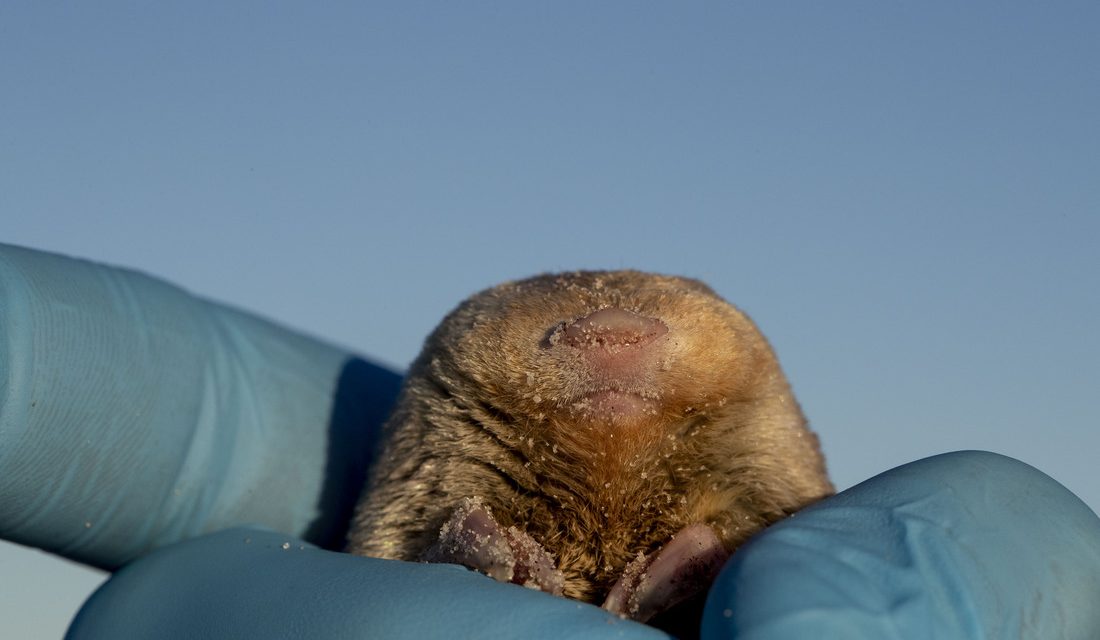
Rediscovering a lost species is difficult. It requires trips to remote areas and searching vast regions for few animals. Scientists use new technologies to find evidence of elusive species. In South Africa, Samantha Mynhardt of the Endangered Wildlife Trust has been researching golden moles, eventually rediscovering De Winton’s golden mole with collaborators.
A mix of scent detection dogs and environmental DNA (eDNA) were used in the search. The dogs identified areas where moles might be, and soil samples were collected to test for traces of DNA.
In a recent expedition, a group of local scientists finally found De Winton’s golden mole. They confirmed the species’ identity through eDNA analysis in the lab.
Halfway around the world, Tyrone Lavery from the University of Melbourne spent 14 years searching for the Vangunu giant rat. Known locally as “vika,” this rare animal was confirmed by Lavery’s efforts. An incident where a logging company disrupted its habitat led to Lavery’s collaborator catching a vika, proving its presence. Lavery used camera traps to get photographic evidence.
Despite publicizing his findings, official protections for the giant rat have not yet materialized. Logging in its habitat continued until, unofficially, some effort to stop it emerged.
While the De Winton’s golden mole and Vangunu giant rat may receive crucial protections, many “uncharismatic” species may not be as fortunate. Mynhardt laments that while people are drawn to appealing animals like primates and big cats, many don’t even know of golden moles. She stresses that all species hold value and deserve security.
Have other scientific gray areas you’d like us to explore? Email [email protected]! Listen to Short Wave on Spotify, Apple Podcasts, and Google Podcasts. Support NPR’s Short Wave at plus.npr.org/shortwave for a sponsor-free experience.
The episode was produced by Margaret Cirino and Rebecca Ramirez and edited by Rebecca. Anil Oza checked the facts. The audio engineer was Robert Rodriguez.
 Atlantic Ends September Without a Hurricane for First Time Since 1994
  Bobcat Sightings and Conservation Efforts in Illinois
  2026 El Niño: A Historical Comparison and Future Projections
  U.S. Records Warmest September in History
  Swiss Glaciers Show Effects of Ice Loss Amid Global Warming
  Climate-Resistant Rock Glaciers: Hidden Water Resources