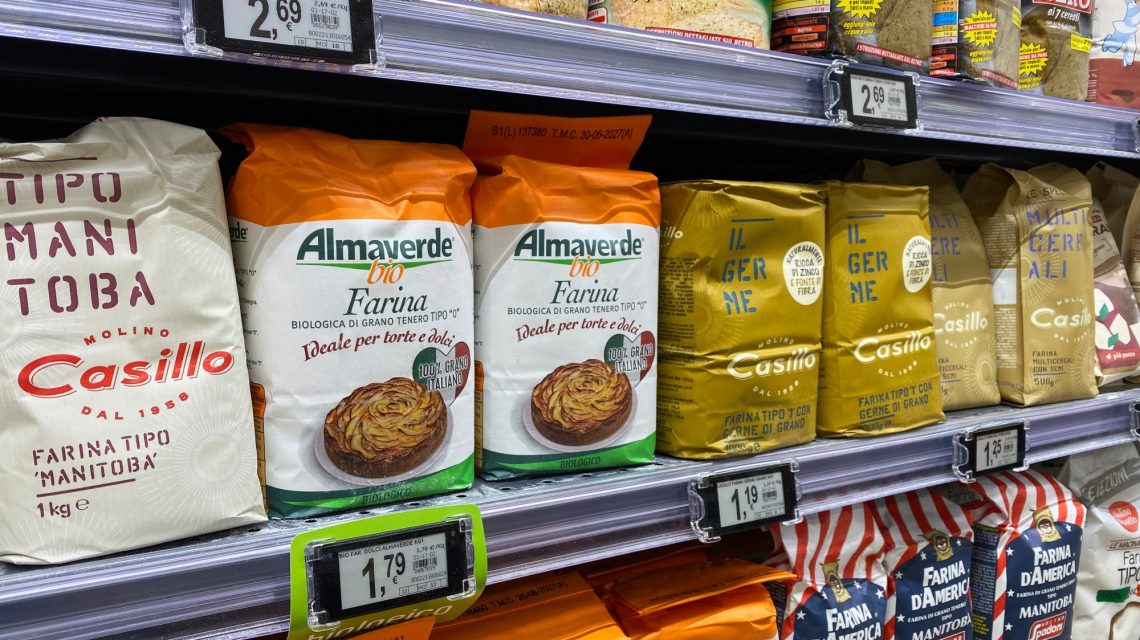
A display of flour brands, including Casillo, Almaverde Bio, and Molino Spadoni, can be seen on a supermarket shelf in Bari, Italy, dated August 7, 2026. These flour varieties, such as Manitoba-type flour, organic wheat flour, and more, feature digital price tags. These tags, positioned on the shelf edge, mark a shift in how prices are set and adjusted in stores.
Half a century ago, bar code scanners faced consumer opposition due to fears of price gouging and potential harm from lasers. Today, electronic shelf labels have replaced printed tags in many global retailers. Approximately 80% of European supermarkets use them, but the U.S. lags due to political concerns over potential price increases and job losses.
The AFL-CIO’s recent report highlighted worries about increased grocery prices and job impacts due to electronic label expansion. However, innovations like shopping carts, bar code scanners, and self-checkouts have historically reshaped the grocery industry, enhancing efficiency without eradicating jobs. In California, the largest food retailing sector thrives, with grocery employment growing 38% since 1992, surpassing the state’s 28% population growth during the same period.
Electronic shelf labels are unlikely to cut jobs, despite projected employment growth. Labor remains a challenge due to high turnover rates and retention issues. Surveys indicate recruitment and retention as pressing concerns for supermarket operators. By automating price updates, employees can focus more on customer service and store maintenance, potentially increasing productivity.
Concerns about price increases with electronic labels are increasingly unfounded. These labels can lead to lower, more efficient pricing. Research indicates that food prices resist changes even when cost factors suggest adjustments. Such ‘sticky prices’ arise partly due to the substantial cost of updating prices across thousands of products. Electronic labels simplify this process, helping supermarkets adjust prices as cost pressures shift.
Surveillance pricing and predatory tactics, distinct concerns from electronic label use, require regulatory oversight. Electronic labels have been used throughout Europe without leading to increased prices. Regulations, like those preventing facial scans and other identifying practices, address these issues. Most U.S. states have strict price gouging laws, applicable to both physical and digital prices.
U.S. supermarkets, operating on thin margins, benefit from technologies like electronic shelf labels, which can stabilize and mitigate food price inflation. This evolution mirrors the bar code scanner’s acceptance, suggesting a future where paper tags become obsolete due to their inefficiency and waste.
Richard Volpe, an agribusiness professor at California Polytechnic State University, highlights these points. The transformation continues, echoing past innovations that have shaped effective and efficient grocery store operations.
 Debate Intensifies Over AI Safety and Regulation
  The Historical Fear of Technological Advances and AI
  How Generative AI Affects Critical Thinking Among Professionals
  Virginia Congressional Districts Show Increasing Competitiveness
  Challenges and Dilemmas in the Age of Deepfakes
  National Security Push Faces Local Resistance in Data Center Expansion