Kim Stanley Robinson’s novel “The Ministry for the Future” opens with a catastrophic scenario. A heat wave, combined with an electrical grid failure in India, claims 20 million lives. Such fictional catastrophes seem increasingly plausible as nations grapple with climate change.
Scientists have warned for years about the rising intensity of extreme weather, including heat waves, storms, floods, and droughts. Once the stuff of fiction, these events are now discussed as inevitable.
Daniel Swain, a climate scientist at the California Institute for Water Resources, cautions about an “extreme of extremes,” likening the uncertainty to predicting earthquakes. Nobody can foresee the exact timing of weather calamities, yet the planetary conditions required for such disturbances are converging rapidly.
“The risk is that people just think you are exaggerating,” Swain explains. “It’s the ‘Boy Who Cried Wolf’ problem. Sometimes wolves are real. If it’s outside the door, wouldn’t you want to know?”
The Historical Warning of Extreme Weather
The link between greenhouse gases and rising temperatures dates back over 150 years. In the 1850s, Eunice Newton Foote’s experiments in Seneca Falls demonstrated how carbon dioxide heated up faster than other gases—a foundational discovery in climatology. Today, Earth’s temperature has increased by 1.44 degrees Celsius (2.59 degrees Fahrenheit) since the early 1800s, leading to more frequent and severe weather events.
The United States remains the largest contributor to greenhouse gas emissions. Yet, recognition of this responsibility, especially by those in power, remains elusive. Former President Donald Trump dismissed climate change as a “con job,” casting doubt on climate policies and predictions.
Current Global Weather Extremes
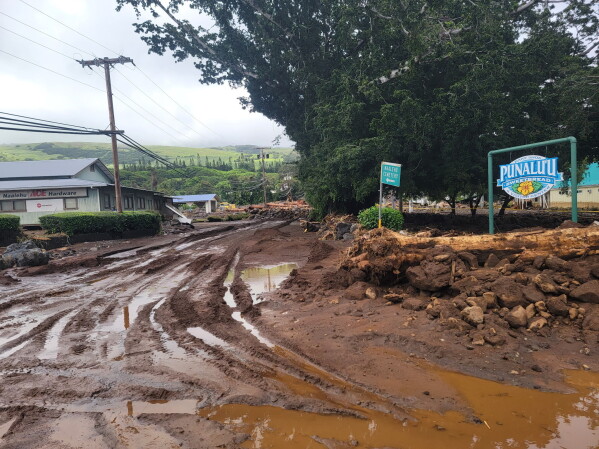
Recent years have shown that we live in an age of extremes. Wildfires ravaged Australia in the “Black Summer” of 2019-2020, scorching millions of acres. Pakistan experienced monumental flooding in 2022, submerging a third of the nation. Hurricanes Milton and Helene struck the southern United States in 2024, with numerous other smaller disasters unfolding worldwide.
Despite aspirations of reaching net-zero emissions, Sarah Perkins-Kirkpatrick from Australian National University underscores that extreme weather events will persist due to the enduring presence of carbon dioxide in the atmosphere. “It’s the issue of the frog in the boiling water,” she notes, warning about complacency.
Unpreparedness for Future Disasters
No country is adequately equipped for a colossal climatic disaster. As Robinson’s work highlights, wildfires have grown more devastating over time. Even as India reduces its reliance on the grid and adopts solar power, the threat of catastrophe looms larger.
Psychological avoidance hampers progress, with individuals and governments often ignoring the grim realities of climate change. Part of the difficulty lies in the precision required when discussing potential impacts, as climate models improve yet remain imperfect.
Climate Denial and Its Consequences
Sonia Seneviratne, a Swiss climatologist, equates climate risks with smoking and lung cancer, advocating for transparency about heightened risks. “If such an event happened, I could already see the criticism,” she says. “But we did [warn].”
Lessons from earthquake safety preparations in California demonstrate potential pathways forward when societal belief in risks and solutions is strong.
The Simplistic Resolutions of Climate in Film
Films often address climate change in extremes. “The Day After Tomorrow” showcases disaster-driven repentance while “Don’t Look Up” portrays an ignored threat with catastrophic results. These narratives, while engaging, rarely align with scientific predictions.
The Ultimate Question: When?
As greenhouse gases intensify, severe weather events are bound to worsen. While exact timelines are elusive, climate change denial remains a pervasive issue. Critics may point out past inaccuracies in climate models, yet historical data confirms accelerating impacts.
Tipping points—where ecosystems cannot recover—are becoming a stark reality. Coral reefs, threatened by heat stress, showcase irreversible damage. The Amazon rainforest, vital for carbon storage, faces its own precarious future.
Tim Lenton, a climate scientist at the University of Exeter, emphasizes the need to discuss potential catastrophic risks. “It’s natural to think that some bigger shocks are on the way.”
Overall, the Earth faces a perilous trajectory. The urgency to address climate change has never been more critical.
For those in the field of climate science, discussing potential risks and worst-case scenarios can foster preparedness and action, denying the possibility only diminishes readiness for what lies ahead.
 Swiss Glaciers Show Effects of Ice Loss Amid Global Warming
  Climate-Resistant Rock Glaciers: Hidden Water Resources
  Senators Reach Bipartisan Agreement on Permitting Reform
  Experts Warn of Critical Period for the Colorado River
  Future Cities: Ambitious Projects Aiming for Innovation and Sustainability
  Supreme Court Case Suncor vs. Boulder: Implications for Accountability in Climate Change