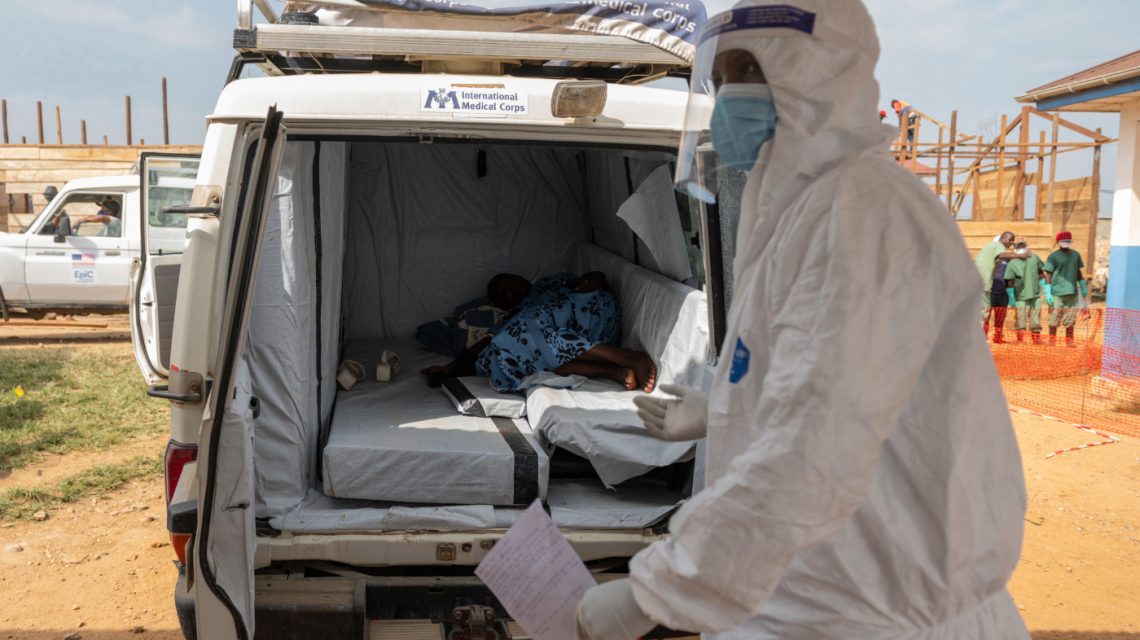
A paramedic stands by a suspected Ebola patient in an ambulance at a treatment center in Bunia, Congo, on June 15, 2026. Ebola, one of the most deadly infectious diseases globally, is rapidly spreading through the Democratic Republic of the Congo and Uganda, now also threatening South Sudan. As nations rush to control the outbreak, the diminished role of the U.S. in responding to these global health crises has become evident.
The last Ebola epidemic, which struck nearly a decade ago, resulted in over 11,000 deaths in Africa. At that time, the U.S. was pivotal in fighting the disease. Recent actions, however, indicate a shift in priorities. The Trump administration’s decision to remove experienced personnel and vital resources from U.S. public health agencies has weakened America’s ability to manage these crises effectively.
Further complicating the situation, the U.S. withdrawal from the World Health Organization has limited the nation’s capability to gather and exchange data with global partners. Previously essential for U.S. health policy, these practices no longer fortified global safety as they once did. Once a leader in battling infectious diseases, the U.S. now struggles to keep pace with an Ebola outbreak potentially as devastating as the one in 2014.
The American response to the Ebola crisis has been fraught with confusion and uncertainty. Questions remain about the current leadership at the State Department, overseeing the U.S. response, and how the promised millions in aid will be utilized. Uncertainty looms over which office now manages the logistics as the U.S. Agency for International Development no longer operates.
Even with seasoned officials, confusion would persist. However, the U.S. has seen multiple acting heads at the Centers for Disease Control and Prevention due to changes under President Trump. This has led to uncertainty about who provides reliable, science-based information regarding the public health threat.
Viruses ignore national borders. They become more dangerous when the U.S. reduces health agency budgets, sidelines experts, halts real-time data sharing, and dismantles critical global partnerships. Containing the outbreak will be challenging, especially if the disease reaches overcrowded refugee camps in Sudan.
Confusion also arises from the Trump administration’s inconsistent stances on disease prevention. Those who once opposed public health measures during COVID-19 now advocate for strong quarantine measures to control the Ebola and hantavirus outbreaks. Isolation and containment, once criticized, are now supported by U.S. officials as effective disease prevention strategies.
Secretary of State Marco Rubio’s statement that Ebola policies protect Americans contrasts with barring citizens exposed to the virus abroad from returning home. The U.S. possesses advanced facilities and skilled medical personnel to treat Ebola at home, yet Americans affected must receive care in Kenya instead.
Previously, the U.S. invested significantly in disease preparedness, collaborating with allies, supporting international organizations, and respecting expert advice. The unified goal was preventing and managing disease, locally and globally. That commitment has faded. Unless Congress addresses the administration’s actions undermining public health response capabilities, the safety of Americans remains at risk.
Lyndon Haviland, DrPH, MPH, is a scholar at the CUNY School of Public Health and Health Policy.
 Understanding Inflammation: Myths and Facts
  Patrick McEnroe Advocates for Collegiate Athletic Reform
  Push for Reparations Faces Challenges and Calls for Strict Eligibility
  Texas Man Arrested for Threatening State Capitol Attack
  The Key Debate Between Xavier Becerra and Steve Hilton: What You Need to Know
  Physicians Urge Senate to Reject FDA Nominee