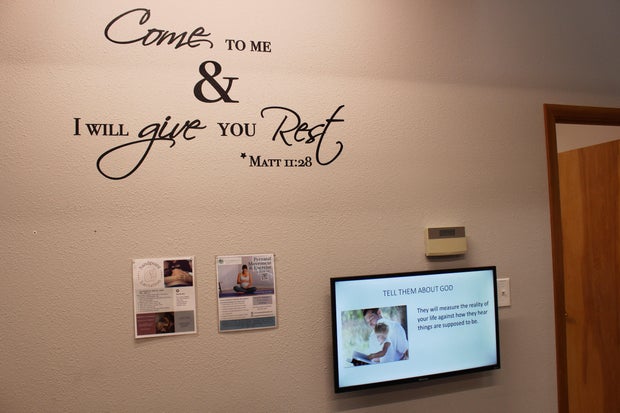
On the outskirts of Sandpoint, Idaho, an anti-abortion pregnancy center, 7B Care Clinic, welcomes visitors with a Bible verse on its wall. This center, operating since 2001, is part of Care Net, a national network of Christian evangelical centers. 7B provides free services like pregnancy tests, ultrasounds, parenting classes, and children’s clothing, supported by donations from individuals, businesses, and churches. Such centers, known as crisis pregnancy centers, aim to dissuade women from having abortions, offering limited medical services.
7B’s traffic has increased after the local hospital closed its labor and delivery unit, causing a gap in reproductive health services. Since the U.S. Supreme Court’s Dobbs decision, Idaho lost a third of its OB-GYNs by December 2024. 7B plans to expand and collaborate with an OB-GYN in Washington to offer prenatal care weekly.
As hospitals in rural areas close, crisis pregnancy centers grow in influence, with supportive legislation strengthening their position. Critics argue these centers, lacking medical licenses and regulation, mislead patients. Jen Jackson Quintano, founder of the Pro-Voice Project, highlights this concern, stating services prioritize ministry over medical care. However, Executive Director Janine Shepard encourages tours to clear misconceptions, promoting options like abortion, adoption, and parenting.
Andrea Swartzendruber from the University of Georgia highlights crisis pregnancy centers’ role in exploiting healthcare gaps. Her research indicates over 2,600 centers in the U.S. engage in questionable practices, presenting as medical clinics to attract women seeking abortions.
The Trump administration supports these centers. A new website, launched on Mother’s Day, provides resources for mothers, including a map of pregnancy centers with their services.
Sandpoint, a conservative Idaho town with strict abortion laws, sees both benefits and drawbacks from 7B. Lori Sabin, a licensed midwife, values 7B’s free services, particularly for low-income women who struggle without insurance. Amelia Huntsberger, a former Sandpoint OB-GYN, acknowledges 7B’s support but worries about its medical facade.
Lisa Battisfore of Reproductive Transparency Now notes that while some services help, the centers spread misinformation. Protected under free speech and religious exercise, these centers face minimal regulation, raising concerns about misinformation on abortion and unethical practices.
Legal victories have fortified these centers against state regulation attempts, allowing blurred lines between activism and medical care. Criticism includes instances like a Texas case where a misdiagnosis at a crisis pregnancy center led to hospitalization for an ectopic pregnancy.
Local hospital Bonner General Health closed its labor unit, stirring resentment. The hospital now aims to regain community trust, offering prenatal care through visiting clinicians. Filling gynecologist positions remains a priority. Sandpoint resident Makayla Sundquist expresses concerns about relying on 7B for care, questioning information accuracy due to the center’s faith-based stance.
KFF Health News, a national newsroom, provides in-depth journalism focused on health issues, part of KFF’s core programs offering health policy research and journalism.
 Trump Administration Distributes ACA Refund Checks
  Higher Consumption of Ultra-Processed Foods Linked to Increased Health Risks
  Understanding Inflammation: Myths and Facts
  Calm Parenting: Strategies to Manage Stress
  Trump’s Executive Order to Combat Mosquitoes and Ticks in D.C.
  Overcoming Weight Loss Challenges: Brain Health and GLP-1 Medications