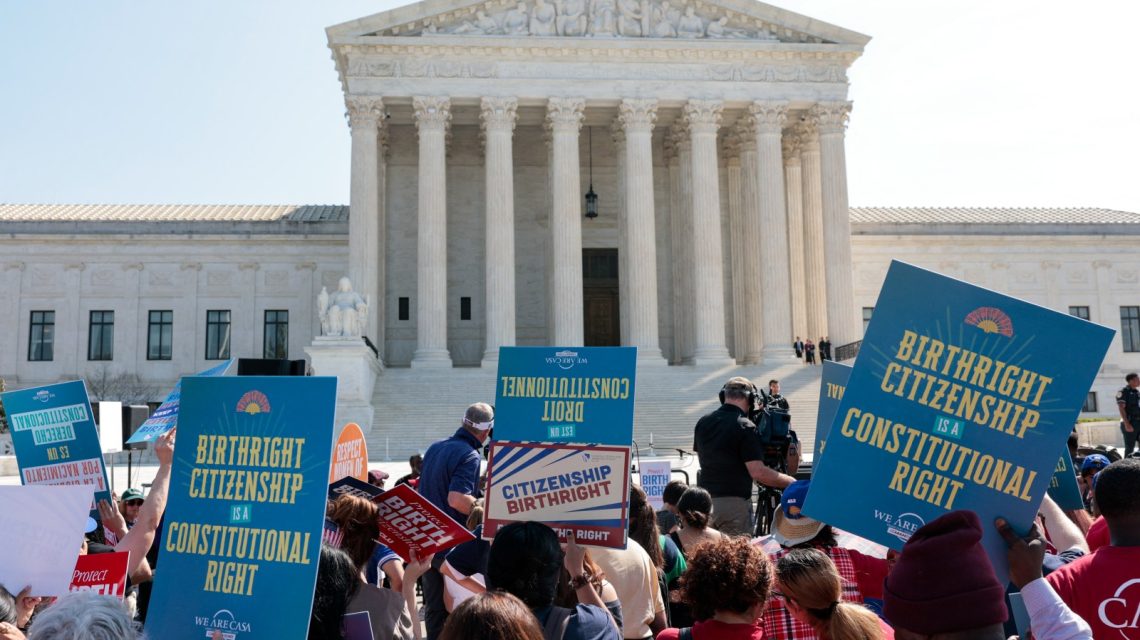
The recent 5-4 decision by the U.S. Supreme Court to uphold birthright citizenship has brought a sense of relief to many. It reflects the Court’s recognition of certain boundaries to the current judicial shift away from longstanding liberal principles in U.S. jurisprudence. This ruling stands in contrast to the series of reactionary decisions the Court issued this year. Striking down the constitutional guarantee of citizenship for those born in the U.S. would have been a profound shift, comparable to the reversal of Roe v. Wade.
Roe v. Wade was a landmark case that extended privacy rights to include abortion. In stark contrast, revoking birthright citizenship would have eliminated a well-established right. The notion of birth-based citizenship is deeply ingrained; a challenge to this right seemed excessive even to this Court’s majority.
The agenda of the Court majority appears clear. They focus on replacing new individual rights with traditional views. This agenda manifests in recent rulings. This year, the Court supported the Trump administration’s efforts to restrict asylum seeker entry and ended protections that allowed others to remain in the U.S. Additionally, the Court invalidated bans on conversion therapy and legalized business discrimination against gay individuals. It also enforced restrictions on transgender athletes.
These decisions accompany other actions that challenge the established liberal legacy. These include limiting abortion rights, undermining environmental regulations, and removing safeguards against oligarchy and tyranny. The Court recently eased money flow into politics and expanded the president’s authority to dismiss federal workers arbitrarily.
The decision to uphold birthright citizenship, written by Chief Justice John Roberts, surprised many. The Trump administration’s legal position sought to exclude children of illegal immigrants from citizenship. However, the Constitution clearly grants citizenship to all born in the U.S. with the exception of certain groups such as diplomats and invading forces. Trump’s argument contradicted this well-settled understanding.
This ruling suggests that the Supreme Court may not be entirely partisan. Yet, the overall direction of the Court remains clear with further conservative shifts likely. Upcoming midterm elections could test the boundary of judicial impartiality. The Court’s stance during uncertain election results will be critical.
The Trump administration’s efforts to undermine faith in U.S. elections lack substantiated evidence. However, these claims continue to circulate. The Supreme Court faces the responsibility to ensure election integrity with swift judicial oversight. The Court should address meritless cases promptly, focusing on determining the truth behind fraud allegations. By issuing clear and authoritative decisions, the Court could help prevent further threats to democratic stability.
Thomas G. Moukawsher, a former Connecticut judge and former leader in the American Bar Association, emphasizes the importance of transparency and decisive judicial action in maintaining public trust. He advocates for reducing complexity in court proceedings as articulated in his book, “The Common Flaw: Needless Complexity in the Courts and 50 Ways to Reduce It.” His perspectives underscore the critical role of the judiciary in upholding democratic principles.
 Sen. Cotton Opposes Permanent Daylight Saving Time
  Steve Hilton’s Latino Outreach and Gubernatorial Ambitions
  The Need for Reform in Presidential Nominations
  Controversy Surrounds Performances at Gillette Stadium
  Celebrity Controversies Over Political Activism and Speech
  Trump Pushes for Permanent Daylight Saving Time, Sharing Senator’s Contact Information