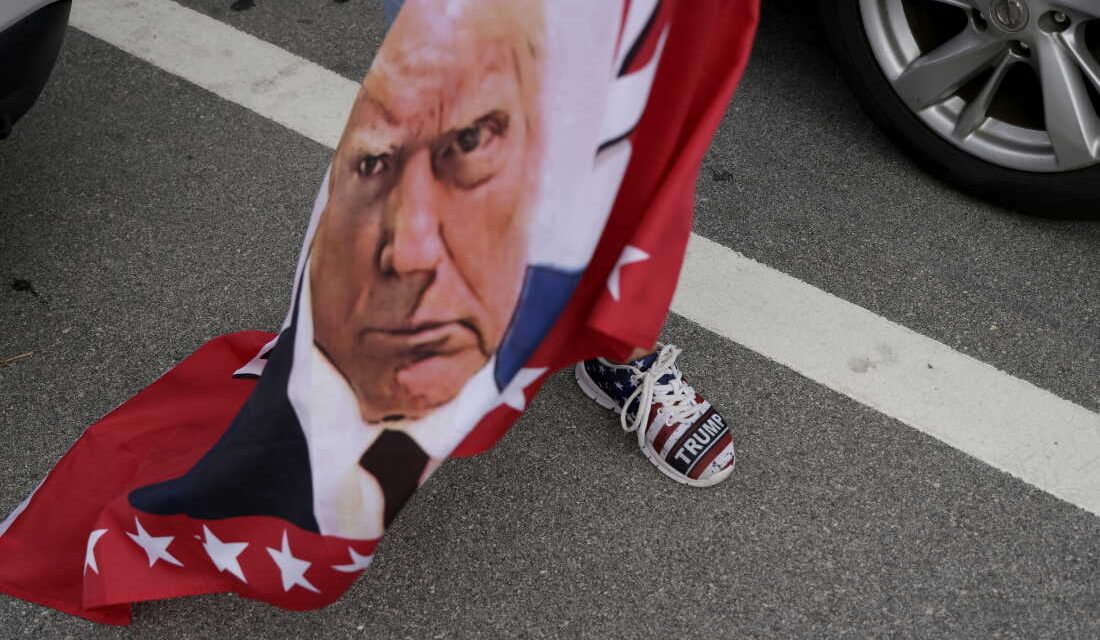
A flag featuring Donald Trump waves amid a group of supporters near Mar-a-Lago, Florida, in 2024. President Trump has consistently tested the boundaries of executive power since his return to the White House. In a bold move, administration lawyers argued on Friday before a federal appeals court in Washington that papers created in the White House belong to Donald Trump, not the American people.
This action is part of a series of efforts under Trump’s second term to challenge regulations established post-Watergate. This controversial issue might eventually head to the conservative-leaning Supreme Court. Six months prior, the Justice Department sought to nullify the Presidential Records Act, a federal law enacted in 1978. Conservative lawyer Michael Edney framed this as part of ongoing attempts to reduce the scope of statutes from that era. “This situation reflects a post-Watergate overreach into executive prerogatives,” Edney remarked during a webinar by the Federalist Society.
Historically, for about 200 years, presidents determined what to do with the documents they created in office, until disputes with Richard Nixon prompted congressional intervention. Every president since has complied with the records law, except now. “The Presidential Records Act is unconstitutional and violates the separation of powers,” stated White House spokeswoman Lauren Bis.
The White House’s new interpretation of the act emerged after Trump faced charges of obstruction of justice for allegedly storing classified documents at Mar-a-Lago. These documents were reportedly kept in a bathroom, ballroom, and office at the resort. A federal judge dismissed the case on technical grounds relating to the prosecutor’s appointment, and the Justice Department dropped the case after Trump won reelection.
Public Access to Presidential Papers
Nikhel Sus, chief counsel for Citizens for Responsibility and Ethics in Washington, a watchdog group, has filed a lawsuit against the Trump move. “If courts accept this, it risks denying people access to the president’s papers, which significantly impacts archivists, historians, and the American public,” Sus stated.
Senior U.S. District Judge John Bates, appointed by former President George W. Bush, ruled against the Trump White House, quoting George Orwell’s 1984: “Who controls the past controls the future; who controls the present controls the past.” Three D.C. Circuit Court of Appeals judges are deliberating on the matter.
The Need for Continuity in Government
Former officials argue for the importance of consulting presidential records. John Bellinger, a legal adviser to the National Security Council under George W. Bush, emphasized that access to records on national security is essential for maintaining government continuity. Bellinger and his peers often referred to President Bill Clinton’s papers to better understand his discussions with global leaders and Congress.
“Often, the only record of a president’s conversation with a foreign leader—or a foreign leader’s conversation with the U.S. president—is in a written document,” Bellinger noted.
Constitutional Concerns and Future Implications
Michael Edney, who also served in Bush’s National Security Council and Justice Department, expressed the possibility of Congress passing a “thoughtful” records preservation statute. He cited constitutional concerns with parts of the current act allowing automatic access to Congress and presuming public disclosure of records.
Edney questioned whether watchdog groups challenging Trump’s actions have legal standing but believes the Trump administration is aiming beyond these issues. “They seek Supreme Court resolution with arguments and timing of their choosing,” Edney said, noting the administration’s preference for the Solicitor General’s involvement in arguments, over subsequent administrative representations.
 Sherrod Brown’s Bid for Senate Reflects Economic and Cultural Focus
  Fundraising Challenges for White House Historical Association Amid Construction Plans
  Democratic Concerns Over AI and Economy for 2028
 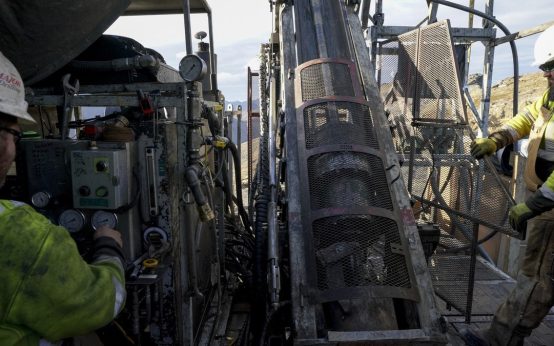 America’s Critical Mineral Dependence: A National Security Concern
 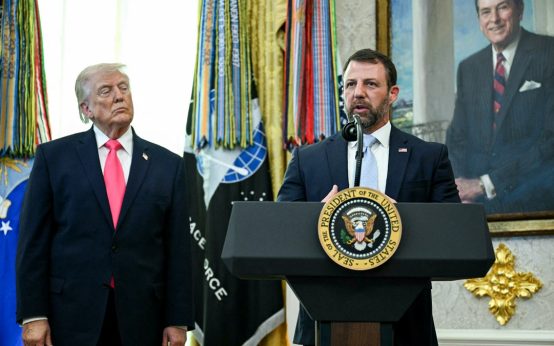 DOJ Takes Action Over Non-Citizen Voter Fraud and Voter Data Collection Controversy