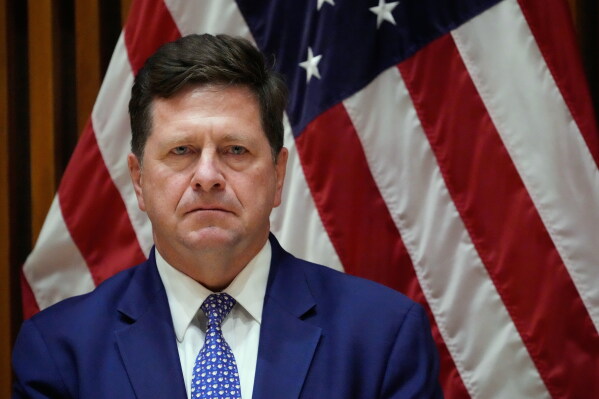
President Donald Trump disrupted the confirmation process of his nominee for the nation’s intelligence agencies on Wednesday, leading to complications in the Senate’s efforts to renew a significant surveillance program. From the Group of Seven summit in France, Trump announced via social media that he was delaying the nomination of federal prosecutor Jay Clayton as director of national intelligence. This decision came just before Clayton’s scheduled hearing despite bipartisan support for him and Republican attempts to expedite the process.
Senate Intelligence Committee Chairman Tom Cotton expressed his intent to proceed with Clayton’s hearing unless directed otherwise by the president. However, the hearing was postponed as Trump instructed Clayton not to appear. Cotton described the situation as “regrettable” but remained optimistic about moving forward with Clayton’s confirmation soon.
Trump’s delay likely means that Bill Pulte, a senior housing official lacking national security experience, will assume the role temporarily once Tulsi Gabbard steps down. Pulte’s selection has been criticized by both Republicans and Democrats, yet Trump defends him, describing Pulte as “fair” and “talented.” Trump questioned the urgency imposed by Democrats to have Clayton quickly installed, suggesting they fear Pulte’s appointment.
The situation impacts the renewal of Section 702 of the Foreign Intelligence Surveillance Act (FISA), crucial for monitoring foreign communications to prevent terrorism. Democrats have opposed passing the FISA bill unless Pulte’s temporary role is rescinded. The surveillance authority expired recently, adding urgency to the legislative discussions.
Further complicating the issue, Trump has declared in his social media post that he will not sign the FISA renewal without the inclusion of his citizenship verification requirement for voters, which lacks Senate support. He also expressed reluctance to shift Clayton from his U.S. Attorney role without a confirmed successor.
Trump’s maneuver has left Senate Republicans seeking clarity on the administration’s stance. Senate Majority Leader John Thune acknowledged uncertainty regarding Trump’s motives, suggesting they will reassess actions as information becomes available. Virginia Senator Mark Warner criticized Trump’s actions as demonstrating dysfunction, arguing that the White House’s strategies are turning national security into a political lever.
This is just one of many standoffs between Trump and Senate Republicans this year. Previous disputes included a delay in funding for immigration agencies over disagreements on financial allocations. Trump’s appointment of Pulte triggered additional issues with bipartisan efforts to renew FISA, with Republicans unsuccessfully urging a retraction of the interim appointment.
Senator Thom Tillis of North Carolina warned that Trump’s recent actions are counterproductive, noting that the nomination of Clayton, which seemed favorable, is now in jeopardy. He views Pulte as incompatible with the role due to his lack of national security experience.
Democrats argue that Trump is undermining national security by attempting to appoint loyalists to key positions, with Senator Elissa Slotkin cautioning against Pulte’s interim leadership over 17 intelligence agencies. Senator Angus King, independant from Maine, similarly expressed regret over lost bipartisan support for Clayton’s nomination.
The lapse of FISA’s authority poses significant challenges, as it has been considered essential by many in safeguarding national security. However, concerns remain over surveillance and privacy, with communication companies potentially challenging governmental mandates to cooperate under the program. Senator Chuck Schumer illustrated Trump’s lack of priority in addressing FISA’s renewal, emphasizing pressing concerns from national security officials.
 State Department Simplifies Passport Process with Online Applications
 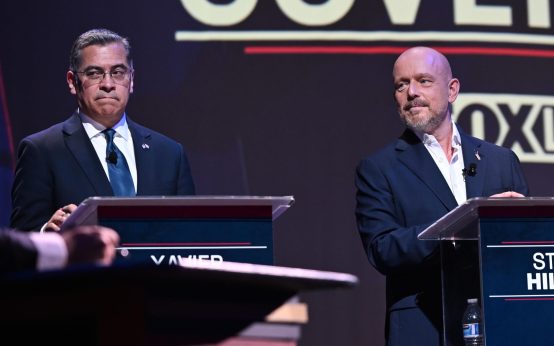 Becerra and Hilton Clash in California Gubernatorial Debate
  California Voters to Decide on $7.5 Billion State Research Fund
 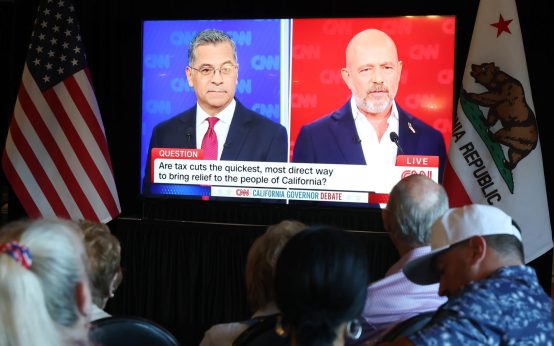 Highlights from the California Gubernatorial Debate: Becerra vs. Hilton
 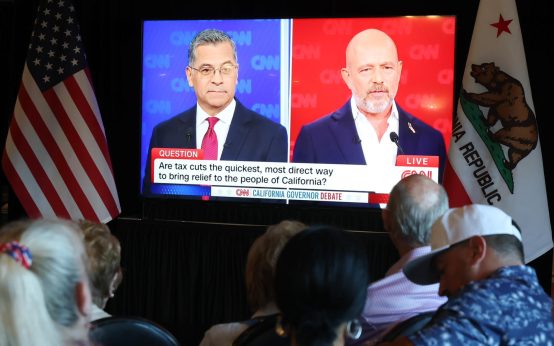 Becerra vs. Hilton: The Debate and Key Issues in the California Governor Race
  Senate Confirms New Labor Secretary