President Donald Trump announced on Wednesday that the ceasefire between the United States and Iran has ended. This decision could lead to a political fallout affecting his approval ratings. Throughout 2026, the status of the truce has influenced his numbers. When the ceasefire collapses, Trump’s approval rating dips. Conversely, when it holds, his numbers improve. Data from Nate Silver’s Bulletin average reflects these fluctuations since the conflict began in February.
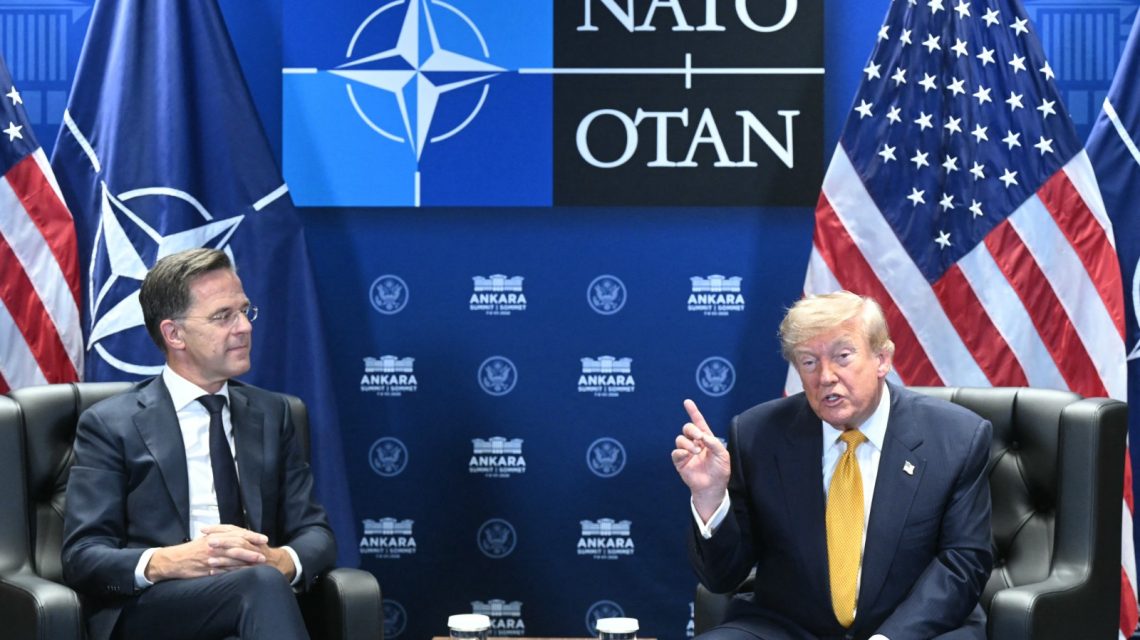
Trump’s statement at the NATO summit in Ankara, Turkey, came after Iran attacked three commercial vessels in the Strait of Hormuz. In response, the U.S. conducted retaliatory strikes. “As far as I’m concerned, it’s just a waste of time,” Trump told reporters regarding the ceasefire.
The official average on Wednesday, prior to fully accounting for Trump’s comments in Ankara, showed an approval rating of 43.1 percent and a disapproval rating of 52.7 percent. These figures have been relatively stable since July.
How Ceasefire Affected Trump’s Ratings
Earlier in the year, Trump’s ratings experienced more volatility. Violations of the ceasefire in late June pushed his disapproval to 54.4 percent, close to the war’s worst levels. A memorandum of understanding (MOU) signed on June 17 contributed to a brief stabilization.
In mid-June, before the MOU was disrupted, Trump’s approval reached 43 percent, and disapproval dipped to 52 percent. This improvement followed a preliminary framework agreement sought to reopen the Strait of Hormuz and extend the ceasefire.
The rise in approval ratings was short-lived. On May 4, as Iran attacked the United Arab Emirates, Trump’s approval fell to 41.9 percent, reflecting the impact of escalating tensions. He previously saw a peak approval of 44.4 percent on April 20 after extending the ceasefire indefinitely.
Initially, the war began in February, when Trump’s approval slipped to 41.6 percent. This occurred around the time of Iranian Supreme Leader Ali Khamenei’s death due to U.S.-Israeli strikes.
Concerns Over Renewed Conflict
The recent exchange of fire has raised fears of war resuming with Iran. Trump’s announcement of the truce ending led to rising oil prices, indicating market concerns about potential disruptions in the Middle East and energy shipments through the Strait of Hormuz.
Iranian Deputy Foreign Minister Kazem Gharibabadi criticized Trump’s stance on X. He claimed it reflected a failure of U.S. policy toward Iran. Trump’s recent threats concerning Kharg Island point to ongoing tensions over oil exports.
Iran’s leadership remains split. While hard-liners wish to control the Strait, pragmatists favor lifting sanctions and economic recovery. Negotiations aim to resolve complex issues, including reopening the strait and addressing Iran’s nuclear program. Talks were expected to start after Ayatollah Ali Khamenei’s funeral.
Timeline of Ceasefire Disputes
The truce has seen multiple disputes since the memorandum was signed on June 17. Both sides have accused each other of violations, leading to mutual retaliations.
- June 17: A 14-point MOU signed by Trump and Iranian President Masoud Pezeshkian halted military operations.
- June 19-25: Renewed fights and accusations followed, with disputes over the interpretations of the ceasefire terms.
- June 25: A Singapore-flagged vessel was attacked in the strait, escalating tensions.
- June 26-28: The U.S. launched strikes against Iranian military targets, leading to further accusations.
- July 7-8: More attacks occurred, culminating in Trump’s announcement that the ceasefire was “over.”
These developments highlight the fragile state of negotiations and the ongoing tensions between the U.S. and Iran.
 Investigation into Thomas Crooks’ Assassination Attempt
  Supreme Court Allows Trump Administration to Continue Third-Country Deportation Policy
  Police Discover Ancient Roman Artifacts Off Sardinian Coast
  Urgent Need for Action in East Africa’s Food Crisis
  Trump Rallies Support in GOP Strongholds as Midterm Elections Approach
  Brazil’s Next Election: Familiar Faces and High Stakes