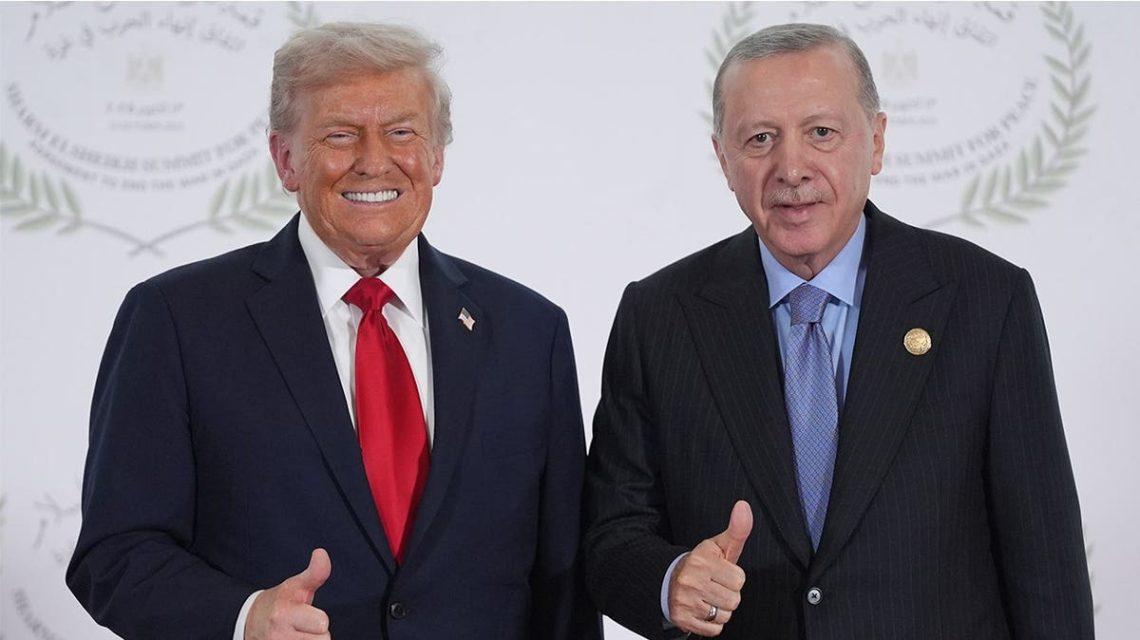
President Donald Trump confirmed his attendance at the NATO summit in Ankara, Turkey, stating his visit is primarily due to Turkish President Recep Tayyip Erdoğan. Trump referred to Erdoğan as both a friend and a respected leader, hinting at potential enhanced defense cooperation between Washington and Ankara.
The summit is set to commence on Tuesday in Ankara, Turkey. This development marks a significant change in the relationship between the United States and Turkey. Previously, Turkey faced expulsion from the F-35 fighter program in 2019 after acquiring Russia’s S-400 air defense system. The U.S. also imposed sanctions on Turkey’s defense procurement agency, further complicating its position within NATO.
Yet, despite ongoing disputes, Turkey’s strategic importance to NATO has increased. Facing challenges from Russia, instability in the Middle East, and a contested Black Sea, Turkey’s role has become difficult to ignore. Former U.S. Ambassador to Turkey, James Jeffrey, emphasized Turkey’s critical role in the Trump administration’s strategy, highlighting President Trump’s strong relationship with Erdoğan.
The strategic partnership between Trump and Erdoğan is underpinned by Turkey’s military strength and geographical significance. Turkey fields the second-largest military force in NATO, after the United States, and controls key maritime chokepoints such as the Bosporus and Dardanelles. Its strategic position bordering Syria, Iraq, and Iran amplifies its geopolitical influence. Additionally, Turkey’s significant defense industry bolsters its standing within NATO.
NATO recently refocused on collective defense, requiring member states to enhance their military commitments. Analysts assert that countries offering substantial military capabilities receive priority within the alliance. This has renewed scrutiny on defense spending, following Trump’s criticism of NATO allies’ previous defense budgets. NATO reached an agreement in 2025 to set a defense spending target of 5% of GDP.
President Erdoğan’s participation in NATO remains contentious among certain member nations due to Turkey’s divergent foreign policy stances. Critics cite Turkey’s maintenance of the S-400 system and its affiliations with groups like Hamas as diverging from NATO’s principles. Additionally, Turkey’s interest in non-Western organizations such as BRICS and the Shanghai Cooperation Organization raises further questions.
Debates have also emerged over U.S.-Turkey defense ties, particularly following the Trump administration’s proposed $700 million arms sale to Turkey. The sale has faced congressional scrutiny, particularly regarding Turkey’s possession of the S-400 system, which threatens U.S. technology security.
Jeffrey suggested that resolving the issue surrounding the S-400 is crucial for progressing U.S.-Turkey defense relations. The current controversy is more about protecting sensitive technology rather than mere political disagreements. The Turkish embassy did not comment on the matter.
 Activists Push for Nationwide Ban on Child Marriage in the U.S.
  Democratic Hopes and Historical Warnings in 2026 Senate Race
  Republicans Face Challenges Amidst Cost of Living Concerns
  A Different Kind of Fall for Congress This Year
  Investigation into Alleged Incident at Cornell University
  Cornel West and Sean Hannity Discuss Differences on Podcast