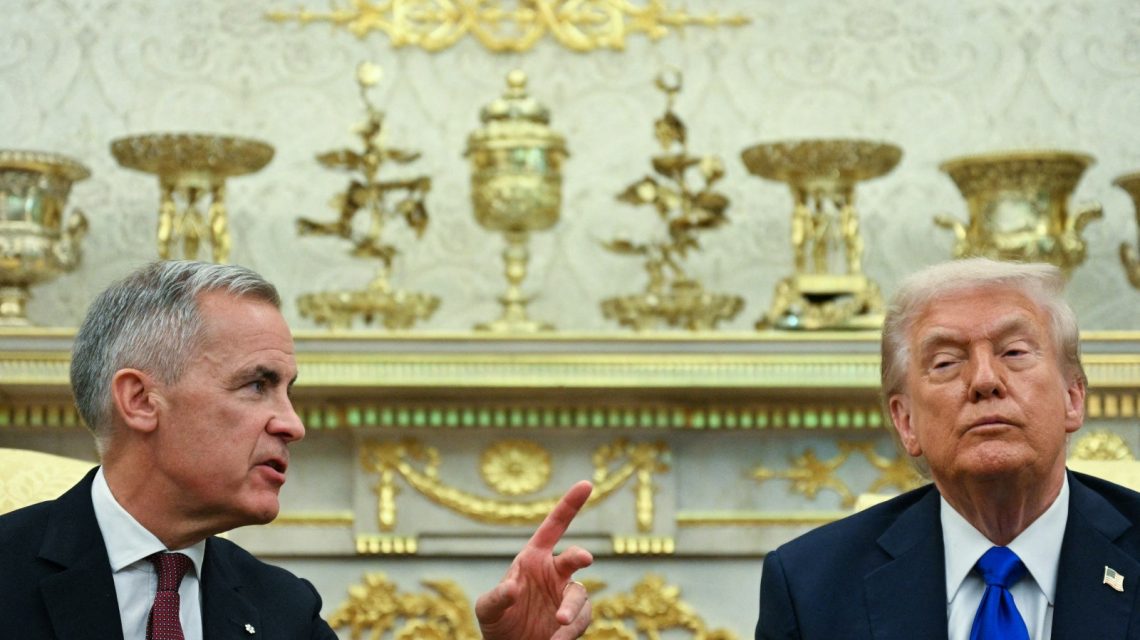
Increased tensions between the United States and Canada have elevated President Donald Trump’s prominence in Canadian political discussions. Nearly half of Canadians now consider Trump and his administration as among the most significant issues facing their nation, as per a recent national poll.
The survey, conducted by Abacus Data, took place before President Trump shared a controversial AI-generated video featuring ‘Donald Duck Army’ imagery. This clip, depicting armed birds with Trump-like hairstyles guarding ‘Lake America,’ intensified the ongoing debate over the renaming of Lake Ontario. Findings reveal that 45 percent of Canadians see Trump as one of their top three national concerns, marking a seven-percentage-point increase from two weeks prior.
The primary issue for Canadians remains the rising cost of living, cited by 62 percent of respondents. Other significant concerns include the economy, housing affordability, and healthcare, with figures at 39 percent, 30 percent, and 29 percent respectively. Respondents could select up to three issues, leading to totals exceeding 100 percent.
Impact on Canadian Politics
The strained relations between Ottawa and Washington have roots in the collapse of trade negotiations and the imposition of new U.S. tariffs on Canadian products. Prime Minister Mark Carney halted talks with the United States on August 21 to resist unacceptable terms from Washington, with 50 percent tariffs implemented the following day.
As tensions rise, the political landscape in Canada shows signs of shifting. If elections were held today, 45 percent of committed voters would support the ruling Liberals, outpacing the Conservatives who have 35 percent support. This gap widened from a seven-point lead reported in an earlier Abacus survey.
Among Canadians who view Trump as a major issue, 60 percent would back the Liberals, while 21 percent would choose the Conservatives. When asked which party could best manage relations with Trump, 62 percent favored the Liberals over the 18 percent who preferred the Conservatives.
Renaming Lake Ontario: A Source of Tension
A separate conflict over Lake Ontario’s name has further strained relations. Trump’s executive order instructing U.S. agencies to refer to the lake as ‘Lake America’ sparked backlash from Canada. Carney emphasized the name’s historic roots, linked to a Wendat word, and longstanding usage for over 400 years.
Google Maps reflects these conflicting renamings. U.S. users see ‘Lake America,’ while Canadian users see ‘Lake Ontario.’ International users view both names.
President Trump shared an AI video on Truth Social featuring blond-haired geese guarding the lake and celebrating the renaming. Another AI video replaced a ‘Welcome to Lake Ontario’ sign with ‘Welcome to Lake America.’
Rhetoric and Economic Implications
Trump uniquely voiced claims on Truth Social about Canadian enterprises moving south due to disputes. He commented, “Canadian businesses are pouring into the United States. We want to make our own cars. That’s what’s going to happen. Canada has been ripping us off for years—NO LONGER!”
Government approval ratings in Canada climbed by four points to 56 percent, with improvements in Carney’s personal ratings as well. Concerns around Trump may have bolstered support for Carney’s leadership.
The Abacus survey involved 2,022 Canadian adults, conducted between August 21 and 26, with a margin of error of ±2.2 percentage points.
Carney’s assertive stance against President Trump highlights Canada’s broader test of economic sovereignty. After U.S.-Canada negotiations fell through, Carney rejected Washington’s terms and stood firm against Trump’s aggressive rhetoric. This approach seems to resonate among Canadians.
 U.S. States Extend Gas Tax Waivers Amid Rising Fuel Costs Due to Iran Conflict
  USCIS Raises Immigration Fees
  The Surveillance Threat to U.S. Federal Agents
  Trump Administration Distributes ACA Refund Checks
  Trump Administration’s Approach to Illegal Alien Deportations
  New Jersey Voter Fraud Prompts Renewed Push for SAVE Act