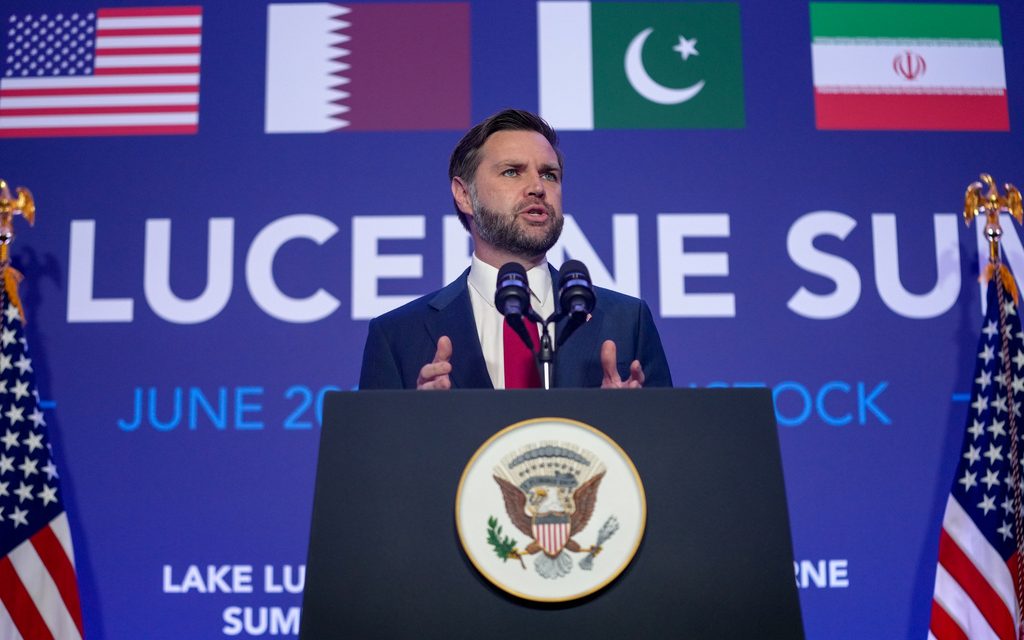
Vice President JD Vance recently addressed the media following significant talks between the U.S. and Iran at the Bürgenstock Resort in Switzerland. The result was the signing of the Islamabad memorandum. At the heart of this agreement is the stipulation concerning the release of $24 billion in frozen Iranian reserves once a final deal is reached. President Trump emphasized that these funds will only be released upon the completion of a formal agreement.
The main issue revolves around the timing and justification for transferring these assets. However, the discussion often ignores the critical question: who truly owns this money, and what would genuinely benefit them? An estimated $100 billion of Iranian assets remain immobilized overseas. These funds are not the personal treasury of those in power but represent the hard-earned product of a nation’s oil, commerce, and labor.
International law acknowledges Iran as a sovereign entity. Still, criticism arises that the current Iranian regime governs through domestic oppression and regional unrest, making them illegitimate stewards of these national assets. Returning the capital under current circumstances arguably rewards aggression and supports the regime’s narrative that the people and their rulers have aligned interests.
The U.S. recently challenged such narratives. When Afghanistan’s government collapsed in 2021, the U.S. froze around $7 billion in bank reserves. Instead of releasing these funds to the Taliban or creditors, Washington established the Fund for the Afghan People, protecting $3.5 billion with a Swiss-based trust to prevent access by the Afghan sanctioned regime. This model successfully restricted resource allocation to unauthorized parties.
A similar mechanism was created for Venezuela by the U.S., European Union, and United Nations, safeguarding over $3 billion from the Maduro regime. The operational framework is validated, supported by the International Emergency Economic Powers Act. This act enables legal preservation of wealth meant for misruled populations.
If Iran’s frozen assets genuinely belong to its citizens, policymakers must consider solutions that serve the people best. Digital connectivity emerges as a critical need, as connectivity has been systematically restricted. The Iranian regime relies on network blackouts for control, having cut domestic internet access during significant uprisings to prevent observation of violence.
Tehran criminalized Starlink usage, threatening harsh legal penalties, including capital punishment for espionage. Despite challenges, the use of such services has increased. However, cost and access barriers persist. Direct-to-cell service could provide a way forward, linking phones to satellites without needing to smuggle hardware.
The Pentagon explored direct-to-cell coverage for Iran, estimating costs of $500 million to launch and $100 million monthly for operations. A dedicated trust could address this funding gap, enabling the project. The U.S. has prioritized internet access for Iranians as a key policy instrument, reflected in regulatory frameworks like General License D-2 that allow communication tools to counter state censorship.
Legal structures supporting expanded connectivity already exist but require political will and dedicated funds to scale. An initiative should be established as the Iranian People’s Connectivity or Internet Freedom Fund, managed independently, with safeguards preventing regime access to funds.
The choice is clear for Washington: returning reserves fuels oppression and terrorism, opposing the interests of millions of Iranians. Their rightful ownership of assets should be weaponized to empower Iranian freedom by enhancing connectivity. A free Iran starts with an Iran that can’t be silenced.
 Backlash Against Trump’s White House Photos
 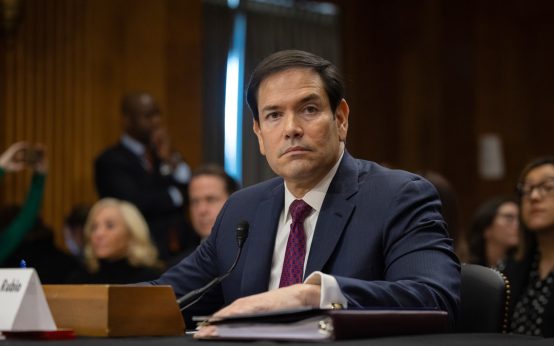 State Department Accuses Senate Democrats of ‘Grandstanding’ Over Venezuela Oil Deal
  Texas Senate Candidates Address Attacks with New Ads
  Republicans Withdraw Financial Support from North Carolina Senate Campaign
  Defense Secretary Ensures Military Votes Are Counted
  The Trump Team’s Challenge to the Military Leadership