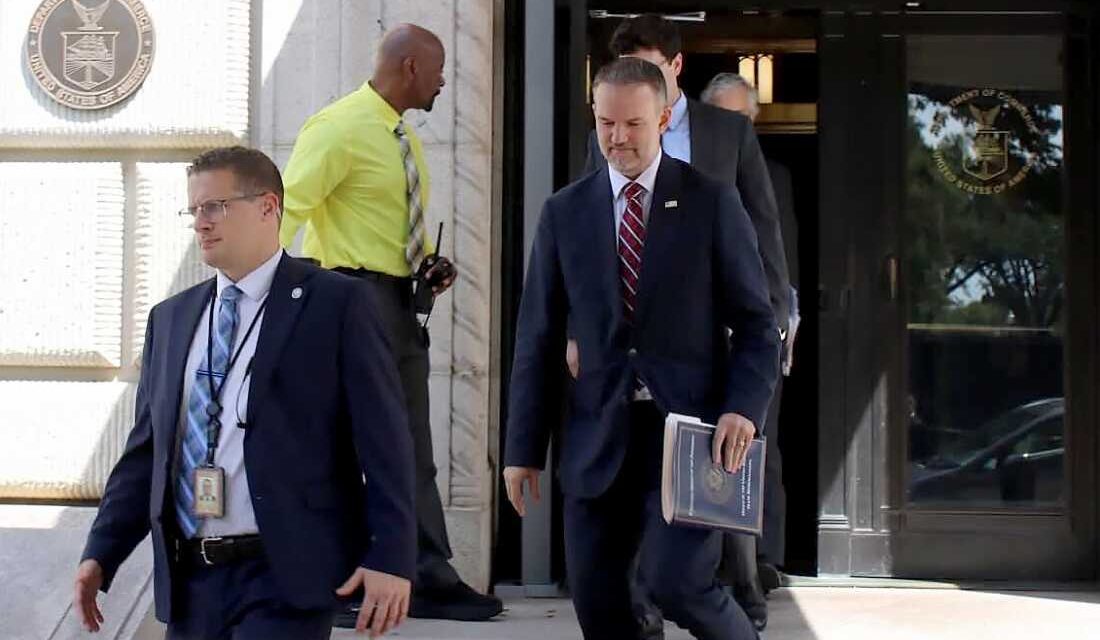
United States Trade Representative Jamieson Greer left the U.S. Department of Commerce following discussions with Canadian officials in Washington on Monday, August 17, 2026. President Donald Trump announced Tuesday that he would delay the implementation of 50% tariffs on $20 billion worth of Canadian imports. The delay came after a last-minute agreement between the two countries, reached just under two hours before the tariffs were to begin.
Trump announced the delay on his social media platform, stating that this decision allows for further negotiations and avoids immediate strain on U.S.-Canada relations. “I have paused the 50% Tariffs against Canada, that were scheduled to kick in tomorrow morning for a three-day period, based on the fact that Canada and the U.S.A., subject to the finalization of documents, have a DEAL!” Trump posted on Truth Social.
If the tariffs had been enacted at the scheduled time of 12:01 a.m. Wednesday, products like hockey sticks and tongue depressors from Canada would have been affected. More significantly, Canada had threatened to respond with tariffs of its own, potentially escalating the trade dispute. The two nations conducted $880 billion worth of trade last year, showing the scale of economic interactions between them.
A White House statement noted that Canada had agreed to remove reported discriminatory measures against U.S. exports such as alcohol, dairy, and motor vehicles. However, Canada did not immediately verify these commitments. Canadian Prime Minister Mark Carney stated that while substantial progress had been made, critical work remained. Carney confirmed that Canada agreed to a three-day delay for ongoing negotiations.
Both nations had their reasons to avoid escalating tensions. About 72% of Canadian exports last year went to the United States. For the Trump administration, imposing new tariffs could be risky before the November midterm elections, as U.S. consumers already face high living costs. Ryan Majerus, a partner at King & Spalding and former U.S. trade official, noted both parties sought to prevent these tariffs from taking effect.
Candace Laing, Canadian Chamber of Commerce President and CEO, commented that the tariff delay provided temporary relief to businesses. However, she emphasized the necessity of a signed interim agreement to achieve certainty. She urged negotiators to reach a swift resolution, considering the “limbo state” was not ideal for anyone.
The current U.S. approach is uncommon, given the historically cooperative U.S.-Canada relationship. Trump’s imposition of tariffs on Canadian goods aims to boost U.S. manufacturing. His provocative comments, alleging a desire to transform Canada into a U.S. state, are well publicized. Trump’s tariffs form part of his strategy for his second-term economic policy.
Last year, he imposed new import taxes globally, citing a national emergency due to the U.S. trade deficit. However, the Supreme Court nullified these actions in February, identifying them as exceeding presidential authority. This forced the federal government to issue refunds to importers. Trump explored other legal means to impose tariffs, referring to a seldom-used law known as Section 338 of the Tariff Act of 1930, which allows up to a 50% tariff imposition without needing an investigation or a time limit.
The context of the 1930 tariff law dates back to the Great Depression, where such tariffs limited global trade and exacerbated economic downturns. Although Section 338 tariffs have never been utilized previously, it represents a potential tool for leverage in the ongoing renegotiation of the U.S.-Mexico-Canada Agreement (USMCA). By threatening Section 338 tariffs, the U.S. aims to obtain further concessions from Canada.
 Tennessee Prison Chief Resigns After Botched Execution
  White House Announces Medicare-Linked Payments for Seniors
  Collapse of Hawai’i’s Hōlei Sea Arch Amidst Storms
 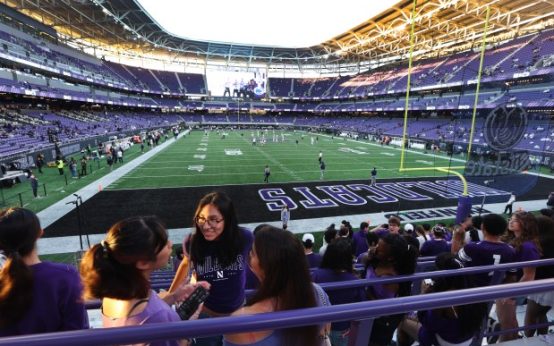 Northwestern Debuts New Ryan Field with Victory Over Penn State
  Concerns Over Contaminants in U.S. Cat Foods
  U.S. Initiates Military Operation on Southern Border