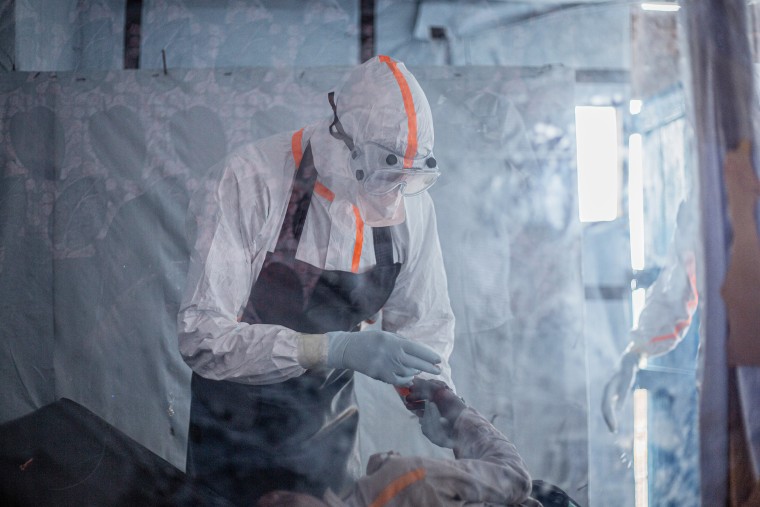
KAMPALA, Uganda – On Tuesday, Ugandan authorities announced the nation is free of Ebola following the discharge of the last patient in mid-June. This marks a delicate milestone as the virus continues to affect neighboring Congo.
Uganda’s health officials have consistently reported that their Ebola cases were connected to a larger outbreak in Congo’s Ituri province, located at the border with Uganda. Initial cases in Uganda involved Congolese individuals who had crossed the border seeking treatment for symptoms that were later identified as Ebola.
Congo declared its outbreak on May 15, the same day Uganda confirmed its first two cases, including one individual who had already died from the virus. Despite reporting a total of 20 cases, Ugandan authorities state there are no signs of the virus spreading within the country.
The last known patient was released on June 16, after which Ugandan health authorities observed the World Health Organization’s recommended 42-day monitoring period before declaring the country Ebola-free.
“Uganda’s 2026 Ebola outbreak arose from a fully documented importation event,” the Ugandan Health Ministry stated, distinguishing it from previous outbreaks.
The statement emphasized that all identified contacts had been quarantined and had completed the 21-day follow-up without further transmission. Enhanced surveillance found no unexplained community spread of the virus.
The Bundibugyo strain responsible for the outbreak lacks an approved vaccine or treatment. The broader regional outbreak is regarded as a global health emergency.
Ugandan officials have responded decisively to the Ebola threat by urging the public to avoid handshakes and postponing a major religious event in June that hosts thousands of pilgrims. Other measures included suspending public transport and flights between Uganda and Congo.
In Congo, health authorities report 3,262 confirmed cases, with 1,437 deaths, making it the fastest Ebola outbreak recorded in the nation. The current outbreak might soon surpass the previous highest toll experienced in Congo, a country where a previous outbreak lasted two years, unlike this one, which has only spanned 10 weeks.
The rapid spread of the outbreak aligns with concerns over safety, as several affected communities in the region have reportedly become inaccessible or abandoned by health responders following conflicts involving residents and rebels.
Effective tracing and isolation of Ebola contacts are critical to halting the virus, which typically presents as a hemorrhagic fever.
 Early Detection of Atherosclerosis and Heart Disease Prevention
  Church Attendance Linked to Increased Sexual Satisfaction for Married Couples
  Dining with Loved Ones May Benefit Blood Sugar Levels
  Urgent Need for Action in East Africa’s Food Crisis
  Facing Terminal Illness: Embracing Life’s Moments
  Eating with Partners May Impact Blood Sugar Regulation