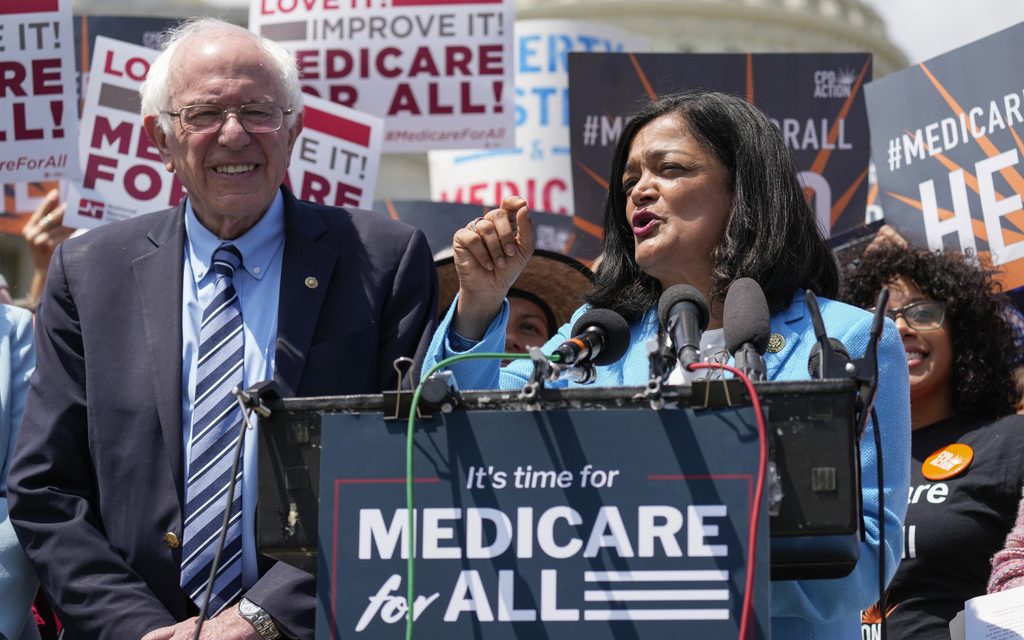
Senator Bernie Sanders and Representative Pramila Jayapal have promoted a health insurance reform proposal known as ‘Medicare for All.’ While its name suggests an extension of the current Medicare system, the plan proposes a significant overhaul. This proposal aims to replace existing private and government health insurance systems, including Medicare, with a new government-run program.
Medicare enjoys widespread popularity, particularly among seniors. Under the current system, seniors have options between traditional Medicare and Medicare Advantage, with 55% opting for the latter. Medicare Advantage depends on private sector health insurance and offers a choice not available in the ‘Medicare for All’ model.
‘If you like your health plan, you can keep it.’ This statement, made by President Obama regarding the Affordable Care Act, was rated as Politifact’s ‘Lie of the Year’ in 2013. Unlike Obama, Sanders does not promise the retention of current plans. Instead, ‘Medicare for All’ entails an overhaul where no current plans remain.
Surveys show high satisfaction levels with current healthcare coverage, notably among Medicare beneficiaries. NBC News found that 82% of Americans and 90% of Medicare seniors are satisfied with their plans. In contrast, satisfaction with the UK’s National Health Service (NHS) stands at only 26%, based on the British Social Attitudes survey.
One of the challenges of a single-payer system is balancing healthcare funding with other governmental needs. Countries with government-run healthcare systems, like Great Britain, face issues such as provider shortage, lengthy wait times, and limited availability of modern treatments. The NHS, for example, reports waiting periods of up to 18 weeks for non-urgent treatments.
In the U.S., Medicare survives partly due to cross-subsidization from private insurance which compensates healthcare providers better than the government rates. The reform suggested by ‘Medicare for All’ could eliminate these private-sector contributions.
When healthcare becomes heavily politicized, it’s the politically powerful, like senators, who can navigate complex systems more easily. Concerns arise that everyday citizens might face prolonged wait times and limited access in such a system.
This examination offers insight into the nuances and implications of the ‘Medicare for All’ proposal. The debate continues over whether replacing the current healthcare system with a government-run program would lead to the desired improvements.
 The Trump Team’s Challenge to the Military Leadership
  Maryland First State to Restrict Electronic Pricing in Grocery Stores
  Activists Push for Nationwide Ban on Child Marriage in the U.S.
  Democratic Hopes and Historical Warnings in 2026 Senate Race
  Republicans Face Challenges Amidst Cost of Living Concerns
  A Different Kind of Fall for Congress This Year