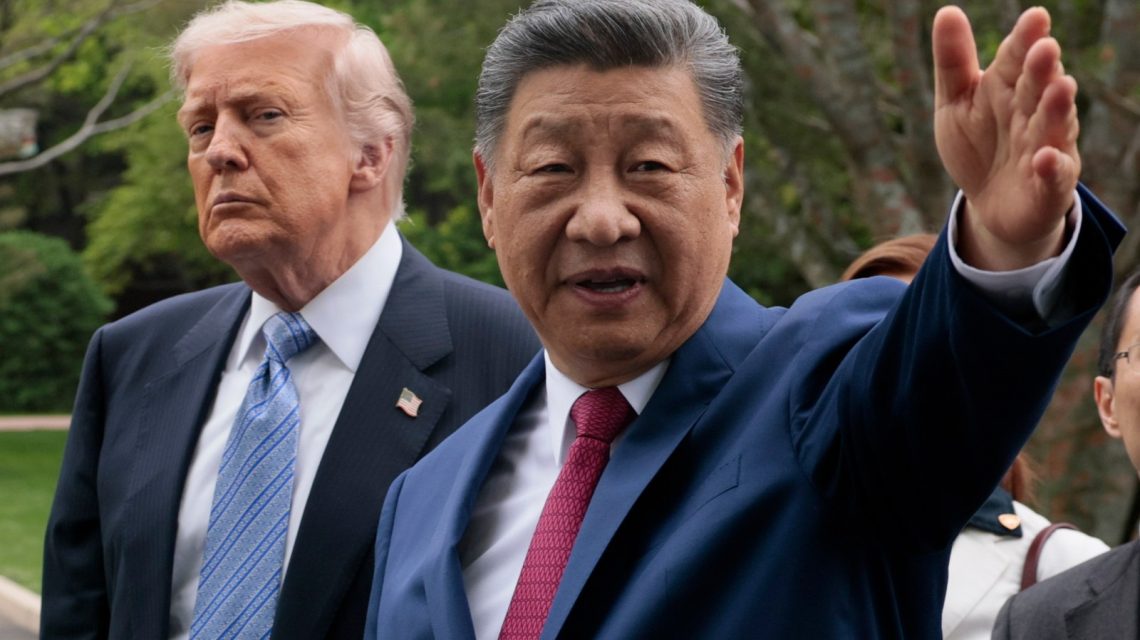
Chinese leader Xi Jinping has emphasized the importance of understanding emerging technologies to maintain China’s competitive edge in the global economy. In a speech on January 30, published in the Communist Party’s official theoretical journal Qiushi, Xi stressed the need for all party leaders to enhance their knowledge of frontier science and technology. He urged them to improve their professional capabilities and make informed decisions.
Xi called for a focus on quantum technology, biomanufacturing, hydrogen energy, nuclear fusion, brain-computer interfaces, embodied AI, and 6G. These, he identified as new economic growth points critical for technological leadership. Xi’s message highlights that identifying key industries has been instrumental in China’s dominance over green technology and rare earth supply chains.
Upgrading the World’s Factory
China has spent two decades and trillions of dollars in state funding to establish its manufacturing dominance. This included enabling subsidized local companies to bypass regulations. Chinese industrial policy has empowered companies to gain strong positions in various global markets, including electric cars and information technology, often surpassing Western and Global South competitors.
An example is BYD, an electric vehicle maker. It benefits from below-market loans, tax breaks, and integrated supply chains, allowing it to produce economically and on a large scale. BYD overtook Tesla as the top electric vehicle seller in 2025. In Europe, it ranks third among EV brands, following Volkswagen and BMW, according to the European Commission report.
The U.S. has responded by banning Chinese-made electric cars domestically. Meanwhile, the European Union plans to shift from tariffs to price controls in response.
China is navigating a cyber revolution led by artificial intelligence, robotics, and smart household devices. It seeks to lead in scientific breakthroughs and replace the U.S. as the top provider of online services and connected hardware. This includes constructing new infrastructure, like power grids, to support AI research over decades. Achieving parity with the U.S. in computing power remains a challenge.
China’s strategy may help counter long-term economic challenges, such as an aging population and international resistance to its industrial policies.
Unlevel Playing Field
A recent OECD report highlighted that industrial subsidies reached their highest levels since the 2008 financial crisis. In 2024, firms in China received 52% of the $108 billion in global subsidies. The analysis of over 500 major firms showed that about 22% of their growth from 2005-2023 resulted from subsidies, including grants, tax breaks, and inexpensive loans.
The OECD stated that around 60% of Chinese firms’ market share gains could be attributed to these subsidies. They receive substantially more subsidies than their OECD counterparts.
“Just like doping in sports, there is a risk that subsidies allow less productive players to win over more innovative ones,” the report said.
Such practices could impose long-term costs on the global economy by reducing innovation, product quality, and competition, despite short-term consumer benefits from lower prices. The Chinese government claims their industry dominance stems from the competitiveness of its products.
 New Jersey Voter Fraud Prompts Renewed Push for SAVE Act
  Concerns Over Changes to Voter-Registration Form for Americans Abroad
  Trump’s 2024 Campaign Targets Young Men Through Cryptocurrency
  Trump’s White House Visitor Center Proposal Gains Bipartisan Support
  How Modern Windows Improve Home Insulation
  State Department Simplifies Passport Process with Online Applications