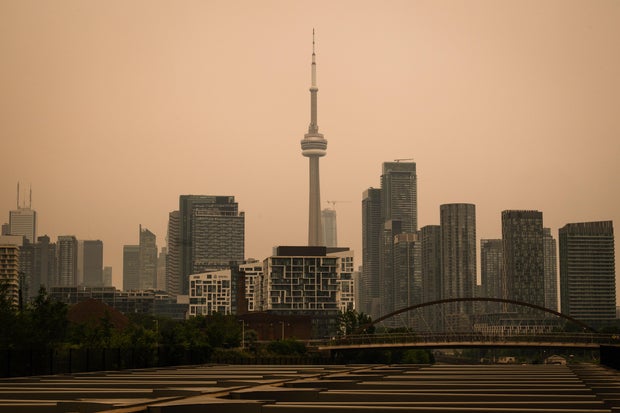
Wildfires are rapidly consuming land across the United States and Canada in 2026. Smoke from Canadian fires is affecting air quality far beyond their borders. Experts attribute the heightened severity to climate extremes. In Canada alone, more than 100 wildfires are active, spreading smoke into the Midwest and northeastern U.S., impacting millions with poor air quality.
This year, 3,500 Canadian wildfires have enveloped about 2.3 million acres of land, which aligns with the country’s 10-year average for mid-July. However, it’s below the 5-year average due to past extreme fire seasons. Wildfires now start earlier and linger longer. They’re also harder to control, with ‘zombie fires’ smoldering through the winter, according to the Canadian Climate Institute. Climate change is intensifying wildfire threats, increasing the likelihood of extreme fire weather.
In the U.S., nearly 40,000 fires have devastated over 3.6 million acres in 2026, including half a million acres in the past two weeks. According to the U.S. National Interagency Fire Center, fire activity is showing patterns usually seen later in the season. Fires have ravaged hundreds of thousands of acres, especially in the American West. Colorado and Utah experience the most severe impacts, with 10 of the 48 large fires still active in these states.
Jon Meyer, Utah’s assistant state climatologist, explains that a combination of prolonged drought, record heat, and low snowpack created an ideal environment for an intense wildfire season. Nick Nausler from the National Weather Service says these fires were expected due to preceding conditions. Dan McEvoy of the Western Regional Climate Center called the 2026 snowpack in Colorado and Utah the worst in decades, correlating with the state’s intense fire season.
Prolonged heat waves and low snowpack reduce moisture from runoff, making the land more prone to ignition. McEvoy noted high temperatures prompted early snowmelt, drying terrain longer before fire season started. Canadian officials and U.S. experts acknowledge human-caused climate change as a significant factor. Stanford’s Noah Diffenbaugh suggests that climate change accounts for roughly half of the increase in burned areas in the western U.S.
Even ambitious carbon emission reduction may not alter these trends. Warmest winters, as seen recently, exacerbate the snow drought, according to experts like McEvoy and Meyer. Tim Brown, another climate researcher, discusses the role of ‘hotter droughts’ due to higher temperatures, further fueling wildfires. While climate enables fires, weather drives them.
The National Interagency Fire Center’s outlook indicates above-normal wildfire risk through the fall across much of the West. El Niño complicates forecasts, but a potential monsoon may offer brief relief. Northern California, Oregon, Washington, and the Northern Rockies face enhanced wildfire risk in late summer and early fall. Noah Diffenbaugh cautions that dangerous autumn winds have yet to arrive, emphasizing the need for continued vigilance.
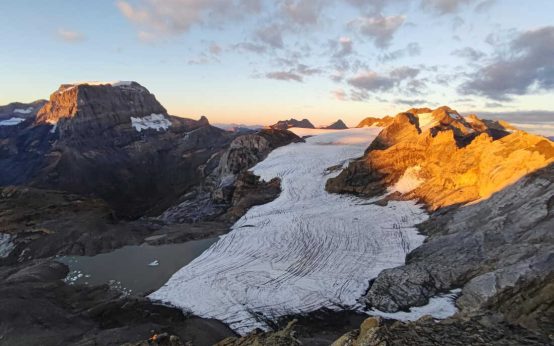 Swiss Glaciers Show Effects of Ice Loss Amid Global Warming
  Climate-Resistant Rock Glaciers: Hidden Water Resources
  Senators Reach Bipartisan Agreement on Permitting Reform
  Experts Warn of Critical Period for the Colorado River
  Future Cities: Ambitious Projects Aiming for Innovation and Sustainability
  Supreme Court Case Suncor vs. Boulder: Implications for Accountability in Climate Change