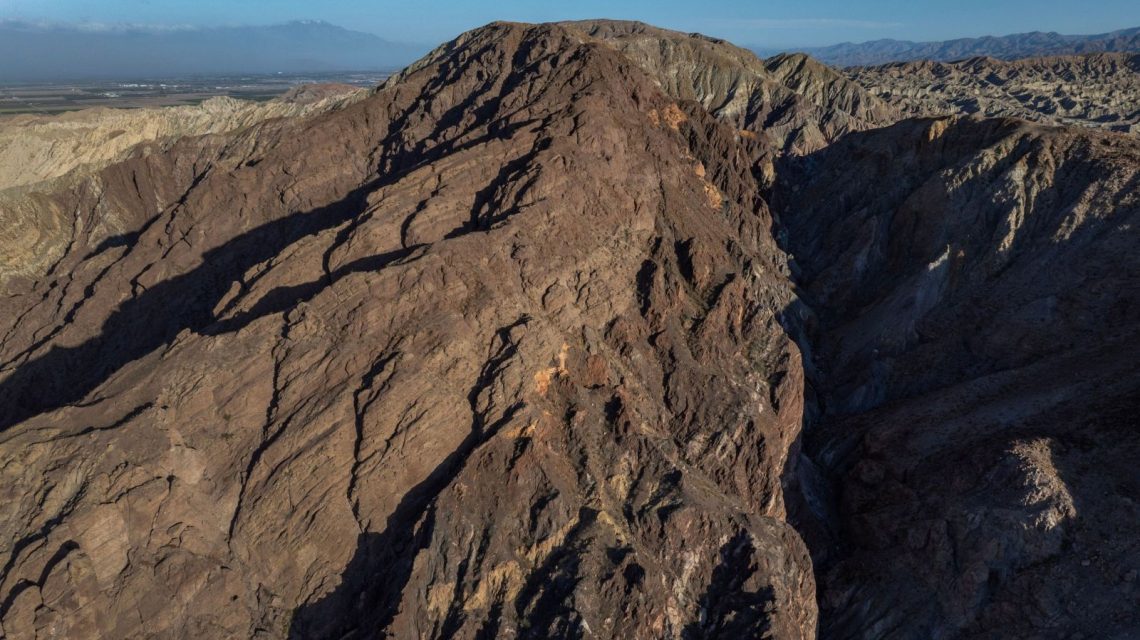
High Stress Levels Detected
Research from the University of Hawaiʻi at Mānoa indicates that tectonic stress along the San Andreas and San Jacinto fault systems in Southern California has reached unprecedented heights in the past millennium. The findings have sparked significant concerns regarding the seismic risk in this region. Several segments of these faults are currently at or above their peak stress levels over the past 1,000 years. This suggests that the system is in a state of critical loading, according to the study’s authors.
Why It Matters
The University of Hawaiʻi emphasizes that these findings are crucial for assessing seismic risk in a densely populated and infrastructure-critical area. One noteworthy finding involves Cajon Pass, a vital junction between the faults, which could act as an “earthquake gate.” This pass may either prevent or permit a rupture from advancing between the two systems. A joint rupture through both networks would be notably more destructive than an earthquake confined to a single fault, potentially impacting heavily populated zones like Los Angeles, San Bernardino, Riverside, and the Coachella Valley.
Key Insights from the Study
Published in the Journal of Geophysical Research: Solid Earth, the study used a physics-based model to trace the build-up and release of stress over the past 1,000 years along these fault systems, including Cajon Pass. Researchers employed geological records, such as radiocarbon-dated sediment shifts and tree-ring data, to simulate past and present stress levels. Lead author Liliane Burkhard highlighted that stress on various fault segments has reached or exceeded the highest levels in the last thousand years, indicating the potential for a substantial rupture affecting both fault lines.
Burkhard also noted that the “earthquake gate” can either obstruct or allow large ruptures to cross between fault systems. The model shows that stress has been accumulating since 1857, surpassing anything recorded in a millennium. Despite the uncertainty of when an earthquake might occur, the loading is a cause for serious preparation. Residents in Southern California are advised to plan thoroughly, know evacuation routes, and maintain emergency supplies.
Future Considerations
According to the University of Hawaiʻi, physics-based modeling like this can refine seismic risk assessments and support decisions regarding infrastructure, emergency protocols, and building regulations. The approach developed in this study also holds potential for application at other complex fault junctions worldwide, enhancing global earthquake preparedness.
 The Threat of Melting Glaciers: A Call to Action
  Collapse of Hawai’i’s Hōlei Sea Arch Amidst Storms
  Los Angeles Faces Uncommon Heatwave in October
  Drought Drives Black Bears Closer to Human Activity
  Atlantic Ends September Without a Hurricane for First Time Since 1994
  Bobcat Sightings and Conservation Efforts in Illinois