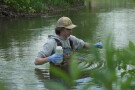
Hannah Ray J Childs navigates the Maquoketa River in Iowa, practicing whitewater kayaking acrobatics. She enjoys the sensation of freedom and community that the water provides. Her connection to the river began with her husband, whom she spotted performing kayaking tricks. Yet, she takes precautions against waterborne illnesses by using nose and ear plugs, addressing common concerns about water quality and cleanliness.
Water pollution in Iowa reflects broader Midwestern challenges. As a leading producer of corn, soybeans, and hogs, Iowa’s vast water networks often suffer from agricultural runoff. Fertilizers and manure contribute to water pollution, impacting public and recreational water use. Iowa’s waterways struggle with nitrates and phosphorus, affecting swimming, drinking, and aquatic life.
“People’s first response when I tell them that I like to kayak and be upside down in the river is, ‘Ew, that’s disgusting. Why would you do that?’”
Efforts to reduce pollution include voluntary practices and initiatives from environmental groups. Legal actions have also challenged governmental policies and sought stricter measures. However, significant hurdles remain as targeted reductions far exceed current achievements.
Childs passionately promotes conservation efforts, advocating for water testing and creating a whitewater park in Manchester. Her work aims to enhance community engagement and stewardship of local waterways.
The emotional loss linked to water pollution impacts adults who have cherished childhood memories of natural water play. Mary Swander recalls fond experiences at Lake MacBride, now deterred by uncomfortable encounters and advisories for contamination. Social spaces outside homes and workplaces are critical for maintaining connections, especially among older adults.
Water quality in Iowa is threatened by bacteria from various sources, including livestock and inadequate sewage systems. Climate change aggravates runoff issues, necessitating improved infrastructure and management practices.
Standing as a symbol of both struggle and progress, Lake Darling experiences challenges with E. Coli and algae despite previous restoration efforts. Local initiatives improve surrounding land management, pursuing better environmental outcomes. Such efforts highlight the complexity of maintaining water quality amid agricultural pressures.
For sustainable solutions, cooperation between farmers and state agencies is vital. Voluntary measures emphasize reduced fertilizer use, improved crop management, and enhanced wetlands.
David Thoreson’s experiences with the Iowa Great Lakes underline the importance of local efforts in wetland restoration and sewage treatment, ensuring enduring tourism appeal and robust community engagement.
Understanding water management holistically, incorporating agriculture as a partner in solutions, contributes to long-term improvements. However, farmers face economic pressures, requiring targeted support for adopting sustainable practices.
Collectively addressing these issues remains essential. Ongoing dialogue and proactive measures can navigate Iowa’s environmental challenges and nurture vibrant community connections to its cherished waterways.
 Higher Consumption of Ultra-Processed Foods Linked to Increased Health Risks
  Swiss Glaciers Show Effects of Ice Loss Amid Global Warming
  Understanding Inflammation: Myths and Facts
  Climate-Resistant Rock Glaciers: Hidden Water Resources
  Senators Reach Bipartisan Agreement on Permitting Reform
  Experts Warn of Critical Period for the Colorado River