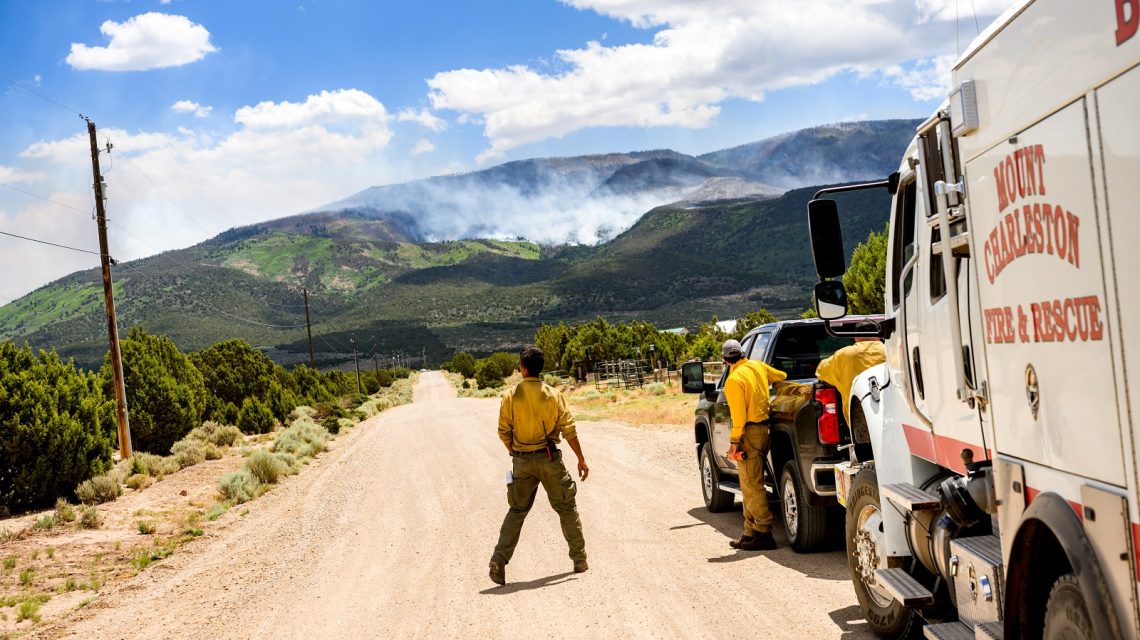
Firefighters’ Lives Lost in Western Wildfires
Three firefighters died, and two others were injured while combating rapidly moving wildfires near the Colorado-Utah border on Saturday. Officials noted these wildfires are part of a larger outbreak fueled by extreme heat, wind, and drought gripping the West. The firefighters were responding to the Knowles and Gore fires, which merged to become the Snyder fire. The U.S. Wildland Fire Service (USWFS) reported the injured individuals are receiving medical treatment for burns.
“Our immediate focus is on supporting their families, friends, and fellow crewmates during this incredibly difficult time,” USWFS stated.
The fatalities highlight the intensified danger in the region, where dry and windy conditions have pushed fire behavior to extreme levels. These fires have stretched firefighting resources thin and necessitated emergency declarations in several states.
Current Status of Fires in the West
The Cottonwood Fire in southwestern Utah, the largest active blaze, has grown to over 92,000 acres—around 144 square miles—and remains uncontained. Firefighters are challenged by steep, rugged terrain as they attempt to control the flames. Approximately 1,200 responders are working in Fishlake National Forest near Beaver, Utah, to create containment lines. The fire’s cause is under examination according to InciWeb, the federal wildfire tracking system.
A “Fire and Fuels Advisory” has been issued for Utah due to low moisture levels and potential for rapid fire growth.
The Snyder Fire has burned tens of thousands of acres along the state line, leading to evacuation warnings in several communities. Across the nation, crews are tackling numerous fires, including over three dozen classified as large and uncontained.
Forecasts and Emergency Measures
The National Weather Service (NWS) warns of conditions ripe for explosive fire growth across several Western states. Red flag warnings are plentiful due to high temperatures, strong winds, and low humidity, affecting areas from California to Arizona and New Mexico.
Meteorologists call Utah’s outlook a “particularly dangerous situation,” with unpredictable fire behavior a looming threat. These developments reflect broader climate patterns influencing the 2026 wildfire season, exacerbated by persistent drought, low precipitation, and high temperatures. Nationwide, nearly 3 million acres have burned this year, surpassing the 10-year average.
Southwest Fire Activity and Power Shut-offs
In Arizona, fire activity reaches south of the Grand Canyon, where flames move away from Grand Canyon Village and Tusayan. However, new fires near Kendrick Mountain prompted evacuation orders from Coconino County officials.
Power shut-offs are occurring as utilities attempt to reduce wildfire risk, with parts of northern Arizona losing power. Factors like wind speed, available fuels, and terrain influence such decisions.
Rocky Mountain Power has likewise shut off lines in Utah’s Beaver County and surrounding areas due to persistent extreme fire conditions.
Emergency Declarations and Preventive Actions
The crisis has sparked prompt responses ahead of the July Fourth holiday. Utah Governor Spencer Cox declared a state of emergency, which includes a statewide fireworks ban. Utah State Forester Jamie Barnes noted a spike in new fires with “unprecedented behavior,” straining resources.
In Colorado, Governor Jared Polis declared an emergency, deploying the National Guard to aid in response and containment efforts. Officials caution that sustained heat and wind will continue to maintain high wildfire risk in coming days.
 British Police Arrest Man Suspected of Terror Plot
  Activists Push for Nationwide Ban on Child Marriage in the U.S.
  Investigation into Alleged Incident at Cornell University
  Rising Drone Threats Highlight Vulnerabilities in Moldova’s Airspace Defense
  Bolivia Faces Security Test Amid Unrest
  Incident on FlyDubai Flight Raises Security Concerns