
On Thursday, several regions in the U.S. experienced the poorest air quality globally. This results from wildfire smoke originating from Canada and Minnesota. The smoke began moving into the upper Midwest and Northeast before spreading further south into the Midwest, Appalachia, and the East Coast.
According to the Environmental Protection Agency’s U.S. Air Quality Index, northern Minnesota’s air quality ranks as the worst. The interactive index map shows regions in Minnesota, Wisconsin, and Michigan enveloped in purple and maroon shades. These colors represent a ‘very unhealthy’ AQI of 201 to 300 and a ‘hazardous’ level above 301, increasing health risks for everyone. As of Thursday morning, north-central Minnesota recorded an AQI of 1,421, significantly higher than hazardous levels.
Due to the wildfires, camps and trips in Northern Minnesota are interrupted. Reports detail the evacuation of the Boundary Waters Canoe Area Wilderness, with efforts made by local wildlife officials.
Various regions are also experiencing low air quality levels. The Minnesota Arrowhead and Duluth regions follow with AQIs of 1,086 and 923. Other affected Midwest areas include:
- Toledo, Ohio: 649 AQI
- Wisconsin’s eastern Northwoods: 627 AQI
- Eastern Michigan’s Upper Peninsula: 622 AQI
- Southeast Michigan: 622 AQI
- Grand Rapids, Michigan: 616 AQI
- Central Minnesota: 607 AQI
- Western Michigan’s Upper Peninsula: 596 AQI
Globally, Detroit is currently marked with the highest air pollution at an AQI of 600, followed by Toronto, Minneapolis, and Chicago. While New York and Pennsylvania areas report ‘unhealthy’ air quality, Philadelphia’s AQI of 182 clearly indicates health risks.
Predictions for Thursday indicate worsening conditions in Minnesota and Wisconsin, while states like Michigan and New Jersey may experience unpleasant air quality. Friday forecasts suggest a slight improvement, except for Maryland and Delaware. Rain and storms might clear the smoke by Saturday, leading to better air conditions by Sunday. However, the threat of ongoing wildfires persists throughout summer, potentially worsening the air quality again.
Health officials caution against outdoor exposure to smoky air, especially in extreme heat. The public is advised to remain indoors. Children and those with heart or lung conditions are particularly at risk. Symptoms from exposure include shortness of breath, cough, fatigue, or dizziness. Protective measures include wearing an N95 mask outdoors and maintaining indoor air quality by closing windows and using air purifiers.
 The Threat of Melting Glaciers: A Call to Action
  Collapse of Hawai’i’s Hōlei Sea Arch Amidst Storms
 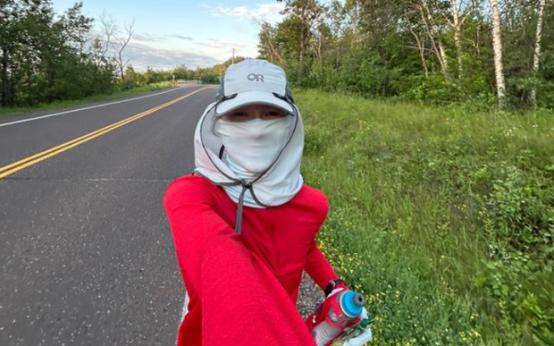 Running Towards a Future: Emily Pearson’s Journey with Erythropoietic Protoporphyria
  Los Angeles Faces Uncommon Heatwave in October
  Addressing Concerns Over Child’s Health Decisions
  Expanded Recall of Bettergoods Lemon Alfredo Fettuccine Due to Listeria Concerns