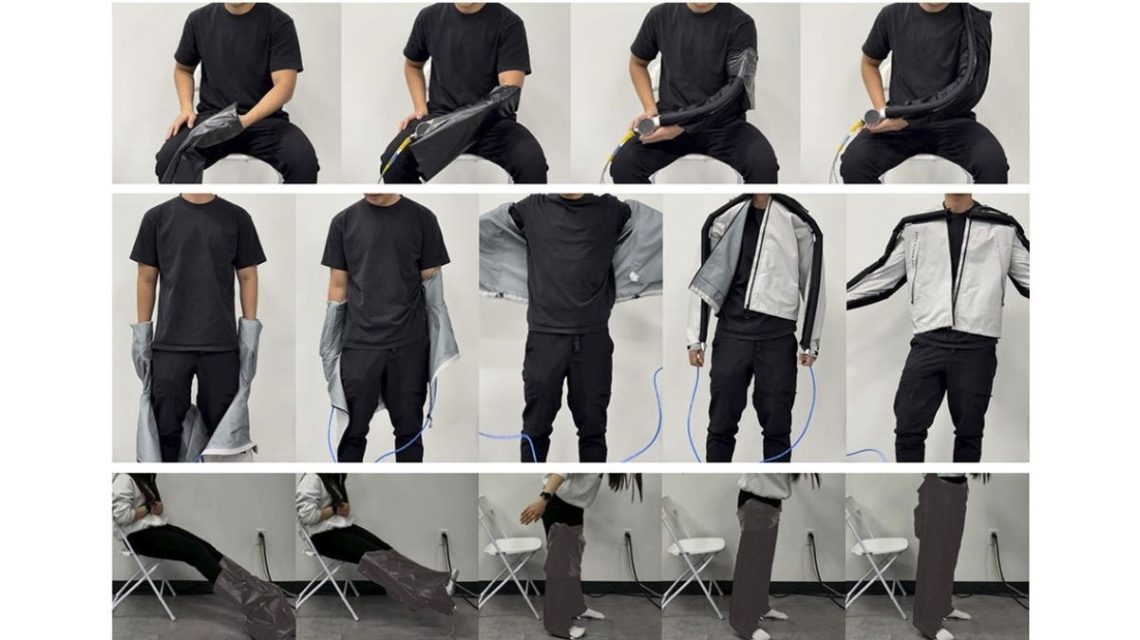
We all get dressed daily, often without a second thought. Yet, those with shoulder stiffness or balance issues know how daunting this routine can be. Fortunately, a collaboration between South Korea’s KAIST and Stanford University offers a promising solution. They have developed self-dressing garments integrated with soft, air-powered robotics.
Self-Dressing Technology
This groundbreaking technology involves garments that, when activated, move along your body to guide themselves into position. This innovation is in the research phase, but it holds potential for empowering older adults to dress with less help, prolonging their independence.
Importance of Dressing Independence
The ability to dress oneself significantly affects one’s autonomy. As mobility diminishes, the need for assistance with such personal tasks grows. The researchers aim this system at individuals with mobility constraints, such as the elderly and those recovering from injuries. With Stanford’s insights, dressing assistance is a critical area for future in-home robots. Assistive technologies like this could be vital as the need for caregiving rises.
The Physical Challenges of Dressing
Dressing involves more movement than it seems, requiring arm extension, weight shifting, and manipulating fabric. Arthritis and shoulder issues can make these tasks painful, while post-surgery recovery complicates bending. Balance is crucial too. Standing on one leg or bending over can become risky for those with instability. The self-dressing clothes aim to address these challenges, though clinical studies are needed to confirm effectiveness.
Mechanics of Robotic Clothing
The system is named SWAG, or Self-Wearing Adaptive Garment. Unlike traditional robotic arms, soft air-pressure tubes within the clothing perform the movements. As the air pressure rises, these tubes guide the garment over the body. This approach reduces friction, allowing the fabric to follow body curves smoothly. The design ensures minimal contact stress while relying on simple physical mechanics rather than complex programming.
“The idea sparked during a rainy bike ride,” shared Nam Gyun Kim, KAIST’s postdoctoral researcher. As he bicycled in the rain, the question arose: What if clothing could put itself on?”
Performance and Safety
A full outfit takes around 10 seconds to put on. Standalone garments show similar efficiency, with a jacket taking 13 seconds, pants 21 seconds, and a sleeve 14 seconds. The tests confirm these garments can unfold along the body without exceeding safety limits. Unlike rigid robotic systems, these soft materials provide a natural feel, bending graciously around the wearer.
Potential Applications
Older adults and disabled individuals are the primary beneficiaries. Rehabilitation patients might also find it useful post-injury or surgery. Beyond personal use, industrial settings may adopt this technology. Semiconductor workers and emergency personnel often require protective dressing. These garments could offer hands-free solutions for wearing such equipment.
Future Development Needs
Currently, the system is a prototype linked to a base station. Practical considerations like fitting various body shapes, maintenance, storage options, and portable air power need addressing. Adjustability and ease of use are priorities for future development. Importantly, clinical trials are essential to assess comfort and reliability for users with mobility impairments.
Implications for Your Life
Though you may not spot robotic clothes in stores soon, this innovation points to a promising direction for assistive technology. For many, this could mean a more manageable morning routine, offering independence without the need for immediate help. Researchers continue to explore affordable, user-friendly designs.
Conclusion
Self-dressing clothes address a clear need. These garments, aiding those with arthritis, limited mobility, or post-surgery recovery, present new opportunities. Older adults could enjoy more privacy and confidence with a garment that guides itself. While the KAIST and Stanford project is still evolving, its potential to enhance independence through everyday wear shows significant promise.
We’d love your thoughts on self-dressing clothing. Reach out to CyberGuy.com.
 National Security Push Faces Local Resistance in Data Center Expansion
  AI Regulation Debate Intensifies Amid Tech Leaders’ Warnings
  Jay Clayton Appointed as White House AI Czar
  Addressing the Growing Threat of AI-powered Scams and Deepfakes
  President Trump Unveils New Super Intelligence Force
  Challenges in Managing Advanced AI Models