Japan’s Sendai Nuclear Power Plant remains unharmed following a strong earthquake, as reported by the country’s nuclear authority to the International Atomic Energy Agency (IAEA). The United Nations watchdog, IAEA, stated that monitoring of the situation would continue. This event brings back memories of the 2011 disaster when a 9.1-magnitude quake and tsunami caused meltdowns at Fukushima Daiichi, placing focus on nuclear plant safety during seismic activities.
Military Assistance Deployed
In response to the earthquake, Prime Minister Sanae Takaichi deployed 300 Japan Self-Defense Forces members to southern Japan to aid in disaster relief efforts. The region was significantly affected by the quake, prompting a swift governmental response.
Mall Tragedy and Explosion
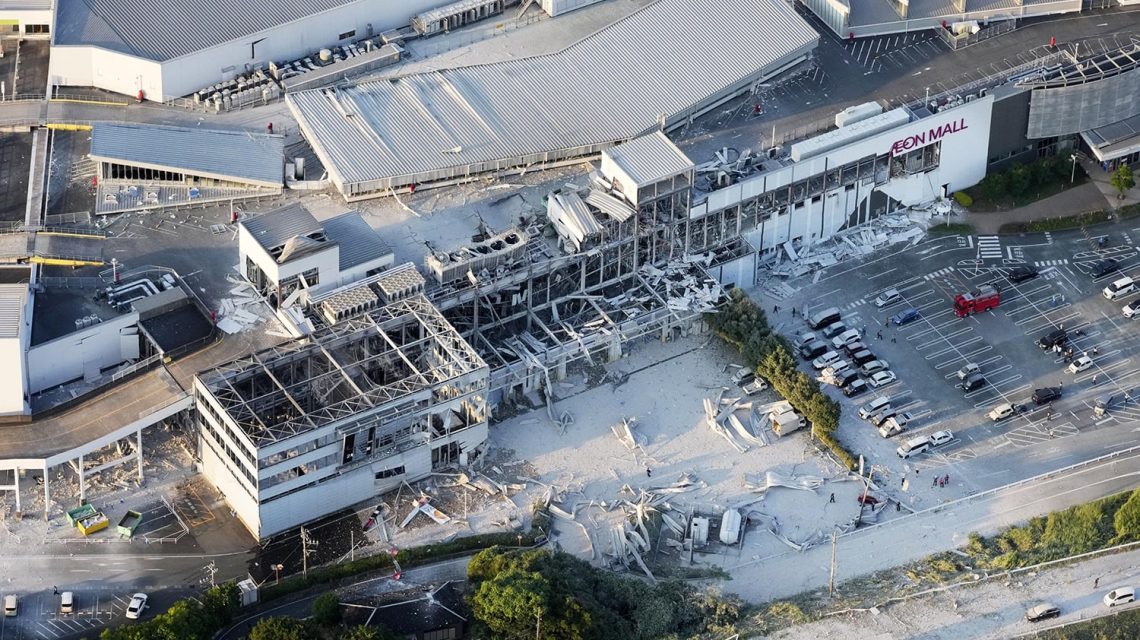
Local fire officials reported multiple individuals trapped in a mall following the earthquake. The incident took place at AEON Mall, where an explosion was heard on the second floor. State broadcaster NHK showed footage of the mall with numerous fire trucks in the parking area, capturing images of collapsed sections and debris covering roads.
Impact on Infrastructure
The quake, which registered at a magnitude of 7.1, caused extensive infrastructure damage. Aerial footage revealed at least 12 collapsed buildings. In Yatsushiro, part of Kumamoto Prefecture, several incidents with trapped individuals were noted. State broadcaster NHK highlighted significant damage in commercial areas, including mall collapses and shrine damage. Fires were reported at seven locations in Kumamoto Prefecture, increasing the urgency of disaster responses.
Earthquake Details and Tsunami Warning
The Japan Meteorological Agency recorded the earthquake hitting southern Japan at approximately 4:27 p.m. local time. It derailed a train, resulting in numerous injuries and triggering a tsunami warning for the Ariake and Yatsushiro Seas. The tsunami advisory was eventually lifted by NHK.
Japan’s Earthquake Preparedness
Japan is positioned on the “Ring of Fire,” making it a hotspot for seismic and volcanic activity. The nation experiences frequent tremors, with about 20% of global earthquakes measuring 6.0 or higher occurring here. Since the 2011 Fukushima disaster, Japan has enhanced earthquake warning systems and evacuation protocols, improving response efforts during such natural events.
 The Threat of Melting Glaciers: A Call to Action
  Police Discover Ancient Roman Artifacts Off Sardinian Coast
  Urgent Need for Action in East Africa’s Food Crisis
  Suspected Plague Death in Siberia Sparks Health Measures
  G7 Nations Agree to Release 100 Million Barrels of Oil Amid Fuel Price Surge
  Co-Pilot Attempts Hijack on Flight to Tel Aviv