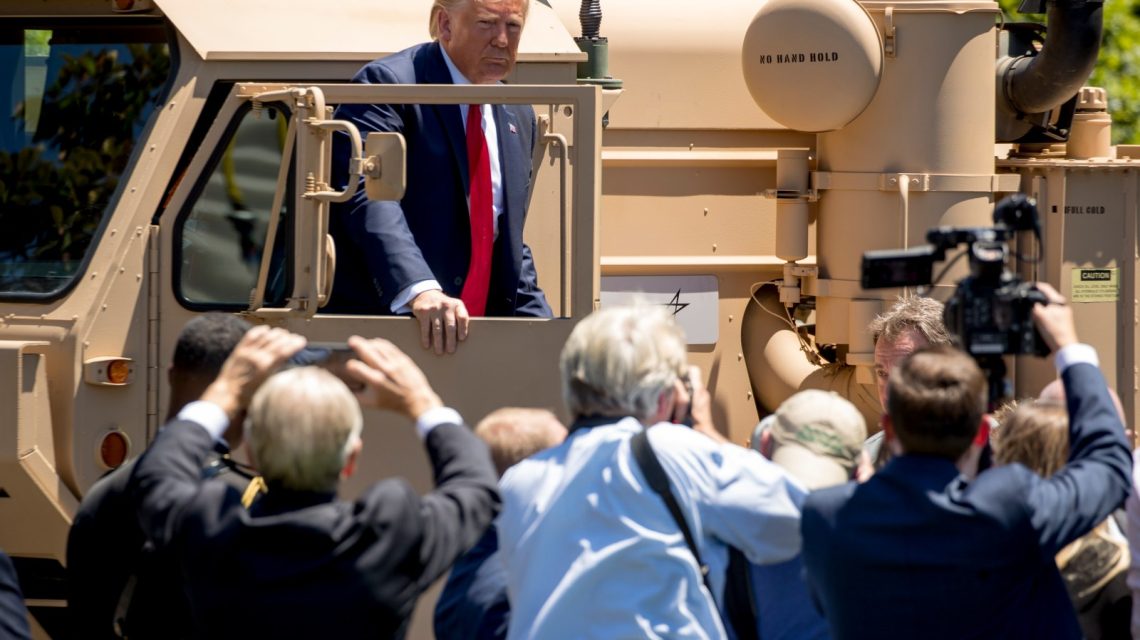
More than five months have passed since the U.S. initiated military actions against Iran. President Donald Trump and his administration stress that America still has a substantial arsenal, even as officials and analysts express concerns about diminishing stockpiles of key weapons. These concerns suggest possible limitations in confronting nations like Russia and China if future conflicts arise.
President Trump maintains that the U.S. possesses “massive amounts” of munitions, particularly certain types, as stated in a recent social media post. His message counters reports suggesting that America’s stock of some specific weapons is depleting, affecting both offensive moves against Iran and defensive strategies in the Middle East.
In a reported meeting at Camp David with Defense Secretary Pete Hegseth, Trump questioned prior briefings about shortages of munitions that influence his strategic options in Iran. The President reportedly assumed that the stockpile issues were resolved. However, White House spokesperson Karoline Leavitt denied such a meeting occurred, expressing Trump’s confidence in Hegseth’s efforts.
As tensions persist with Iran, the White House finds it challenging to secure the Strait of Hormuz, an essential trade route. Despite aggressive rhetoric, the planned prolonged strike action on Iran was paused amid stock worries. While Iran denies engagement in negotiations, questions remain about the sustainability of continued military operations with current resources.
White House deputy press secretary Anna Kelly provided reassurances, noting adequate supplies of munitions and ongoing encouragement for defense companies to increase domestic weapon production. Amidst this, concerns extend beyond the Middle East, impacting regions like Ukraine, which rely on U.S. air defenses against Russian offensives. Observers worry about readiness in potential confrontations with China over Taiwan due to reported reductions in air defense missile availability.
Current Stockpile Challenges
The Heritage Foundation, a conservative research institute, reported dwindling air defense missile inventories. They warn the U.S. would exhaust these supplies within days if China initiated conflict targeting U.S. facilities. Exact stock figures remain classified, but indications point to significant reductions in both offensive and defensive armaments.
Reports identify shortages in five critical missile types due to engagements with Iran and defensive efforts against regional threats to U.S. locations and allies:
- Army Tactical Missile Systems (ATACMS) and Precision Strike Missiles (PrSMs): These tactical missiles have been extensively used, reportedly depleting almost all ATACMS and PrSM inventories according to Reuters. They’re key for striking distant targets accurately and reducing the need for air assaults, thus minimizing aircraft risks.
- Tomahawk Missiles: Nearly half of the U.S. Tomahawk stockpile has been used since February. Over 1,000 were launched early in the conflict, according to The Wall Street Journal. These cruise missiles, launched primarily from ships, have been essential to naval operations since the 1980s.
- Patriot and THAAD Systems: Demand for air defense systems has surged globally. Patriots crucially intercept various threats, famous for countering Russian missile strikes in Ukraine. Both this system and THAAD defend against Iranian ballistic missile threats but have witnessed substantial reductions.
Based on Center for Strategic and International Studies and CNN reports, pre-conflict THAAD interceptor numbers were around 452, decreasing to 234 by late July. Patriot interceptors, once numbering 2,330, fell to approximately 759. Data suggest the U.S. has used nearly 80% of THAAD and about half of Patriot stocks.
 Elisha Wiesel’s Reflections on Antisemitism and Jewish Identity
  Israel Marks Third Anniversary of Hamas-Led Attack with Commemorations
  The Impact of October 7, 2023: Understanding Hamas’ Attack and Its Aftermath
  Grief and Memory: Families and Nations Respond to Tragedy
  Remembering Hersh Goldberg-Polin
  Commemoration of the Oct. 7, 2023 Hamas Attack on Israel