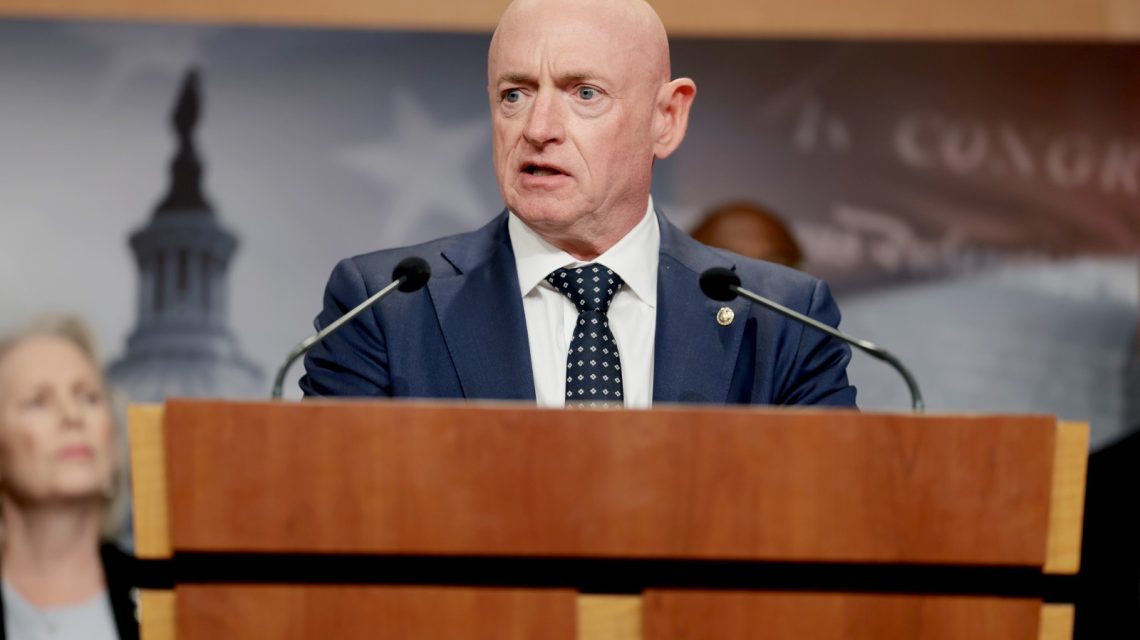
Arizona Senator Mark Kelly has recently addressed the ongoing speculation concerning his potential candidacy for the presidency in 2028. Conversations about his political future emerged in a publication on Monday, highlighting the growing interest in his candidacy. While Kelly has been suggested as a possible contender, he remains non-committal about running.
When Politico questioned Kelly about his decision to support Georgia Senator Jon Ossoff, another individual rumored to be considering a 2028 presidential bid, Kelly humorously deflected by asking, “Hey, why’d you put it in that order?” This exchange highlights the active discourse surrounding Democratic hopefuls as the political landscape begins to shift ahead of the midterm elections.
Potential Presidential Candidates and Their Plans
The field of presidential candidates is poised to take shape soon. Traditionally, candidates declare their candidacy after the midterms, yet some announce prior to these elections. Prospective Democratic candidates are already working on public outreach, aiming to bolster their presence in important primary states.
Although the first votes are over a year away, polls are beginning to reflect initial momentum among potential candidates. Early poll results help donors and voters ascertain the viability of these candidates, affecting their ability to fundraise and gain media exposure. These initial polls mainly assess name recognition and are subject to shift once the primaries commence.
In recent polls, Kelly is positioned below prominent figures such as former Vice President Kamala Harris, former Transportation Secretary Pete Buttigieg, California Governor Gavin Newsom, and Representative Alexandria Ocasio-Cortez. However, he maintains some backing from Democrats.
Poll Results Reflect Varying Levels of Support
According to a poll conducted by Focaldata and the Financial Times, Harris leads with 30 percent support, followed by Newsom, Buttigieg, and Ocasio-Cortez. The poll, which included 2,152 adults, ranked Kelly and Ossoff at 5 percent each, collected between August 7-11.
Another survey by McLaughlin & Associates placed Kelly at 7 percent, with Harris leading at 28 percent and Newsom at 17 percent. Buttigieg and Ocasio-Cortez trailed with smaller shares. This poll covered 1,000 general election participants, including 472 Democratic voters, between July 15-21.
An Echelon Insights poll placed Kelly at 4 percent compared to Harris’s 21 percent. Newsom, Buttigieg, Ocasio-Cortez, and Shapiro followed with various levels of support. Conducted between July 9-13, it surveyed 1,004 likely voters with a margin of error of plus or minus 3.6 percentage points.
Supporters of Kelly emphasize his robust electoral performance in Arizona, considered a swing state. Initially elected in 2020 with a narrow margin, he secured a full term in 2022 with a nearly 5-point lead. Arizona’s electorate is evenly divided, which was also evident in the 2024 presidential election where Trump garnered significant support.
Kelly’s reputation as a moderate senator aligns with Arizona’s voting tendencies. This perception suggests that a moderate candidate from a swing state might have the edge against a Republican adversary.
Kelly’s Position in Prediction Markets
In recent months, Kelly’s ranking in prediction markets has shown incremental gains, though he remains behind other potential competitors. Early Monday afternoon data from Kalshi reflected a 5.3 percent chance for Kelly to secure the nomination. Leading the prediction charts are Ocasio-Cortez and Newsom, with Ossoff and Harris trailing.
On Polymarket, Kelly’s chance sits at 3 percent. The leaders there include Ocasio-Cortez, Newsom, and Ossoff, among others. Prediction markets, serving as platforms for traders to wager on political outcomes, aggregate real-money wagers into probability estimates. Although they offer insights into trader sentiment at specific moments, they do not always predict outcomes accurately.
Statements from Potential Democratic Candidates
Vice President Harris, in contemporary discussions, has shown openness to the idea of running again. In April, she responded to Reverend Al Sharpton’s inquiry about her intentions by asserting her thoughtful consideration of the possibility. Harris reflected on her significant experience within the White House and her preparedness for the demands of the presidency.
California Governor Newsom, in prior interviews, acknowledged the potential for a presidential run. While he contemplates the idea, he attributes his decision to ‘fate’ and emphasizes readiness to contend if the situation aligns with his vision.
Alexandria Ocasio-Cortez, during a conversation with David Axelrod, highlighted her commitment to the country’s progression over personal ambitions. She stressed the lasting impact of policy advances like healthcare and workers’ rights over transient political roles.
 Sen. Cotton Opposes Permanent Daylight Saving Time
  Steve Hilton’s Latino Outreach and Gubernatorial Ambitions
  The Need for Reform in Presidential Nominations
  Controversy Surrounds Performances at Gillette Stadium
  Celebrity Controversies Over Political Activism and Speech
  Trump Pushes for Permanent Daylight Saving Time, Sharing Senator’s Contact Information