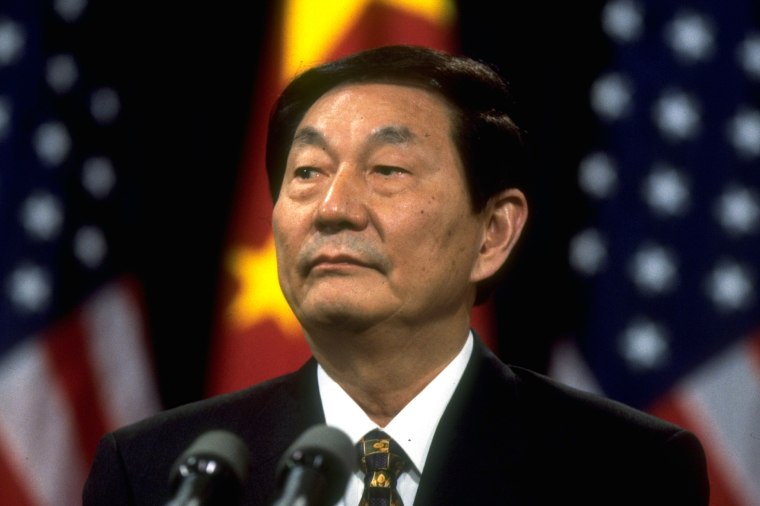
BEIJING — On Tuesday, China bid farewell to former Premier Zhu Rongji, who passed away last week at 97. The cremation of Zhu’s body was marked by a lowering of the national flag to honor the reformer known for his pragmatic policies. Citizens used the occasion to remember an era marked by change and reflect on Zhu’s complex legacy.
Security measures were stringent across Beijing, especially around Tiananmen Square and Zhongnanhai, China’s political nerve center. These areas are adjacent to the path leading to the Babaoshan crematorium.
President Xi Jinping and the Politburo standing committee’s seven members stood in respectful silence, bowing three times before Zhu’s cremation at the cemetery designated for top officials and national heroes, according to the state-run news agency, Xinhua.
Former President Hu Jintao, aged 83, who has been absent from several public occasions recently, sent a condolence wreath for Zhu. Zhu held office as vice premier from 1991 to 1998, later serving as premier until 2003. During the 1990s, he played a key role in directing China’s economic overhaul.
Under Zhu’s leadership, from 1999, economic reforms aided China’s entry into the World Trade Organization in 2001. These reforms curbed inflation, strengthened tax and banking systems, and reorganized the state sector, leading to the loss of numerous jobs at failing firms.
Zhu once stated, “My defining trait — my guiding principle — is independent thinking.”
Zhu’s political career faced challenges, including a temporary revocation of Communist Party membership in the late 1950s following a brief, unguarded speech. His party status was reinstated roughly twenty years later.
Following his death, social media in China saw an outpouring of grief, although some responses were mixed. One removed Weibo post, China’s version of X, cited Zhu as “the main culprit” of job losses, yet others praised his strong leadership.
In 2001, Zhu acknowledged, “I know that quite a considerable number of ordinary people in China like me… But there are also some who hate me to the core.” The subdued official response to Zhu’s death is part of a pattern seen with other former premiers over the past decade. Public expressions of sorrow were tightly controlled, with increased security and censorship.
Authorities routinely treat these deaths with caution, wary of the potential for public emotions to spark instability. Historical precedents include the outpouring of grief following Zhou Enlai’s passing in 1976 and the pro-democracy movements triggered by Hu Yaobang’s death in 1989.
Nevertheless, memories of Zhu remain vivid. Zhao, a 39-year-old IT worker, commented on the nostalgia and emotional impact Zhu’s passing had on people, recalling the rapid economic growth and reform period two decades ago.
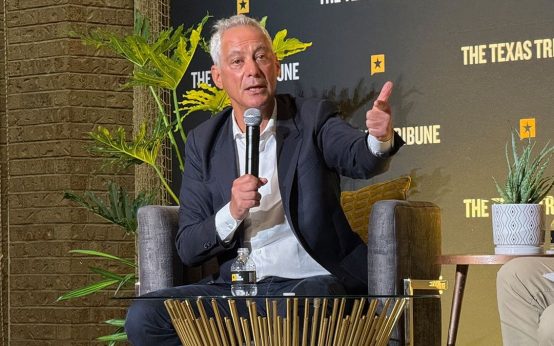 Rahm Emanuel Advises Against Impeaching Trump and Calls for Ethics Reforms
 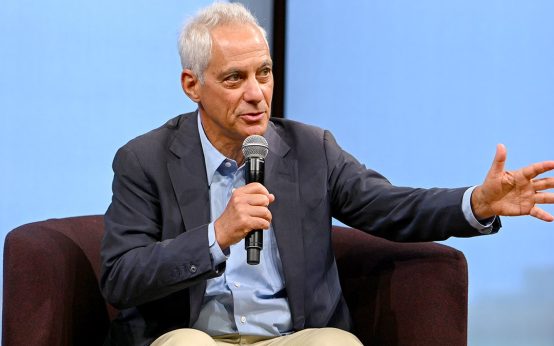 Rahm Emanuel Discusses Potential Presidential Run and Jewish Identity
 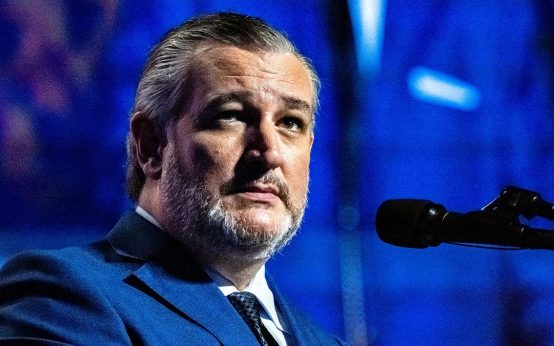 JD Vance’s Influence Grows as 2028 Speculations Arise
  Laura Ingraham Criticizes Democratic Policies on ICE and Immigration
  Jay Clayton Appointed as White House AI Czar
  Debate Over Democratic Socialism Intensifies Within Democratic Party