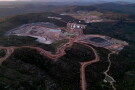
Brazil is becoming an alternative source for rare earths, challenging China’s dominance. These minerals are essential for many technologies, including mobile phones and renewable energy systems. Foreign investments, especially from the United States and Australia, are growing rapidly in Brazil.
Increased Investment and Foreign Interest
A significant portion, about 42%, of Brazil’s rare earth exploration applications involves foreign-owned firms. Most of these investments come from companies in the U.S., Australia, and Canada. The rush to secure these minerals has intensified, with over 86% of exploration applications filed in the last three years.
Brazil has notable rare earth reserves, second only to China. The government’s records show a sharp increase in exploration applications, highlighting the growing interest in Brazil’s mining potential.
Environmental and Indigenous Concerns
The potential for environmental damage is a major concern. Many applications are near the Amazon rainforest and Indigenous lands. Mining activities in these areas can lead to deforestation and pollution, impacting local ecosystems and communities.
“Brazil’s rare earths are significant not just because of their size,” stated Robert Muggah of the Igarape Institute, “but because they intersect with resource nationalism and competition with China.”
U.S. Investments and Strategic Moves
In response to China’s export restrictions, U.S. investments in Brazil’s rare earths have surged. The U.S. government has a stake in Serra Verde, Brazil’s only commercial rare earth producer. In 2026, a deal valued at $2.8 billion was made by USA Rare Earth to acquire Serra Verde.
Additionally, Alpha Minerals Brazil and Mineracao Apollo are key players in the sector, backed by U.S. interests. The U.S. Department of Commerce has committed significant support, with over $1.6 billion allocated to facilitate rare earth production.
Risks and Economic Opportunities
Mining can leave a substantial environmental footprint. Toxic chemicals and radioactive waste are risks associated with rare earth extraction. Despite these challenges, there is a push to expedite environmental licensing for mining projects, aiming to stimulate economic growth.
The success rate for developing lucrative mines is low. Of 1,000 potential projects, only two might become successful mines. Yet, foreign companies continue to invest, attracted by Brazil’s vast reserves.
China’s Position and Brazil’s Strategy
China, although not filing recent applications in Brazil, shows interest in the country’s resources. The Chinese state-owned China Nonferrous Metal Mining Group and Shenghe Resources Holding have engaged with Brazilian firms to explore possibilities.
Brazil remains open to foreign investment but seeks to retain processing and technology within the country. Proposed legislation aims to ensure that mining benefits the Brazilian economy by mandating technology transfer and local processing.
President Lula has emphasized the importance of processing minerals domestically to safeguard national interests and create jobs in Brazil.
 Scaling Advanced Nuclear Power to Meet Energy Needs
  Supreme Court’s New Term Tackles Climate Liability and Key Legal Battles
  Tick Crisis on Martha’s Vineyard: A Growing Health Threat
  Colorado’s Emissions Regulation and Its Broader Implications
  The Threat of Melting Glaciers: A Call to Action
  Collapse of Hawai’i’s Hōlei Sea Arch Amidst Storms