President Donald Trump has taken a distinct approach towards the U.S.-China trade relationship. In his first term and early into his second, he differentiated himself by taking decisive actions to reshape trade dynamics between the two nations. These actions included imposing tariffs and adopting measures aimed at recalibrating trade flows and reducing risks in supply chains. This shift was favorable for American industrial workers who had suffered from factory closures and unfair trade practices.
However, Chinese leader Xi Jinping has responded strategically. He has restricted access to essential minerals, manipulated the renminbi’s value, erected trade barriers, and redirected goods through other countries to mitigate the economic effects of U.S. tariffs. Although the U.S.-China trade deficit has decreased, China maintains a massive overall trade surplus, reaching $1.2 trillion last year. Xi’s upcoming high-stakes summit in Washington on September 24 holds significant implications.
Trade Concerns: Cars, Currency, and Chips
Trump’s changes to the trade dynamics are notable but further action is needed on three critical issues that threaten U.S. manufacturing: cars, currency, and computer chips.
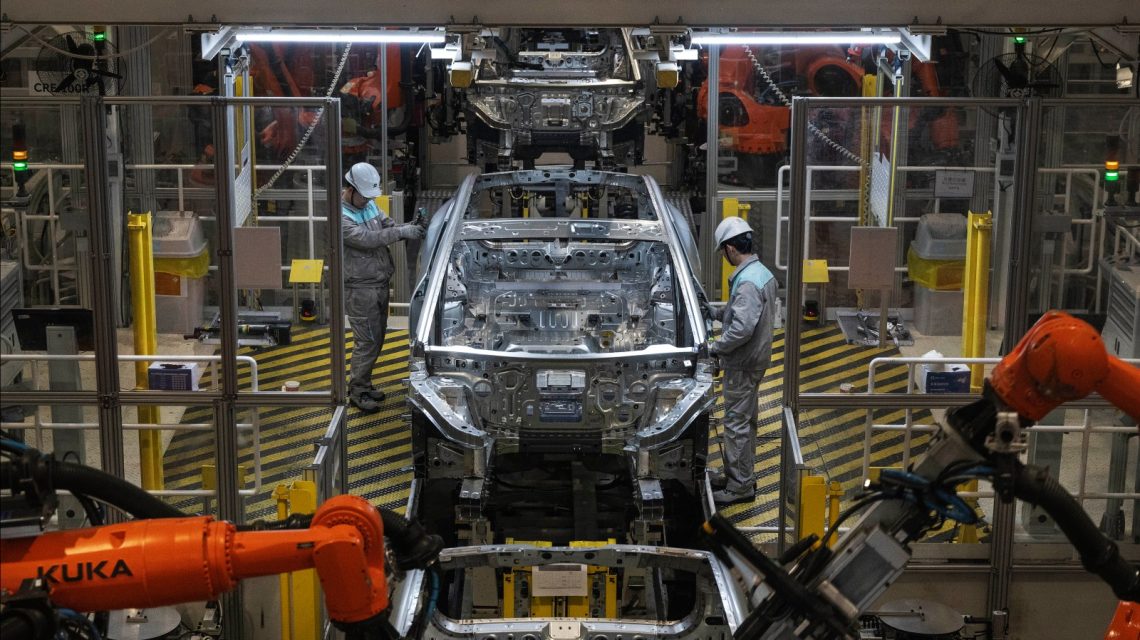
Chinese Auto Industry
China’s auto industry is expanding globally through a combination of subsidies, technology transfer, and supply chains involving forced labor. In 2024, this was seen as an existential threat to American auto jobs—a view shared by lawmakers and auto CEOs. Despite this, Trump has expressed openness to Chinese auto factories within the U.S. while restricting imports. The auto sector is crucial to the broader manufacturing ecosystem in the U.S., and entrusting it to a foreign adversary poses significant risks. Foreign investment can benefit American workers, but allowing foreign control in vital sectors could compromise national security.
Currency Manipulation
China’s currency, the renminbi, is controlled by Beijing, differing from the freely floating U.S. dollar. Through various mechanisms, its value is suppressed, lowering Chinese export prices. This manipulation diminishes U.S. trade enforcement efforts as a devalued currency offsets penalties like tariffs and anti-dumping duties. Consequently, despite existing U.S. tariffs, China’s exports to the U.S. grew significantly. The Trump administration has yet to address this critical issue, although it possesses tools such as confronting exchange rate manipulation and integrating currency practices into trade enforcement strategies.
Semiconductor Chip Manufacturing
Efforts to bolster domestic semiconductor chip production have been evident in Trump’s presidency, building on prior initiatives. With commitments from companies and significant investments, the U.S. is positioned to enhance its chip manufacturing capabilities. However, Trump’s willingness to entertain lobbying from multinationals, like Nvidia, raises doubts about commitment. Allowing such exceptions undermines the goal of reshoring microelectronics and securing crucial supply chains.
Bilaterial Trade Dynamics
Trump’s approach towards China has often been clear, contrasting with previous administrations that engaged in unproductive dialogues. His tariffs on unfairly traded Chinese imports have remained impactful. However, his stance on cars, currency, and chips appear inconsistent with the broader trade agenda. A cohesive strategy addressing these three issues would better align with his established trade position.
The views represented are those of Scott Paul, president of the Alliance for American Manufacturing.
 Sen. Cotton Opposes Permanent Daylight Saving Time
  Steve Hilton’s Latino Outreach and Gubernatorial Ambitions
  The Need for Reform in Presidential Nominations
  Controversy Surrounds Performances at Gillette Stadium
  Celebrity Controversies Over Political Activism and Speech
  Trump Pushes for Permanent Daylight Saving Time, Sharing Senator’s Contact Information