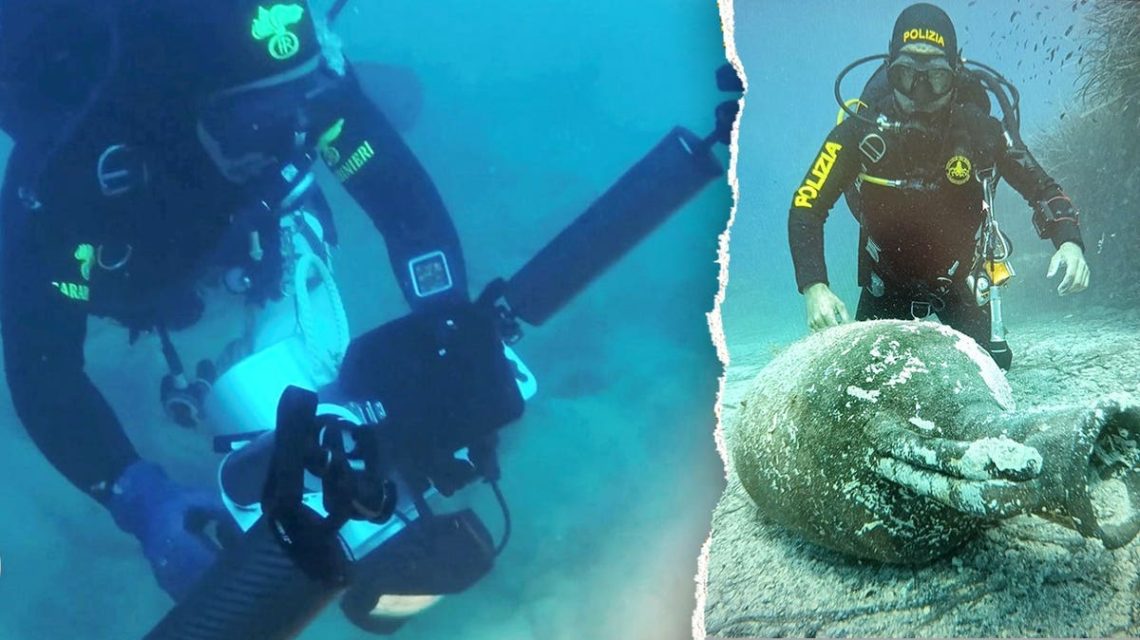
Police officers in Italy recently made a remarkable discovery during a routine dive: Roman artifacts that had been resting underwater for 2,000 years. These artifacts were found off Porto Rotondo’s coast in Sardinia, an island in the Mediterranean Sea, as reported by Cover Images.
The Sassari Police Headquarters announced this discovery in late August. The officers who found these relics were stationed in Olbia, Sardinia. They first saw broken terracotta while conducting an underwater safety operation. Upon returning for another dive, they discovered largely intact vessels.
“Careful dredging action allowed the identification and subsequent recovery of three intact terracotta artifacts, specifically a transport basin, along with other minor items,” officials stated, according to Cover Images.
The artifacts were documented and handed over to the Archaeological Superintendent. Photos reveal police divers examining the seabed and ancient pottery in Sardinian waters. One picture shows an intact amphora surrounded by thick seagrass on the ocean floor, while another shows a diver inspecting a large, encrusted vessel.
In ancient times, amphorae transported materials like wine, olive oil, and grain. The police suggest these artifacts might date from the fall of the Roman Republic to the start of the Roman Empire. Ancient pottery off Sardinia could date from the second half of the 1st century B.C. to the 1st century A.D., potentially originating from Lazio, Campania, or the Iberian Peninsula.
Specialists plan to examine these vessels to learn about their age and origins. They will also explore if these artifacts are part of a larger archaeological site that might contain more treasures.
Though unique, such discoveries are not new to Italy. Earlier this year, Italian authorities discovered a Roman merchant shipwreck carrying amphorae in the Ionian Sea. This vessel, found during a maritime patrol, was dated to the late Imperial era, which spans approximately 284 A.D. to 641 A.D.
 The Threat of Melting Glaciers: A Call to Action
 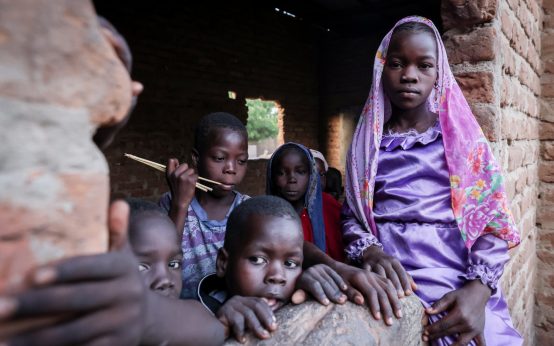 Urgent Need for Action in East Africa’s Food Crisis
 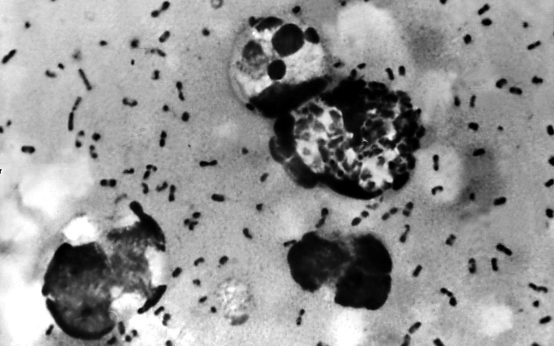 Suspected Plague Death in Siberia Sparks Health Measures
  G7 Nations Agree to Release 100 Million Barrels of Oil Amid Fuel Price Surge
  Co-Pilot Attempts Hijack on Flight to Tel Aviv
  U.S. Revises Global Health Aid with New Strategy