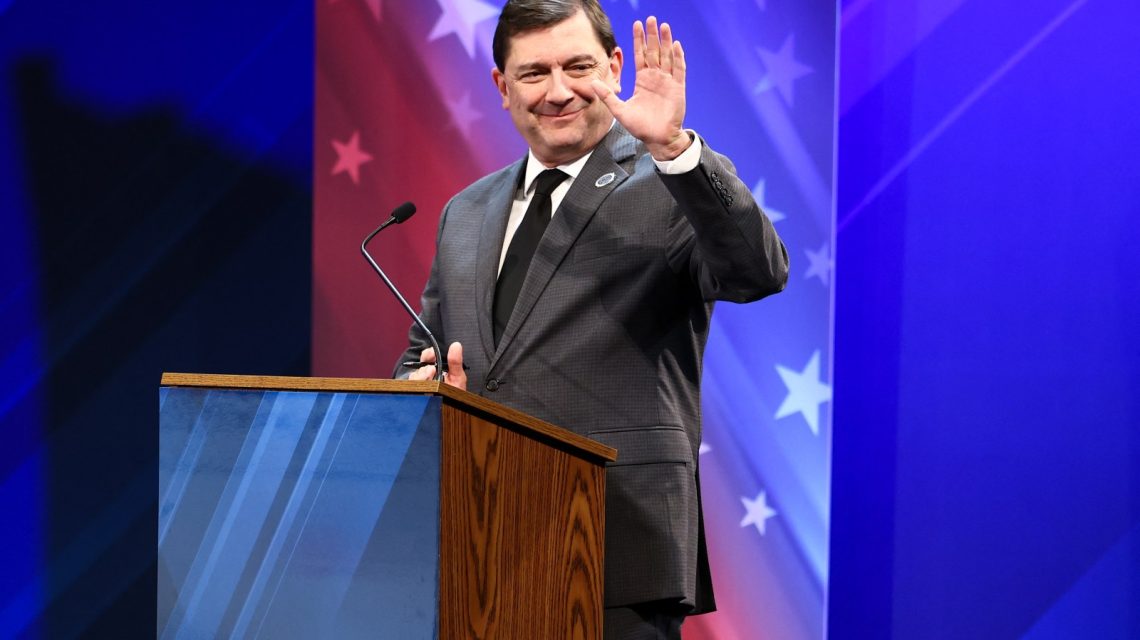
Troy Jackson, a Democratic candidate for the U.S. Senate from Maine, has significantly outpaced his Republican opponent, Susan Collins, in fundraising over recent months. According to recent financial filings, Jackson’s campaign raised $20.4 million in the initial three months since his entry into the race in late July. This amount is four times what Collins’ campaign managed to gather in the same timeframe.
In a press release, Jackson’s team highlighted the strong grassroots energy fueling their campaign. Spending reports show Jackson outspent Collins $16.5 million to $10.9 million during the quarter, wrapping up with slightly less cash remaining.
Jackson expressed his dedication to the people of Maine, emphasizing that he owes nothing to affluent donors. His late entry into the race, following Graham Platner’s exit, meant he was not required to file a quarterly report until recently. Collins’ team raised concerns about the transparency of Jackson’s fundraising practices.
Troy pledged full transparency regarding campaign donors, but we are well into early voting without insight into his campaign’s financial backers,
Jackson disclosed that his campaign funds originate from 350,000 donations by 200,000 individuals, with 95 percent of donations under $100. His campaign registered $16.5 million in expenses, ending the quarter with $4 million on hand and $1 million in debt. Collins raised $5.2 million, spent $10.9 million, and concluded the period debt-free, holding $5.4 million.
Despite Jackson’s fundraising success, the Republican party still holds a broader financial advantage in Maine and other Senate races. AdImpact’s data indicates $149 million of the $259 million spent on ads favored Republicans. On average, $221.55 was spent per voting-age adult in Maine, making it the year’s priciest race.
Troy Jackson vs. Susan Collins: Poll Analysis
Jackson has maintained a narrow lead in most polls since entering the race. A recent InsiderAdvantage poll gave him a two-point edge, a finding echoed by a Suffolk University poll. The latter surveyed 500 voters in early October, showing Jackson at 49 percent and Collins at 47 percent, with 4 percent undecided. However, many poll results fell within the margin of error, and Collins has historically overcome polling challenges, like in the 2020 midterms.
Final Stages of the Maine Senate Race
The candidates concluded their debates before the upcoming elections on November 3. Discussions revolved around Collins promoting her bipartisan achievements, while Jackson critiqued her association with Donald Trump. In their final debate, issues like the U.S. Supreme Court and campaign finances were contentious topics. During this event, a climate protester disrupted proceedings, drawing reactions from both candidates.
For further details, contact Newsweek editors Daniel Orton and Dave Siminoff.
 The Geopolitical Shift in AI Infrastructure
  Nationwide ‘No Kings’ Protests Mobilize Ahead of Early Voting
  Advocating for Guaranteed Income as a Solution for Affordability
  Thousands to Join ‘No Kings’ Rallies in Southern California
  Trump’s Waiver of Russia Sanctions Faces Backlash From Lawmakers
  Analyzing Switzerland’s Fiscal Model and Wealth Tax