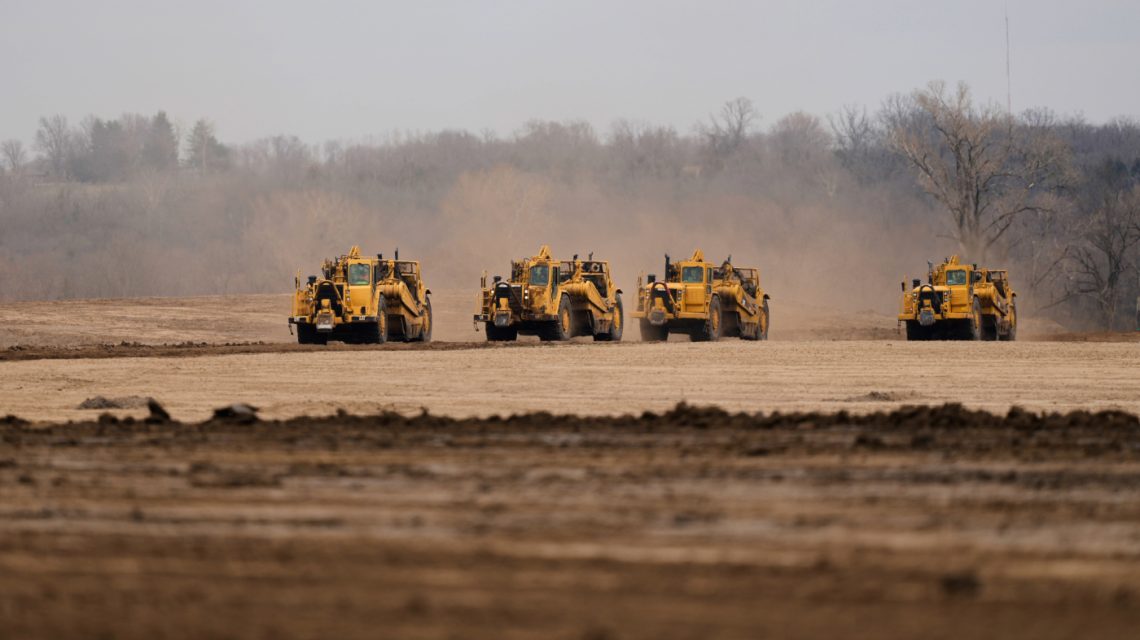
Earth movers ready a site for a massive AI data center in Independence, Mo., highlighting a broader trend in the industry. Democrats show increasing resistance to artificial intelligence and energy sectors, presenting Republicans with a chance to advance American technological leadership while benefiting their constituents. The next computing iteration favors rural areas, mostly in conservative regions, due to factors like land pricing and grid capacity. These dynamics present natural advantages for development in red states.
Google’s recent $4.3 billion deal to revive a nuclear power plant in Iowa and upgrade reactors nationwide illustrates the movement. The tech giant entered a 20-year power purchasing agreement following these upgrades, with electricity delivery expected by 2028. New data centers, planned by 2028, will be located farther from cities, becoming more rural on average. This trend naturally benefits Republican-led states due to favorable geography.
Companies prefer building in conservative areas where land is affordable, and electrical infrastructure additions face fewer legal hurdles. These locations boast regulatory environments conducive to attracting investments, akin to situating a steel mill near a coal mine to minimize transportation costs. A real estate analysis by JLL found most new data centers will emerge in Trump-supporting states. A significant portion targets rural Southern counties, contributing to a new business migration.
Loudoun County, Virginia, the world’s largest data center hub, anticipates $1.3 billion in taxes from these centers and related sectors next year, constituting about 40% of county revenue, per The New York Times. This financial influx supports infrastructure improvements, educational facilities, and tax reductions, directly impacting about 15,000 jobs locally.
Beyond geography, red-state utilities and legislatures expedite permitting and other legal facets, enhancing their competitive edge. These advantages cluster notably in Republican-voting regions, not Democratic strongholds. A Pacific Research Institute study highlighted California’s power supply issues despite its tech hub status. The state’s mandates aim for 100% green energy by 2045 but hinder data center growth due to energy supply limitations.
While California’s tech legacy endures, aggressive policies imitating prohibitions cap future growth potentials. These ideological constraints potentially hand strategic advantages to rivals like China, which doesn’t hesitate to expand its energy and computational capacities.
Some Democrats further challenge the industry with proposals like Rep. Alexandria Ocasio-Cortez’s AI Data Center Moratorium Act. This act seeks a federal pause on new AI data centers, risking ceding economic ground to competitor nations. America currently leads in AI development, maintaining critical intellectual software superiority over China. Nevertheless, even left-wing think tanks acknowledge the threat of neutralized advantages stemming from restrictive energy infrastructures.
Building data centers can take as few as two years, yet major electrical transmission infrastructure requires upward of a decade and a half. Policy remains a significant bottleneck. Without stable electricity, advanced AI models cannot meet computational demands. Democrats inadvertently offer Republicans a political advantage. Capitalizing on a pro-growth policy could bolster red state economies while reinforcing technological dominance.
 George Santos Expresses Interest in Becoming Trump’s Press Secretary
  The Role of Press Secretaries in the Trump Administration
  Nationwide Rallies Encourage Early Voting Amidst Concerns Over Election Integrity
  Nationwide ‘No Kings’ Protests Mobilize Ahead of Early Voting
  Advocating for Guaranteed Income as a Solution for Affordability
  Effective Ways to Organize Photos on Various Smartphones