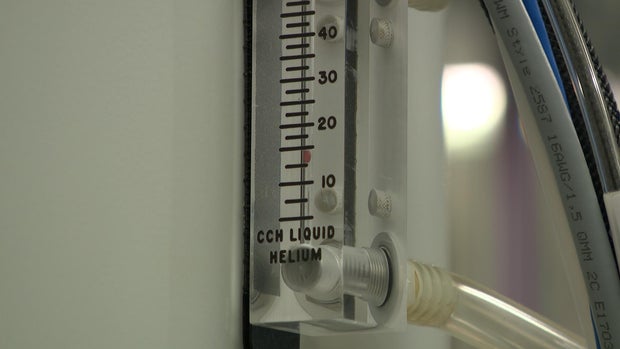
The world is experiencing a helium shortage, linked to recent Iranian strikes on a Qatari gas facility and the effective closure of the Strait of Hormuz. This disruption impacts various industries, with the war showing no signs of ending soon.
Often associated with party balloons, helium is crucial for smartphones, cars, MRI machines, rocket launches, and missiles. The element is hard to extract and transport, requiring extreme cold during transit. Once in the atmosphere, it cannot be recovered.
The Helium Supply Chain
Cliff Cain, president of a helium exploration company, has warned of vulnerabilities in the helium supply chain for years. The global helium supply is heavily dependent on just a few regions: Algeria, Poland, Russia, Qatar, and the United States. Most helium comes from Qatar and the U.S.
“All it takes is a few of those to fall and the whole supply chain comes unraveled,” Cain said.
The conflict in Iran has intensified these vulnerabilities. The Strait of Hormuz’s closure trapped a significant portion of the world’s helium supply in the Persian Gulf. Further complicating matters, the Ras Laffan facility in Qatar, a major helium producer, was damaged in Iranian strikes.
Qatar’s efforts to restore Ras Laffan’s full operations may take up to three years. Meanwhile, U.S. helium exports have surged by 70% since the conflict’s onset, as noted by U.S. Census Bureau export data. However, increasing reliance may not be sustainable.
Rising Helium Prices and Global Demand
Rich Brooke, a former executive at Air Liquide, reports that spot prices for helium have tripled since the war began. Companies in South Korea, Taiwan, and Singapore are turning to the U.S. for supply. Yet, sustained increases in demand further strain the U.S.’s ability to meet global needs.
“If you can tell me what’s going to happen in the Strait of Hormuz between now and three months from now, I can tell you exactly what’ll be happening in the helium business,” Brooke remarked.
Helium is indispensable for military applications. The Pentagon has requested increased production of certain weapons that require helium. Cain stresses the reliance of modern warfare on helium for missiles and hypersonics.
Impact on Science and Electronics
In scientific research, helium is used in nuclear magnetic resonance machines for drug development. Joe Sachleben, from the University of Chicago lab, illustrates helium’s importance in cooling processes. Without it, critical equipment like magnets would fail.
The semiconductor industry, a major helium consumer, faces challenges too. Polar Semiconductors’ President, Surya Iyer, explains that helium is integral to manufacturing processes for chips used in various industries. As demand for semiconductors surges, so does the demand for helium.
Measures to Mitigate Helium Shortage
To manage helium supplies, companies adopt rationing strategies. Polar has diversified its suppliers but still experiences rationing. Sachleben’s lab has similar constraints, impacting research operations.
Sachleben received notice from an alternative supplier indicating potential shortages. As the conflict persists, concerns about continued helium access remain.
“I don’t see an end to the current conflict,” Sachleben expressed.
 Impact of 2010 Deepwater Horizon Spill on Gulf of Mexico Marine Life
 Ancient Ring Discovery in Submerged Harbor of Cleopatra
 Meta’s Settlement and AI’s Impact on Children’s Development
 Help Name the Feisty Red Panda Cub at the National Zoo
 Expedition Seeks Evidence of Amelia Earhart’s Missing Aircraft
 Search for Noah’s Ark Advances with Completion of 3D Model