Indictment of Raúl Castro
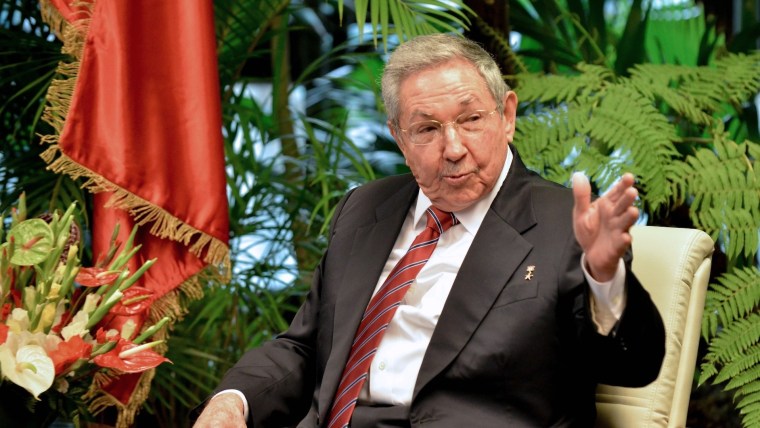
Former Cuban President Raúl Castro faced indictment by the U.S. Justice Department on charges related to the 1996 shooting of two civilian planes, resulting in the deaths of four Cuban exiles. Acting U.S. Attorney General Todd Blanche announced the charges, which include conspiracy to kill U.S. nationals, murder, and destruction of aircraft. The indictment also names five Cuban fighter pilots involved in the incident.
Details of the Incident
The charges were made public in a press conference at Miami’s Freedom Tower, known as “the Ellis Island of the South,” on Cuban Independence Day, May 20. Blanche stated that Cuban military aircraft had fired missiles at the civilian planes, a decision that reportedly passed through a command chain to Raúl and Fidel Castro.
The crowd in Miami greeted the announcement with applause. Officials paid tribute to the four men killed by the Cuban Air Force on February 24, 1996. The victims were involved with Brothers to the Rescue, a group founded by Cuban American pilot José Basulto to rescue Cuban migrants. The organization’s planes sometimes entered Cuban airspace, drawing official warnings from the Federal Aviation Administration.
International Reaction
In response to the incident, reports from the United Nations’ International Civil Aviation Organization and the Inter-American Commission on Human Rights concluded the victims died due to actions taken by the Cuban State in international airspace without standard interception procedures.
The U.S. government swiftly condemned Cuba’s actions, leading to sanctions. Over the years, Cuban American lawmakers and activists have consistently called for legal action against Castro.
Family and Legal Reactions
Relatives of the victims attended the announcement of the indictment. Miriam de la Peña, the mother of one of the victims, expressed gratitude for the recognition of the incident as murder.
Cuba is not anticipated to extradite Castro, and indicted foreign leaders are rarely brought to the U.S. Nonetheless, a warrant for Castro’s arrest has been issued, with a call for him to appear in Miami to face charges.
Cuban Government’s Response
The Cuban government, led by President Miguel Díaz-Canel, condemned the indictment, accusing the U.S. of distorting the events of 1996. Cuban American lawmakers in the U.S. celebrated the indictment, calling it a step toward justice.
Despite stepping down as president, Castro still holds influence in Cuba, with celebrations for his upcoming 95th birthday announced before the indictment.
Context of U.S.-Cuba Relations
The indictment comes amid U.S. pressure on Cuba under the Trump administration. The U.S. has urged Cuba to adopt political and economic reforms, with threats of military action. Cuba’s close alliance with Venezuela faced a blow with the downfall of Nicolás Maduro’s regime, leading to reduced oil shipments and fuel shortages in Cuba.
Residents in Havana face prolonged blackouts and lack of access to water, with the Trump administration’s sanctions seen as efforts to destabilize Cuba. President Díaz-Canel responded to the sanctions, emphasizing Cuba’s resistance to U.S. influence.
 Sen. Cotton Opposes Permanent Daylight Saving Time
  Steve Hilton’s Latino Outreach and Gubernatorial Ambitions
  The Need for Reform in Presidential Nominations
  Controversy Surrounds Performances at Gillette Stadium
  Celebrity Controversies Over Political Activism and Speech
  Trump Pushes for Permanent Daylight Saving Time, Sharing Senator’s Contact Information