A rare strain of Ebola, known as the Bundibugyo virus, has recently been identified in an outbreak that presents significant challenges. Transmitted through bodily fluids, Ebola is notorious for its high contagion level and fatality rate, killing 30% to 50% of those affected. Common symptoms include fever, rash, and vomiting. However, the Bundibugyo strain lacks any approved vaccines or treatments, setting it apart from other Ebola types.
Health officials are alarmed because this outbreak was detected late. Most reported cases are in Congo’s eastern Ituri province, yet the virus has also been identified 600 miles away in Kinshasa and neighboring Uganda. This extensive spread has left authorities unsure of the outbreak’s full reach.
In response, Congo closed its border with Rwanda. The World Health Organization (WHO) issued a statement on Sunday expressing uncertainties about the true number of infections and the geographical spread of the virus. The situation is compounded by recent conflicts between the Congolese government and the rebel group M23, which has control over Goma, a city that reported a confirmed case.
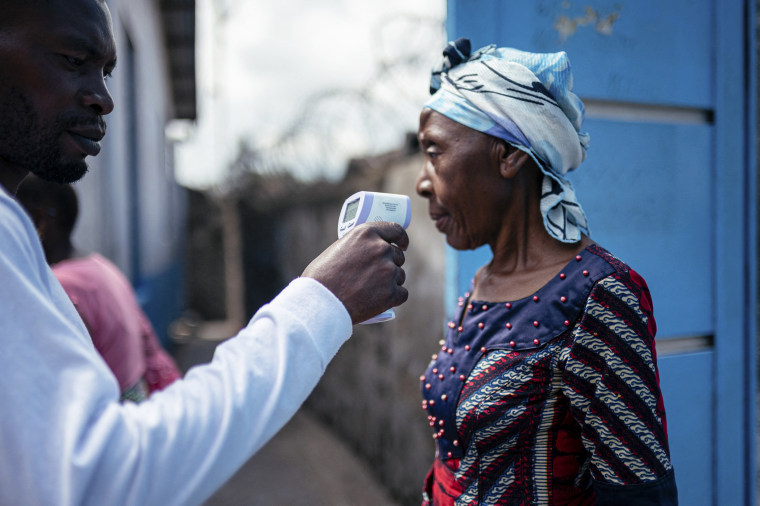
A healthcare worker checks a visitor’s temperature before allowing her access to a hospital in Goma on Sunday. – Jospin Mwisha / AFP via Getty Images
Jean Kaseya, director-general of the Africa CDC, explained to Sky News that there is a significant lack of medicines and vaccines, heightening his concern as fatalities increase. WHO’s emergency declaration indicates their support for government and agency efforts to control the spread. A team of 35 experts from the WHO and the Congolese Health Ministry reached Bunia, the capital of Ituri province, accompanied by 7 tons of emergency supplies.
The U.S. government is aiding efforts with surveillance, laboratory diagnostics, infection prevention, and outbreak containment strategies. However, Ebola response manager Satish Pillai from the CDC refrained from answering direct questions about any affected Americans, focusing on assessing needs on the ground.
A motorcycle taxi driver waits for clients in front of a hospital in Goma on Sunday. – Jospin Mwisha / AFP via Getty Images
Doctors Without Borders, or Médecins Sans Frontières, announced plans to rapidly escalate their medical response due to the alarming rate of infections and deaths in several regions, now spreading beyond borders. Trish Newport, MSF’s emergency program manager, highlighted the gravity of the situation.
Commentaries from public figures like Jeremy Konyndyk, formerly leading the Covid-19 response at USAID, emphasized the severity of the outbreak. He noted the drastic reduction in the international infrastructure that previously supported outbreaks, referencing cuts overseen by the Department of Government Efficiency. Konyndyk stressed that USAID is no longer operational, and the CDC has seen significant reductions.
The U.S. State Department, in collaboration with Congo and Uganda, is engaged in efforts to swiftly contain the virus. A spokesperson mentioned the intention to rapidly mobilize resources and support vital partners in this effort.
 Ancient Marble Statue Unearthed in Sardis
  Terry Moran’s Claims About ABC News and COVID Lab Leak Report
  Gracie Hunt Discusses Fitness, Faith, and Her Future
  Liechtenstein’s Royal Succession Now Includes Women
  Escalating Tensions in the Middle East
  Potential Collision Averted as Duplicate Flight Numbers Cause Confusion Over Phoenix