This article examines allegations that Cuba’s communist government has built an influence network within the United States, which federal authorities are currently investigating. The focus is on the network’s rapid response following the indictment of Cuban leader Raúl Castro.
Immediate Action After Indictment
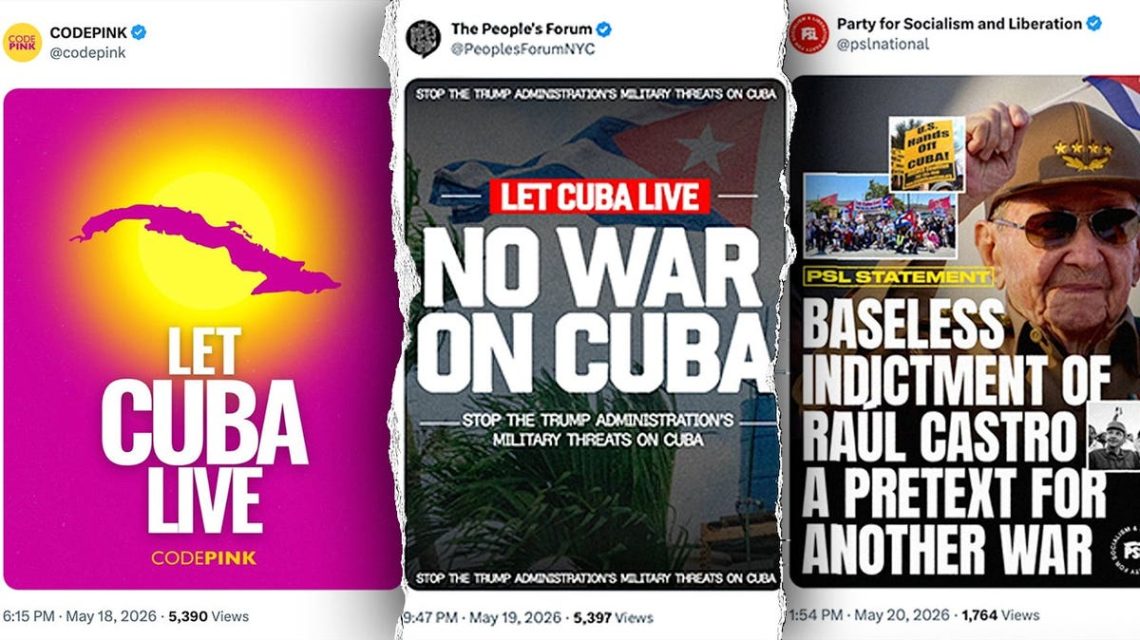
U.S. Attorney General Todd Blanche announced murder charges against Raúl Castro concerning the 1996 shootdown of two civilian aircraft by the exile group Brothers to the Rescue. Within nine minutes, a coordinated network mobilized across the U.S. to defend Castro and the Communist Party of Cuba. At 1:54 p.m., the Party for Socialism and Liberation released graphics condemning the charges as unfounded and an excuse for war.
By 3:18 a.m. on Thursday, Vijay Prashad of Tricontinental stated on social media that Cuba is not a global threat, framing the U.S. as the actual menace. The message was shared by leaders from organizations such as the People’s Forum and CodePink.
Investigations into U.S. Nonprofits
Officials from the Justice and Treasury Departments are investigating nonprofits and activist groups for potentially coordinating with Cuban officials in a foreign influence campaign within the U.S. Over 145 organizations mobilizing support for Cuba have been identified, reporting a combined revenue of approximately $1 billion.
Coordination and Messaging
U.S. national security officials view the rapid-response messaging campaign as a demonstration of how quickly Cuba-related political messaging is synchronized across various platforms. Groups supported by Neville Roy Singham, an expatriate tech tycoon linked to the Chinese Communist Party, are part of this network.
The Embassy’s Response
A spokeswoman for the Cuban Embassy stated that their diplomats operate within the bounds of the Vienna Convention, promoting friendly relations without interfering in U.S. internal affairs.
Probe Into Activists
Investigators are examining activities of several activists connected to the Cuba solidarity movement, probing coordination efforts with Cuban officials. They are also looking into how travel and aid groups function within this network.
Legal Concerns and Compliance
The Foreign Agents Registration Act requires Americans engaging in political activities for foreign governments to register with the Justice Department. Some groups are suspected of coordinating activities with Cuban officials without proper registration, potentially violating U.S. sanctions.
The Treasury Department’s OFAC enforces sanctions against Cuba, examining if activists and nonprofits coordinated shipments and fundraising efforts without compliance.
Conclusion
Heritage Foundation senior fellow Mike Gonzalez, a Cuban-born author, speculates that Cuba operates a foreign influence operation in the U.S., with Cuba serving as a base for anti-American organizing.
Investigators are focused on determining whether U.S.-based organizations have crossed into coordinated political activity under foreign direction.
 British Police Arrest Man Suspected of Terror Plot
  Activists Push for Nationwide Ban on Child Marriage in the U.S.
  Investigation into Alleged Incident at Cornell University
  Rising Drone Threats Highlight Vulnerabilities in Moldova’s Airspace Defense
  Bolivia Faces Security Test Amid Unrest
  Incident on FlyDubai Flight Raises Security Concerns