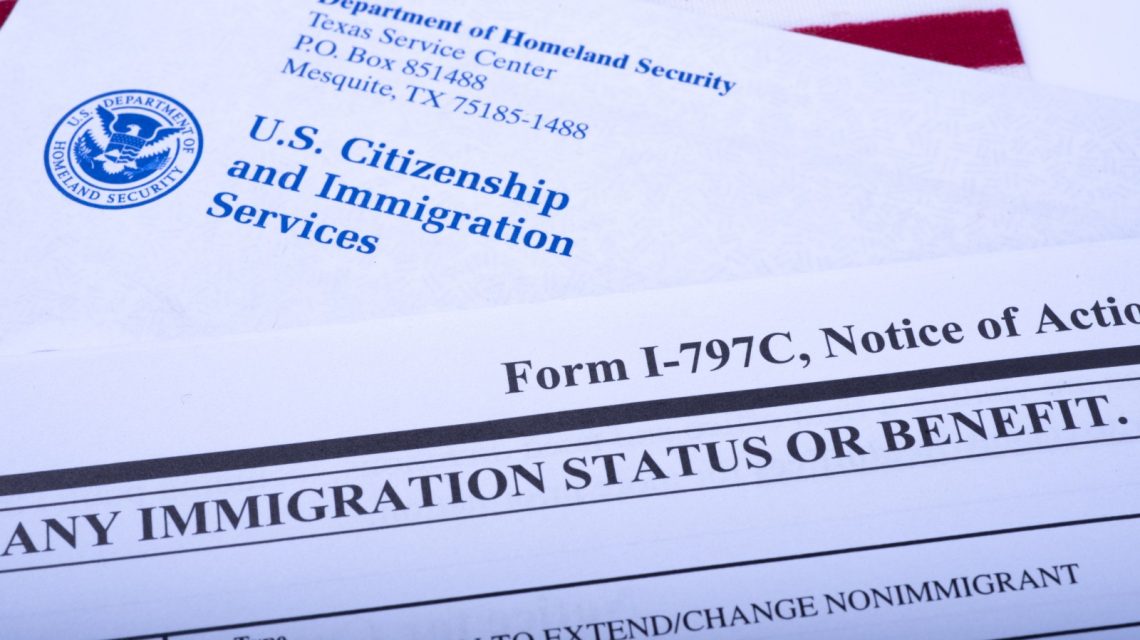
U.S. immigration authorities recently clarified a policy from the Trump administration, which could allow many H-1B visa holders to avoid leaving the country to apply for a green card. This followed a new memo that significantly narrowed the conditions for foreign nationals in the U.S. to become permanent residents without departing the country. The directive marks a major change in immigration practices.
Zach Kahler, spokesman for United States Citizenship and Immigration Services (USCIS), communicated that the agency is “reasserting” its understanding of Congress’s original intent for the adjustment-of-status route. Applications that benefit the economy or serve the national interest might allow individuals to remain in the U.S., while others might need to apply abroad due to specific circumstances.
A Shift in the Green Card Pathway
The administration’s approach changes the transition to permanent residency from temporary nonimmigrant status. For years, adjusting status domestically was standard. The new guidance suggests Congress never meant for temporary visitors, such as students, H-1B professionals, L-1 corporate transferees, and tourists, to treat their stay as a starting point for a green card. Consular processing abroad is now generally required, with domestic adjustments reserved for rare cases.
In an earlier statement, Kahler emphasized this new stance. Most nonimmigrants would now be expected to return to their home countries to complete the process. Only in exceptional situations would domestic adjustments be permitted.
This reflects the administration’s position that temporary visa holders should not adjust their status in the U.S. unless they meet specific exceptions.
Economic Implications and Operational Uncertainty
The decision on who must leave and who may stay hinges on whether the role offers “economic benefit” or serves the “national interest.” This is crucial for highly skilled H-1B visa holders, who support key U.S. sectors like technology, engineering, research, finance, and healthcare.
The policy shift has notable impacts:
- Extended Travel Risks: Many applicants are from countries with severe visa backlogs or travel restrictions, which could leave them stranded abroad for extended periods.
- Human and Corporate Toll: Legal and industry experts highlight risks of prolonged family separations and disruptions for American employers.
- Lack of Regulatory Clarity: The immigration system lacks a clear implementation timeline and objective criteria for domestic processing exemptions.
Understanding the H-1B Visa
The H-1B visa is a nonimmigrant, employment-based visa allowing U.S. companies to hire foreign workers for up to three years, extendable to six years. USCIS regulates this program with the following rules:
- Statutory Caps: The visa is capped at 85,000 new slots annually, including 20,000 for individuals with U.S. master’s degrees or higher. Demand surpasses supply, leading to a lottery each spring.
- Educational Criteria: The job should typically require a specific degree, and the worker must hold that degree or an equivalent. Employers must pay the prevailing wage and get approval from the Department of Labor before petitioning USCIS.
What Happens Next
Previously, students, H-1B workers, L-1 transferees, tourists, and other temporary visa holders could usually adjust status domestically, maintaining family unity and job stability, and reducing consular pressures. Now, the process is considered an “extraordinary” exception rather than the standard, with most applicants expected to apply abroad.
 New Jersey Voter Fraud Prompts Renewed Push for SAVE Act
  Concerns Over Changes to Voter-Registration Form for Americans Abroad
  Trump’s 2024 Campaign Targets Young Men Through Cryptocurrency
  Trump’s White House Visitor Center Proposal Gains Bipartisan Support
  State Department Simplifies Passport Process with Online Applications
  Becerra and Hilton Clash in California Gubernatorial Debate