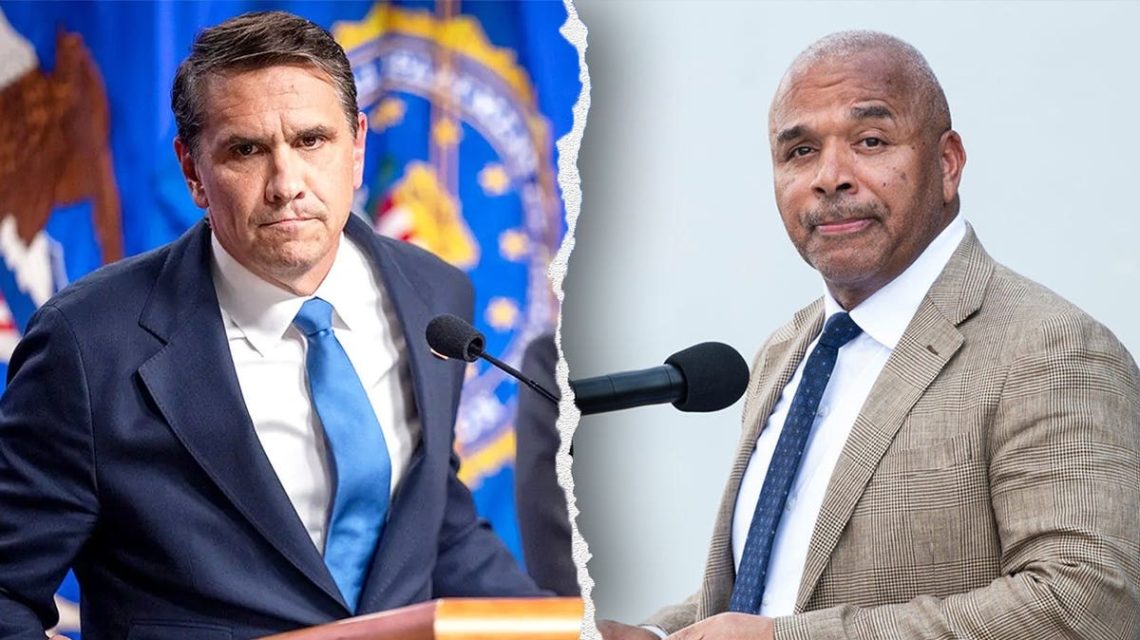
The recent indictment of the Southern Poverty Law Center (SPLC) by the Department of Justice (DOJ) has sparked increased interest. This includes a House Judiciary Committee hearing to examine how the SPLC has influenced civil rights policy in recent years. Although the hearing might not reveal new facts, it highlights the organization’s controversial activities. For years, the SPLC has pushed left-wing agendas in K-12 schools.
For more than a decade, the SPLC has used its reputation as a civil rights group to promote its Learning for Justice standards in schools. These standards, formerly known as Teaching Tolerance, aim to promote social justice. After the racial justice protests of 2020, the SPLC and other organizations pushed a far-left agenda within K-12 education. They marketed their programs to compassionate educators as essential for reducing bias and hate, bridging the achievement gap, and addressing mental health issues.
The SPLC’s ideas, including ‘anti-racism,’ ‘White privilege,’ and ‘Whiteness,’ have deeply influenced the education system. Colleges of Education, activist teachers, administrators, associations, teachers’ unions, and consultants have adopted these concepts.
Hundreds of millions in tax money goes to DEI groups, watchdog finds: ‘Total racket.’
The Southern Poverty Law Center’s reach in education is vast, yet difficult to measure precisely. Although many districts incorporate the SPLC’s content in lessons and curricula, the full extent of its impact remains unclear. Moreover, some teachers unofficially use Learning for Justice materials, which complicates efforts to quantify its influence.
Major Social Emotional Learning (SEL) programs like Second Step, Panorama Education, and the Yale Center for Emotional Intelligence’s (YCEI) RULER have incorporated SPLC standards. Many districts nationwide have contracts with these programs.
High school athlete criticizes CIF’s shared podium rule as humiliating to female competitors.
Furthermore, the SPLC’s ideas are circulated through professional development, teachers’ unions, and professional groups such as the American School Counselor Association. Parent Teacher Associations and state Departments of Education also participate.
In many cases, districts have facilitated the spread of SPLC content that criticizes students based on race or ethnicity and promotes anti-Western ideology. This can lead to hostility and resentment instead of justice and equality.
The DOJ’s recent indictment sheds light on the SPLC’s unchecked influence in schools. The hearing, ongoing scrutiny, and the indictment challenge the SPLC’s authority in education.
Parents, community members, and legislators should evaluate their districts for such politically charged content. Schools need to remove SPLC materials to prevent bias in education.
Kids should not be taught by an organization that fights bias by promoting their biased perspectives and labeling concerned parents as hate group members.
Rhyen Staley, director of Research for Defending Education, emphasizes caution. He has extensive experience in both public and private school settings.
 The Trump Team’s Challenge to the Military Leadership
  Maryland First State to Restrict Electronic Pricing in Grocery Stores
  Activists Push for Nationwide Ban on Child Marriage in the U.S.
  Democratic Hopes and Historical Warnings in 2026 Senate Race
  Republicans Face Challenges Amidst Cost of Living Concerns
  A Different Kind of Fall for Congress This Year