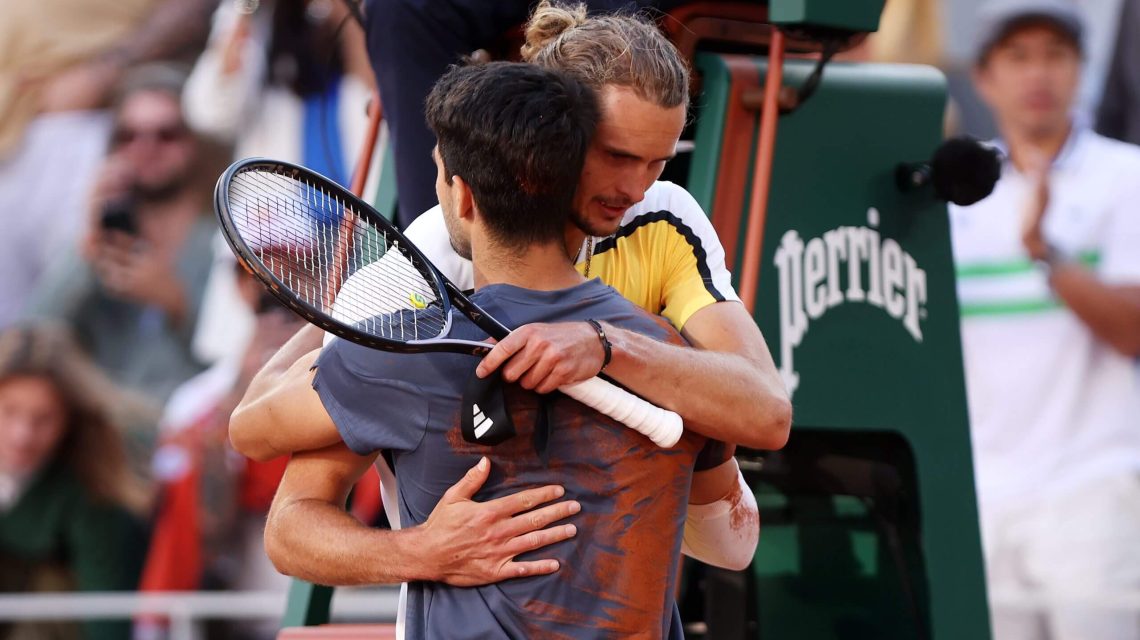
At the 2026 French Open, Alexander Zverev finds himself in an extraordinary position. With key players exiting early, the path to his first Grand Slam victory looks promising. Defending champion Carlos Alcaraz withdrew due to a wrist injury. World No. 1 Jannik Sinner lost in the second round, while Novak Djokovic exited in the third.
This situation marks new territory for the 29-year-old Zverev. Previously, he entered major finals as an underdog. He faced Sinner at the 2025 Australian Open, Alcaraz at Roland Garros two years prior, and Dominic Thiem at the 2020 U.S. Open. Thiem’s eventual Grand Slam victory, after similar initial setbacks, highlights the pressures Zverev now faces.
In his upcoming quarterfinal against Rafael Jódar, Zverev stands as one of the most experienced contenders. Only Matteo Berrettini shares his experience of reaching a major final. As the world No. 3, Zverev and Félix Auger-Aliassime, ranked No. 5, are the top-10 players remaining. This positioning creates an interesting dynamic, as Zverev aims to move away from his naturally conservative style to a more aggressive approach.
Historically, Zverev’s style combined a powerful serve with a defensive baseline game. This strategy posed challenges even for tennis’s Big Three: Roger Federer, Rafael Nadal, and Djokovic. Despite reaching three major finals, becoming world No. 2, and earning Olympic gold in 2021, Zverev has adjusted his play. He’s recognized the need to adopt a more offensive strategy, inspired by players like Alcaraz and Sinner, who execute aggressive play with exceptional returning capabilities.
With those key rivals out of the tournament, Zverev might revert to his original, calculated approach. This strategy seeks to exploit opponents’ weaknesses. Andre Agassi, reflecting on his own career, suggests that Zverev might benefit from being less passive and better utilizing his forehand.
In the fourth round against Jesper de Jong, Zverev employed an offensive mindset. He succeeded with aggressive forehands and net approaches, eventually winning in straight sets. His performance showed adaptability and a growing comfort with heightened expectations.
I’m here, I’m feeling confident with my game.
Zverev’s recent comments reflect his confidence. He emphasized handling challenging situations well, evident in his recent matches. As he navigates each round, Zverev knows the pressure accompanies being a favorite. This mirrors Marta Kostyuk’s experiences on the women’s tour, where playing as a favorite honed her competitiveness.
In the high-stakes environment of Roland Garros, Zverev faces both opportunity and pressure. Dominating from this point requires balancing aggression and patience, alongside managing expectations. His journey in this tournament will be a testament to his readiness for a Grand Slam title.
 Nick Saban’s Comments on ESPN Spark Debate Over College Sports Regulations
  Freddy’s American Adventure: From Soccer to College Football
  Brock Purdy’s Impressive Start in the 2026 NFL Season
  The Value of Retaining Miles McBride for the Knicks
  Penguins Make History with Dominant Season Opener
  Sonny Gray Expresses Frustration After Game Against Yankees