Court’s Decision Sparks Debate on Voting Rights
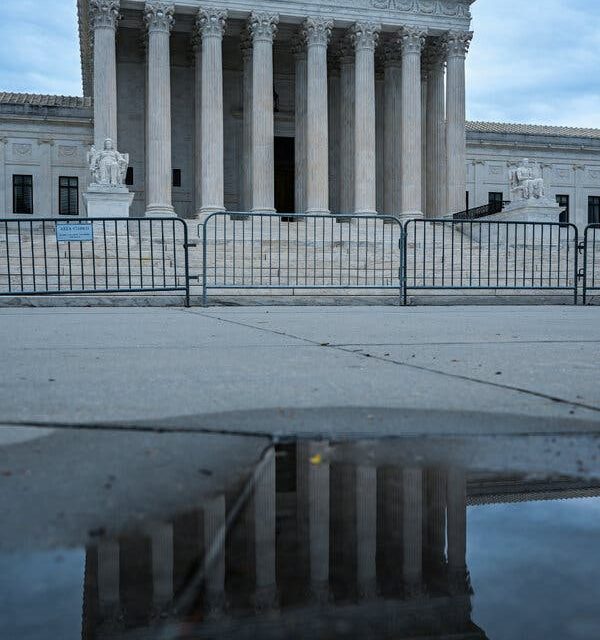
An emergency ruling by the Supreme Court’s conservative majority has provided insight into how future congressional district disputes might unfold under a weaker Voting Rights Act. The decision, reached late on Tuesday, allowed Alabama to proceed with a new congressional map that could favor Republicans in maintaining a slim House majority.
Background of the Dispute
In February 2025, Alabama faced scrutiny during an 11-day trial, overseen by three federal judges. The case involved more than 20 witnesses and close to 800 exhibits, focusing on the state’s proposal for congressional districts.
The judges, two appointed by former President Trump, determined that the state had intentionally discriminated against Black voters. The plan, they concluded, aimed to limit representation by allowing only one majority-Black district out of seven, in a state where over 25% of the population identifies as Black.
Supreme Court’s Controversial Ruling
Despite the lower court findings, the Supreme Court’s decision permitted Alabama to implement its contested map. Citing a ‘colorblind Constitution,’ the ruling effectively removed a majority-Black district.
This development has stirred questions regarding the Supreme Court’s willingness to declare congressional maps as racially biased. Additionally, it raises concerns about the role federal courts will play in future redistricting cases.
The court just seems really hellbent on getting lower federal courts out of any policing of redistricting,said Nicholas Stephanopoulos, a Harvard law professor specializing in election law.
 Trump’s 2024 Reelection and Evolving Voter Dynamics
  Defense Secretary Emerges as Key Player in the Trump Administration
  Hegseth’s Vision for the Military: Balancing Tradition and Innovation
  Significant Funding Boosts Ken Paxton’s Texas Senate Campaign Amid Tight Race
  U.S. States Extend Gas Tax Waivers Amid Rising Fuel Costs Due to Iran Conflict
  USCIS Raises Immigration Fees