The San Francisco Bay now hosts an innovative AI-powered detection system named WhaleSpotter, aiming to track whales around the clock. Designed to identify whale blows and heat signatures within a 2-mile radius, it alerts mariners to slow down or reroute when whales are nearby. Thomas Hall, director of operations for San Francisco Bay Ferry, notes that adjustments can be made well in advance to avoid whales entirely.
This technology was implemented following a rise in gray whale deaths in the bay area, with 21 dead whales found last year—40% due to ship strikes. Even more have perished this year, signaling a grave situation. Many gray whales, traditionally migrating along the California coast on a 12,000-mile journey, are now diverting into San Francisco Bay, possibly due to climate change. Responses to strandings have been overwhelmed, with no remaining places to land dead whales.
The gray whale population, once a conservation triumph, has halved over the past decade with only 13,000 remaining. Rachel Rhodes, a project scientist at the Benioff Ocean Science Laboratory, explains that shifts in the Arctic food web due to warming are leaving whales undernourished for their long migrations.
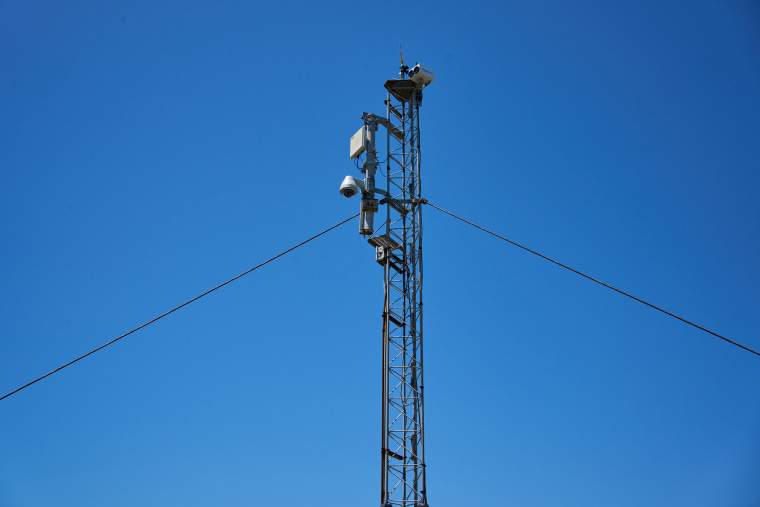
A WhaleSpotter device mounts on a tower on Angel Island. Thermal cameras give real-time alerts, which trained observers verify before sending notifications via radio to mariners and posting publicly.
The San Francisco setup is unique as it integrates detections from land and vessel sources for timely mariner alerts. The WhaleSpotter system, valued for its constant monitoring, operates in darkness and foggy conditions, unlike human observers. Researchers plan to expand with installations on more bridges and ferries.
A marine heat wave off the California coast is affecting humpback whales, pushing them closer to shore where they risk entanglement in Dungeness crab fishery gear. Kathi George from The Marine Mammal Center describes how humpbacks, curious by nature, often become entangled in lines, leading to severe consequences.
NOAA recorded 36 whale entanglements in 2024, but experts caution this underestimates the real scenario. California has authorized ropeless crab gear, reducing risks. Ropeless gear keeps ropes and buoys on the seafloor, releasing them acoustically when fishermen return.
Scientists remain focused on reducing wildlife risks while supporting fishing activities. Caitlynn Birch of Oceana emphasizes the need to adapt and rely on scientific advances to protect marine life amidst changing ocean conditions.
 U.S. Records Warmest September in History
 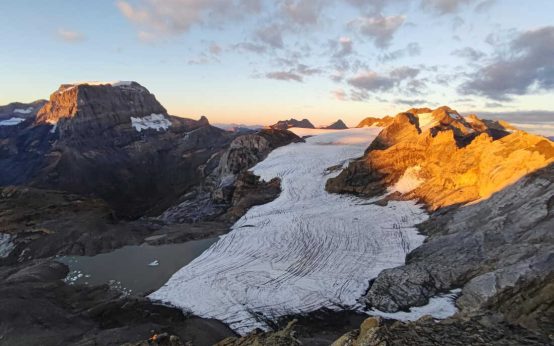 Swiss Glaciers Show Effects of Ice Loss Amid Global Warming
  Climate-Resistant Rock Glaciers: Hidden Water Resources
  Senators Reach Bipartisan Agreement on Permitting Reform
  Experts Warn of Critical Period for the Colorado River
  Future Cities: Ambitious Projects Aiming for Innovation and Sustainability